

Twin screw extruders have become the core equipment in modern plastics processing, polymer compounding, masterbatch manufacturing, biomass modification, chemical blending, and advanced material development.
Operating a plastic extrusion machine requires a combination of technical preparation, process understanding, equipment familiarity, and continuous monitoring. From material feeding to temperature control, screw rotation, melt formation, and pelletizing or shaping, each stage influences the quality, consistency, and safety of the extrusion process.
Energy consumption is one of the most important factors for factories running continuous plastic compounding, pelletizing, profile extrusion, and material modification lines. Many customers evaluating new equipment ask a critical question: How many kWh does a twin screw extruder use?
Plastic recycling is a multi-stage industrial process that converts waste plastics into reusable raw materials. As global manufacturing continues to emphasize sustainability and resource efficiency, recycling systems have become essential equipment for factories, compounding companies, plastic processors, and environmental facilities.
A plastic paint removal machine is a specialized industrial system designed to strip coatings, paints, inks, and plating layers from plastic components without damaging the base material. This type of machine enables factories to restore plastic parts, improve recycling purity, and reduce waste disposal costs.
Plastic pellets are the foundation of modern plastics manufacturing. Nearly every molded, extruded, or processed plastic product—ranging from household items to high-performance engineering components—begins as uniform resin pellets.
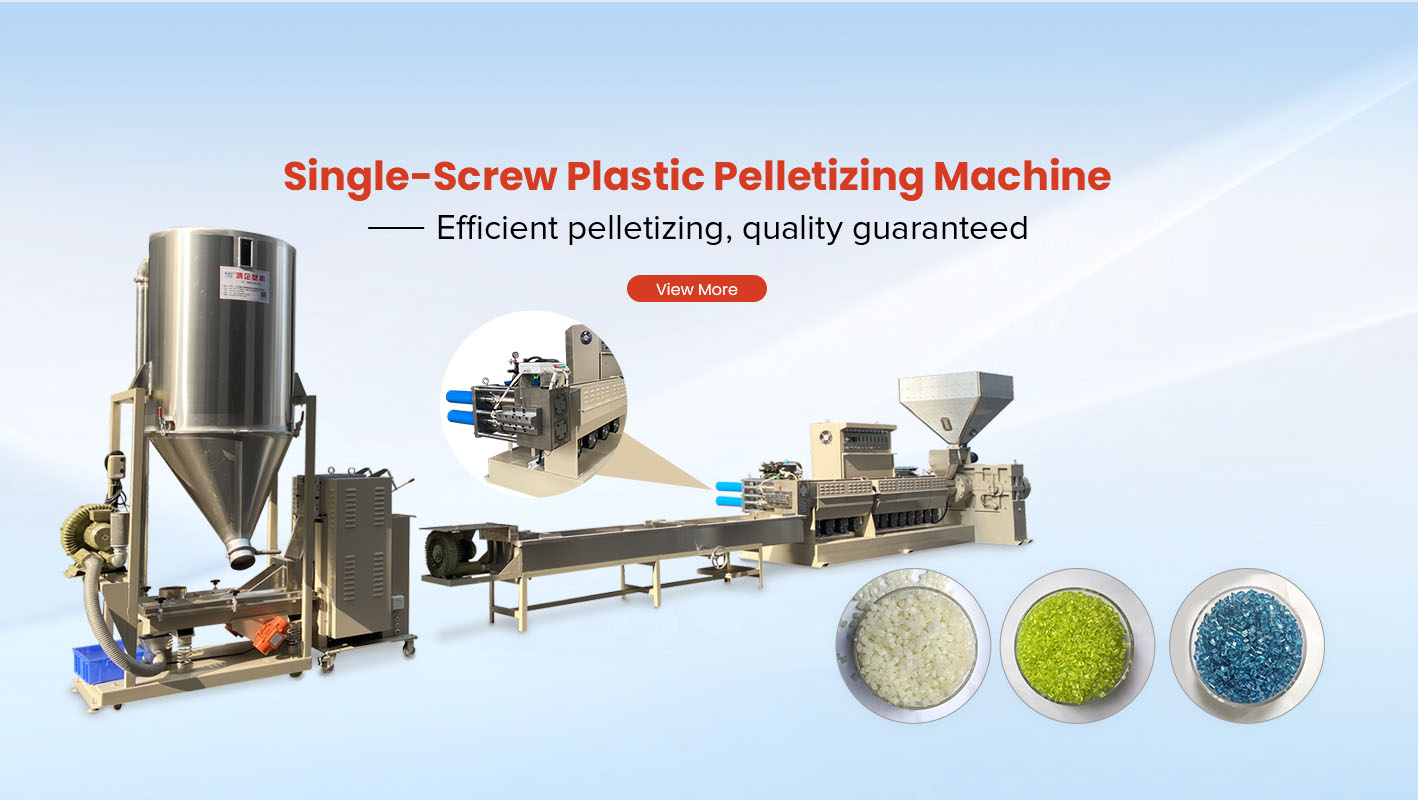
In the plastic compounding and extrusion industry, pelletizing is a crucial step for converting molten polymer into uniform, transportable pellets. Two major pelletizing systems dominate the field: underwater pelletizers and strand pelletizers.
Plastic recycling has become an essential part of global waste reduction efforts, and extrusion technology plays a central role in transforming discarded plastic into useful raw materials.
Sizing a single screw extruder is one of the most important steps in establishing a stable and efficient plastics production line. The extruder’s diameter, L/D ratio, motor power, output capacity, screw design, and feeding requirements must match the characteristics of the material being processed.
Extrusion machines play a central role in modern plastics manufacturing, transforming raw polymer materials into sheets, pellets, profiles, pipes, films, and molded components. Understanding which plastics are compatible with extrusion is essential for ensuring stable production, desired material properties, and long-term efficiency.
A ribbon blender is one of the most widely used industrial mixing machines due to its efficiency, uniform blending capability, and adaptability to different types of powders, granules, and low-viscosity materials. Industries such as plastics, chemicals, food processing, pharmaceuticals, and construction rely heavily on this machine because it delivers fast, repeatable mixing results with low operating costs.
The extrusion process is a cornerstone of modern manufacturing, widely used across industries ranging from plastics and metals to food processing and pharmaceuticals. In plastics manufacturing, extrusion transforms raw polymer materials into continuous shapes.