

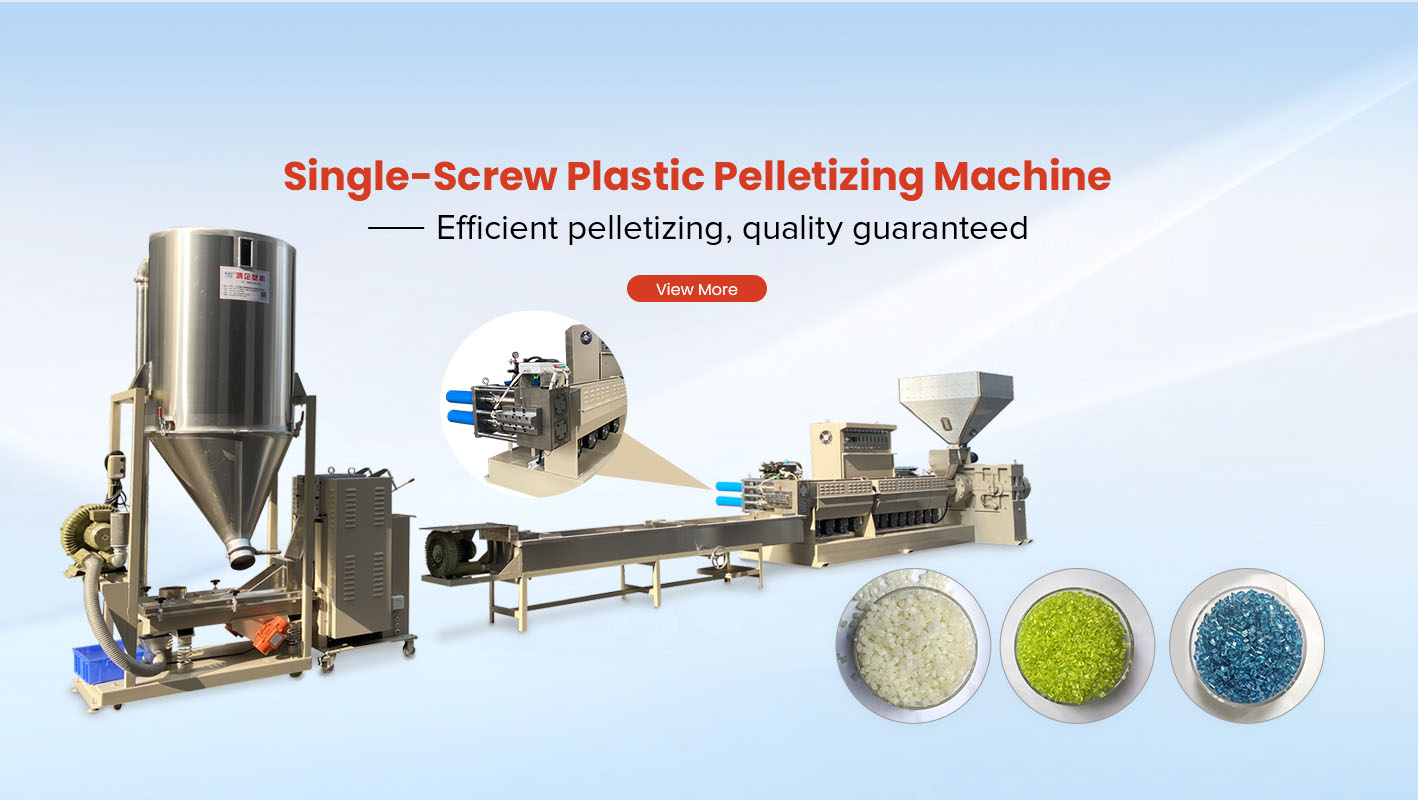
For plastic processing factories, recycling plants, pelletizing workshops, and material preparation lines, mixer performance affects much more than one production step.
Consistent extrusion output is one of the biggest concerns for factories that produce plastic pellets, sheets, profiles, pipes, films, or recycled plastic materials. When output becomes unstable, the final product may show uneven size, color variation, poor melting, unstable cutting, or fluctuating production capacity.
In many manufacturing plants, raw materials do not move directly from storage to production. Before extrusion, injection molding, compounding, or recycling, materials often need to be stored, balanced, and mixed in a controlled way. This is where a plastic mixing silo becomes valuable.
In plastic compounding, efficiency is not only about higher output. What buyers really care about is whether the machine can keep materials mixed evenly, run stably for long hours, reduce waste, and produce pellets that perform well in downstream molding or extrusion. That is where twin screw extrusion stands out.
Buying a plastic extrusion line is rarely just about price. For most factory owners, project buyers, and distributors, the real question is whether the line can run steadily, produce uniform pellets, fit the target material formula, and keep long-term production costs under control.
Buying an industrial mixer is not just about choosing a machine with the right size. For many buyers, the real concern is whether the equipment can keep materials evenly mixed, fit into the production workflow, reduce downtime, and support stable bulk production over time.
Ordering an extruder is never only about choosing a machine size. For most buyers, the real concern is whether the equipment can match the material, output target, workshop conditions, and long-term production plan.
A pelletizer machine is not something most buyers replace quickly. In a real factory, people expect it to keep running for years, not months. So when someone asks about lifespan, the better question is usually this: how long will it keep running well under the material, output, and working conditions you actually have?
Granulation matters because raw plastic waste, scrap, flakes, powder, and mixed regrind are hard to feed, hard to dose, and even harder to reuse consistently in production. Once the material is turned into granules, it becomes easier to store, easier to transport, and much easier to run through downstream processing equipment.
Extruder pricing is one of the first questions buyers ask, but it is rarely answered with one number. In real purchasing, the cost of an extruder depends on what the machine is expected to do, how much output is needed, what materials will be processed, and how complete the line needs to be. A small lab or pilot setup sits in a very different price range from a production machine built for compounding, recycling, or high-output pelletizing.
Importing a large-scale extrusion line from China is not only about comparing quotations. For serious buyers, the real decision is about production stability, long-term operating cost, material adaptability, delivery reliability, and supplier support after the machine arrives.
Melt temperature is one of the most important factors in plastic extrusion because it directly affects product appearance, dimensional stability, material dispersion, output consistency, and energy consumption. If the melt temperature is too low, the material may not plasticize fully. If it is too high, the polymer can degrade, burn, discolor, or lose key performance properties.