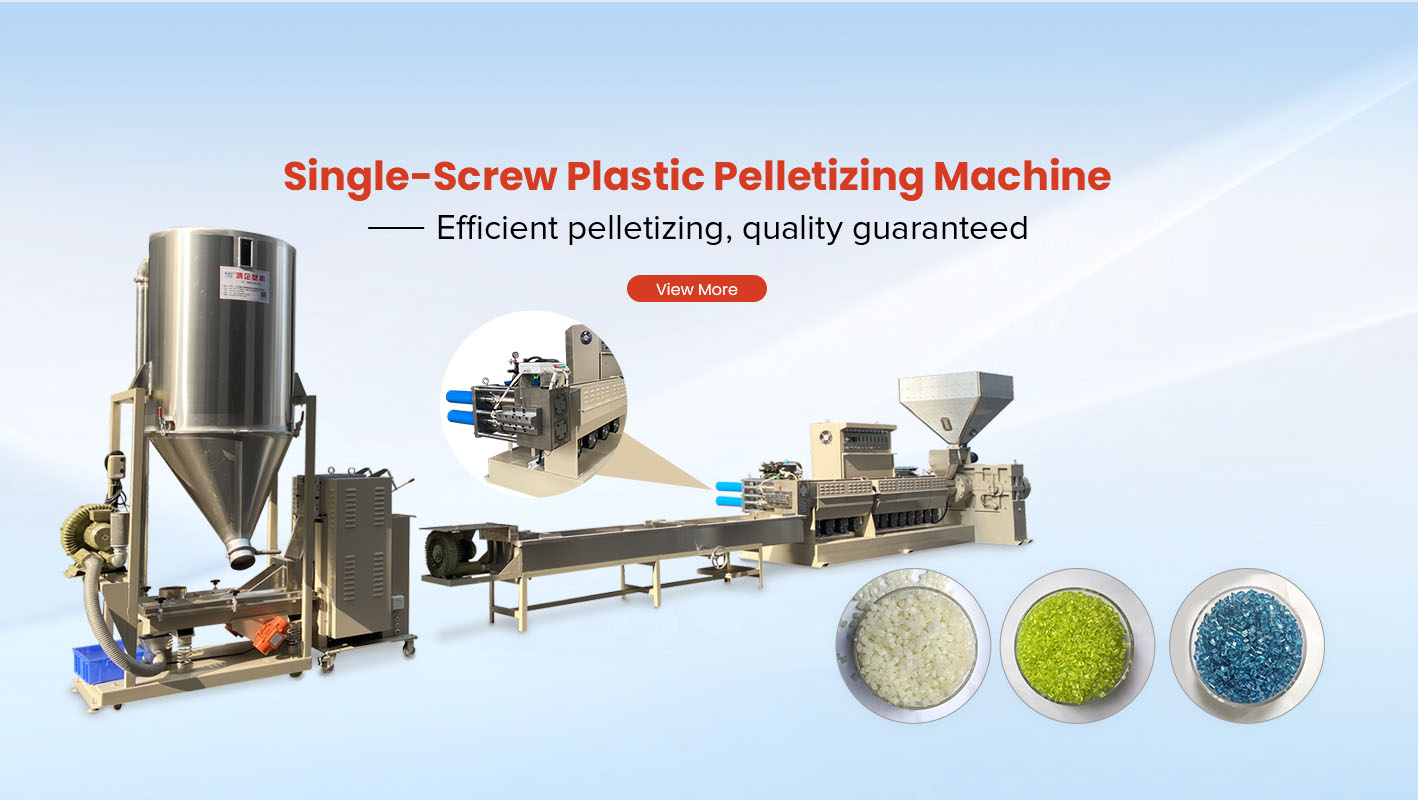
A plastic extruder machine is a piece of industrial equipment used to melt, convey, pressurize, and shape plastic materials into a continuous form. In simple terms, it takes plastic raw material, usually in granules, flakes, or powder, heats it inside a barrel, pushes it forward with a rotating screw, and sends the molten material through a die to create the required output. Depending on the production target, that output may be pellets, pipes, profiles, sheets, or other plastic products.
This machine is widely used because it supports continuous production and stable output. For manufacturers, that matters a great deal. A well-configured extrusion system can help keep melt quality consistent, reduce waste, and improve production efficiency across long runs. That is why plastic extruder machines are found in recycling plants, plastic modification lines, packaging material production, construction material processing, and many other industrial settings.
The reason this machine remains so important is not only its productivity, but also its flexibility. A properly selected extruder can process common thermoplastics such as PE, PP, PVC, ABS, and PC, while also supporting different formulas, fillers, and production goals. For many factories, it is one of the core machines that connects raw material handling with final product manufacturing.
How A Plastic Extruder Machine Works
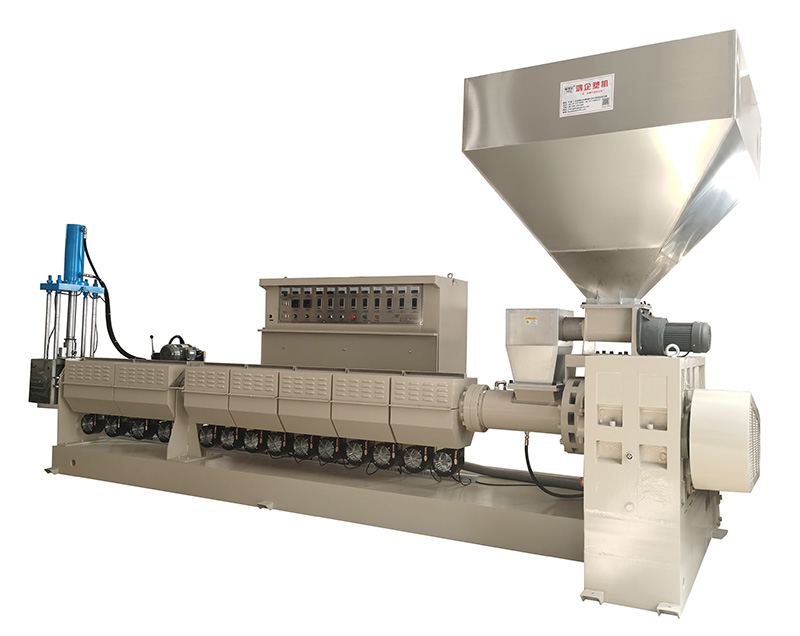
The working process is straightforward in principle, but very important in practice. First, plastic material enters the hopper. From there, it moves into the barrel, where the screw begins to convey it forward. As the screw rotates, the material is exposed to external heating and internal friction. This combination gradually softens and melts the plastic.
As the material moves through the screw, it usually passes through different functional stages. The feeding section moves the material forward, the compression section increases density and begins stronger melting, and the metering section helps stabilize the melt before discharge. This progression is what allows the machine to produce a more uniform flow.
Once the material reaches the front end, the melt passes through a die or screen-changing section. At this point, impurities may be filtered, pressure is stabilized, and the molten plastic is prepared for the next forming step. In pelletizing lines, the melt is turned into strands and cut into pellets. In other extrusion lines, it may be shaped directly into a profile or another continuous product.
Main Parts Of A Plastic Extruder Machine
The screw is the heart of the machine. Its diameter, length-to-diameter ratio, groove depth, and overall design all influence conveying efficiency, melting quality, and output stability. A well-designed screw helps the machine handle material more smoothly and maintain better consistency.
The barrel works together with the screw and provides the heating environment required for melting. Heating zones are usually divided into several control sections so operators can adjust temperature according to the material and process demand. Better temperature control usually means better melt stability.
The motor and inverter system provide the driving force. Stable speed control is essential because screw speed affects output, pressure, and melt behavior. A reliable control system allows the operator to make accurate adjustments instead of relying on rough manual changes.
The screen changer is also important, especially in recycling or material modification lines. It helps remove contamination from the melt and supports cleaner final output. In production environments where different materials or colors are processed, an efficient screen-changing system can reduce downtime and improve workflow.
What Materials Can It Process
A plastic extruder machine can process many thermoplastics, which is one of its biggest advantages. Common materials include polyethylene, polypropylene, polycarbonate, ABS, and PVC. Some lines also process transparent plastics, engineering plastics, and recycled materials, depending on screw design and machine configuration.
This flexibility makes extrusion useful for a wide range of industries. A factory producing plastic pellets for injection molding has different needs from one making transparent raw material for optical applications, but both may still rely on an extrusion system as the core process equipment. The key is matching the machine design with the material characteristics and production target.
Where Plastic Extruder Machines Are Used
Plastic extruder machines are used in both primary processing and secondary manufacturing. In recycling operations, they can convert plastic waste into reusable pellets. In material modification, they help prepare compounds with improved strength, transparency, or heat resistance. In product manufacturing, they support the production of pipes, profiles, films, and other continuous plastic forms.
They are especially valuable in industries that need stable, repeatable, and large-volume production. Construction materials, packaging, household products, automotive plastics, and electronics components all depend on extrusion at some stage. In some applications, the focus is output. In others, the focus is melt quality, transparency, or compatibility with downstream molding.
Why Single Screw Extruders Are Common
Single screw extruders remain widely used because they are practical, cost-effective, and suitable for many standard applications. Their structure is relatively simple, operation is easier to understand, and maintenance is generally more straightforward than more complex systems.
For manufacturers processing regular thermoplastics or producing pellets in steady quantities, a single screw design is often a sensible choice. It can offer stable conveying, reliable melting, and efficient production without adding unnecessary system complexity. That makes it especially suitable for many recycling, compounding, and pelletizing lines.
What Buyers Should Look At Before Choosing One
Choosing a plastic extruder machine is not only about the maximum output number. Buyers should also look at material range, screw structure, temperature control accuracy, screen-changing method, motor configuration, and maintenance convenience. These factors directly affect daily production, not just startup performance.
Capacity should match actual factory demand. An oversized machine may increase energy use and investment cost without improving practical efficiency. A machine that is too small may struggle to maintain production targets. Buyers should also pay attention to whether the machine can support future material changes, formula upgrades, or expanded applications.
Another important point is long-term serviceability. A machine built with durable screw and barrel materials, stable electrical control, and accessible maintenance design usually delivers better value over time than one chosen only for lower purchase cost.
Conclusion
A plastic extruder machine is a key production system that turns raw plastic material into a stable molten flow for pelletizing or further shaping. Its value comes from continuous production, broad material compatibility, and the ability to support many industrial applications with consistent output. For factories involved in recycling, compounding, or plastic product manufacturing, it is one of the most important pieces of equipment in the line.
The right machine depends on the material, output target, product type, and long-term production plan. A well-matched extruder can improve efficiency, support better product quality, and make the whole processing line more dependable.
If you are evaluating extrusion equipment for pellet production, plastic recycling, or material processing, feel free to contact us for technical guidance. We can help review your material type, capacity needs, and line configuration so you can choose a more suitable extrusion solution for your project.