When buyers ask what are the three types of mixers, they are usually not looking for a textbook definition. In real production, the question is more practical: which mixer structure fits the material, the batch size, and the factory layout. In plastics processing, the answer often comes down to horizontal mixers, high-speed mixers, and vertical mixers. Each one solves a different problem. Some are better for fast blending, some for heat-related processing, and some for handling large volumes with a simpler layout. For companies working with plastic granules, recycled flakes, or blended compounds, a Vertical Plastic Mixer often becomes the most practical choice when capacity, floor efficiency, and stable blending matter at the same time.
Understanding The Three Main Mixer Types
A horizontal mixer is commonly chosen when a line needs wide material contact and easier inspection inside the mixing chamber. It is often suitable for formulations that require more direct paddle interaction across a horizontal tank. A high-speed mixer is usually selected when the process needs faster friction, stronger agitation, or heat generation during mixing. This type is often used when the goal is not only blending, but also more active material treatment. A vertical mixer, by contrast, is valued for its ability to process large quantities of lightweight plastic materials while using workshop space more efficiently. Its working logic relies heavily on vertical circulation and gravity-based material movement, which makes it especially useful in plastic processing and recycling environments.
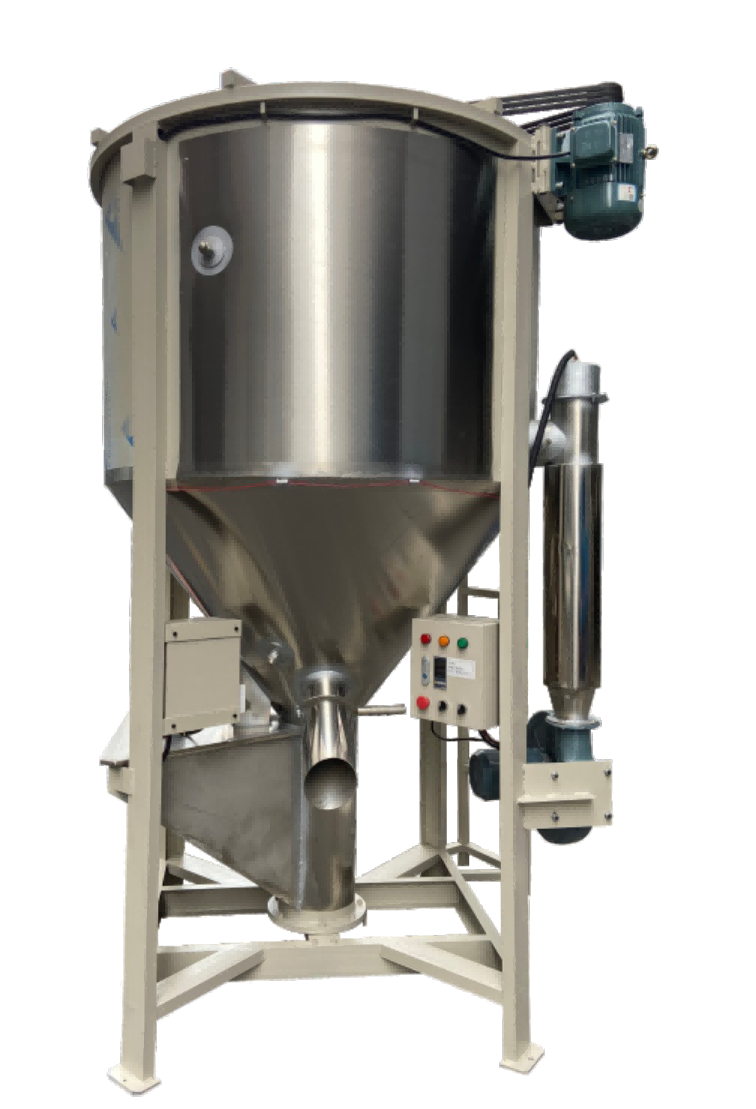
That is where the linked product fits naturally into the discussion. If a buyer is comparing the three mixer types and trying to decide what works best for plastic granules, regrind, flakes, or additive blending, a vertical unit is often the point where theory becomes practical purchasing. The Vertical Plastic Mixer is built as an industrial-grade machine for efficient mixing and homogenization of large volumes of plastic materials, with a stainless steel structure and a capacity range from 1000 kg to 12000 kg depending on model.
Why Vertical Mixers Matter In Plastic Processing
In many factories, the main challenge is not simply whether materials can be mixed. It is whether they can be mixed evenly, in large enough volume, and without wasting valuable floor area. That is one reason vertical mixers remain highly relevant. A vertical structure uses height more effectively, which helps manufacturers handle larger batches without expanding machine footprint in the same way a larger horizontal system might. The machine is suitable for factories and workshops that want to maximize space efficiency while maintaining strong mixing performance.
This matters even more for B-end buyers. Importers, compounders, recyclers, and processors usually do not buy a mixer as a standalone machine. They buy it as part of a production decision. If the mixer takes too much floor space, struggles with batch consistency, or becomes difficult to operate, it affects labor efficiency, output rhythm, and product quality. A vertical mixer is often attractive because it offers a simpler answer to several of those pain points at once.
Where A Vertical Plastic Mixer Fits Better Than Other Types
A vertical mixer is not automatically the best choice for every material or every process. But in plastic manufacturing, it often fits very well when the plant handles lightweight granules, recycled particles, flakes, or additive-based blending in relatively large volumes. This machine is specifically designed around the principle of gravity to thoroughly and evenly mix materials such as plastic granules, recycled materials, and flakes, which is a strong match for common plastics operations.
This is also where many buyers start to see the difference between mixer categories in commercial terms. A horizontal mixer may work well for some formulas, and a high-speed mixer may be better for certain intensive processes, but a vertical mixer often brings a stronger balance of capacity, structure, and ease of use. That balance is what makes it easier to position in real factories, especially where production teams want consistent blending without making the system more complicated than necessary.
What Makes This Product Relevant
The linked Vertical Plastic Mixer is designed around large-batch plastic blending rather than small lab-style mixing. The model range covers HQ-1000 to HQ-12000, with capacities from 1000 kg to 12000 kg. Main motor power ranges from 4 kW to 18.5 kW, and heating plus fan configurations vary by model, which gives buyers more room to match machine scale to actual production demand.
Its material structure is also built for industrial use. The machine uses a 2 mm stainless steel outer plate, a 6 mm paddle bottom, a 4 mm upper part, and a 3 mm inner tube. Those details matter because many buyers in this category care less about surface appearance and more about whether the machine can hold up under long daily shifts and continuous raw material handling.
The machine also includes a timer-based automatic shutoff function and a user-friendly control system. That may sound simple, but in actual factory use it solves a real problem. Not every production team wants a machine that demands constant manual supervision or highly specialized operation. Easier control reduces operator dependency and helps standardize daily workflow, especially in facilities with multiple shifts or mixed skill levels.
Common Buyer Concerns When Choosing A Mixer
One common concern is whether the machine can truly keep mixing results stable across different materials. In plastics, inconsistency during mixing can carry downstream into extrusion, pelletizing, product appearance, and performance. Another concern is whether the mixer is oversized or undersized for the planned workload. A machine that is too small creates bottlenecks. One that is too large may increase capital cost without adding useful efficiency.
Maintenance is another major issue. Buyers often focus on purchase price first, then discover later that cleaning, lubrication, seal inspection, and paddle wear management affect the real operating cost much more than expected. A structured maintenance routine that covers regular cleaning, monthly lubrication checks, quarterly seal inspection, electrical maintenance, paddle inspection every six months, and annual equipment calibration makes this kind of machine easier to manage over the long term.
Industries And Production Scenarios That Benefit
The machine is suitable across several plastic-related production environments. It is used in plastic manufacturing, where different materials, colors, or resin properties need to be blended more evenly before further processing. It is also relevant in plastic recycling, where materials from different sources need more uniformity before reuse. In plastic modification, the mixer helps disperse additives more evenly into base resin, while in plastic alloy preparation and plastic composite material production, it supports better material integration before downstream forming or pelletizing.
That broad use range is important for buyers who want flexibility. A machine that only fits one narrow task can become limiting as production changes. A vertical mixer with broader application value is easier to justify for factories that may expand product categories or processing goals later.
How To Think About The Right Mixer Choice
So, what are the three types of mixers? In practical terms, they are different answers to different production needs. Horizontal mixers are often selected for wider chamber interaction. High-speed mixers are chosen for stronger agitation and process intensity. Vertical mixers are preferred when factories need large-capacity blending, better use of vertical space, and stable handling of lightweight plastic materials.
For many plastics processors, the better question is not which type sounds most advanced, but which type supports daily output, product consistency, and easier line management. That is why a Vertical Plastic Mixer often becomes the more commercially sensible choice rather than just a technical one.
Conclusion
If you are comparing mixer types for plastic production, the three main categories each have their place, but vertical mixers are often the most practical option when large-volume blending and workshop efficiency matter together. The linked Vertical Plastic Mixer is built for that kind of work, with industrial stainless steel construction, a wide capacity range, user-friendly control, and application value across manufacturing, recycling, modification, and composite production.
If you are not sure which mixer structure fits your material, batch size, or production target, contact us with your process details. We can help you review the right model range, discuss capacity matching, and provide guidance for a mixer setup that works more smoothly in real production.