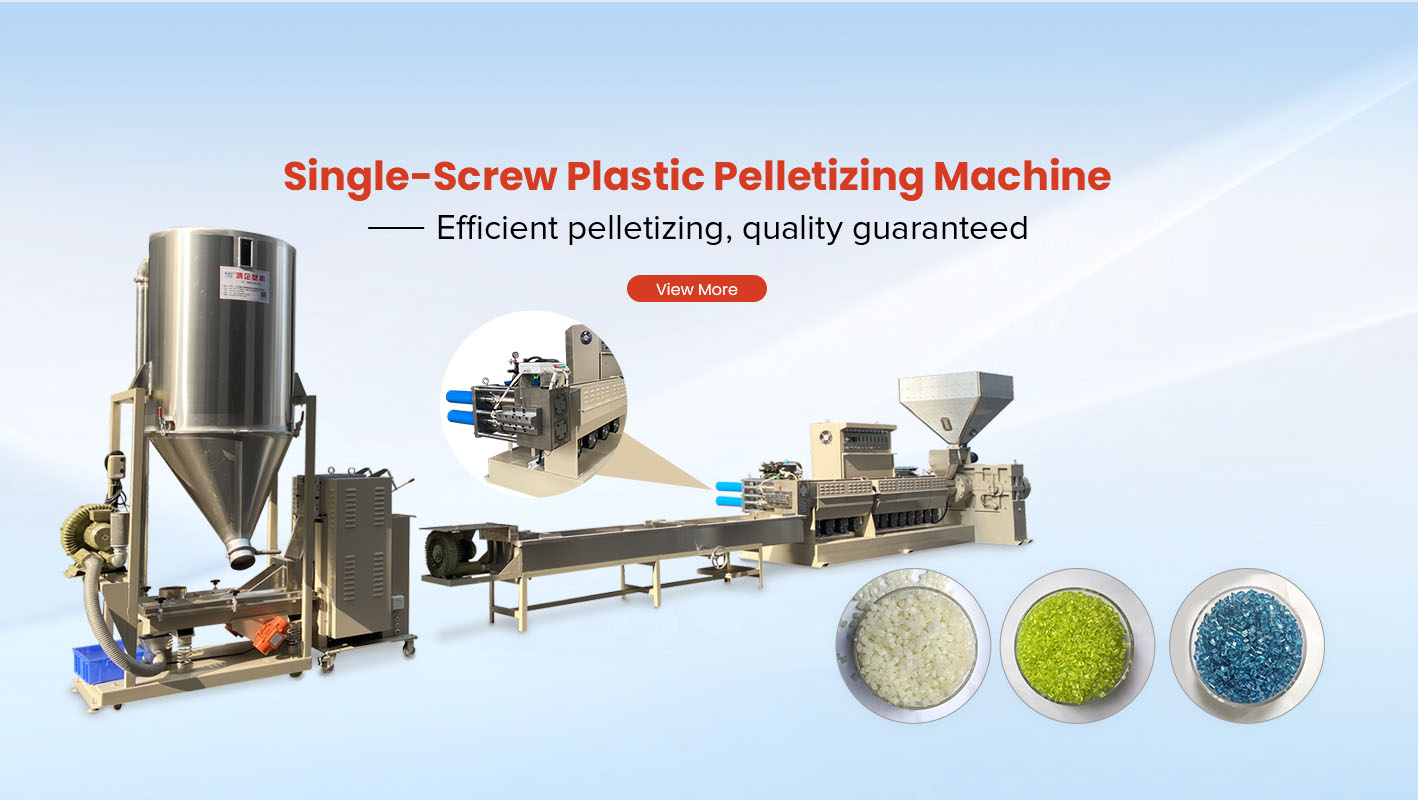
Importing a large-scale extrusion line from China is not only about comparing quotations. For serious buyers, the real decision is about production stability, long-term operating cost, material adaptability, delivery reliability, and supplier support after the machine arrives. A line may look competitive on paper, but if it cannot maintain melt consistency, handle the target formula, or run smoothly in daily production, the initial savings disappear very quickly.
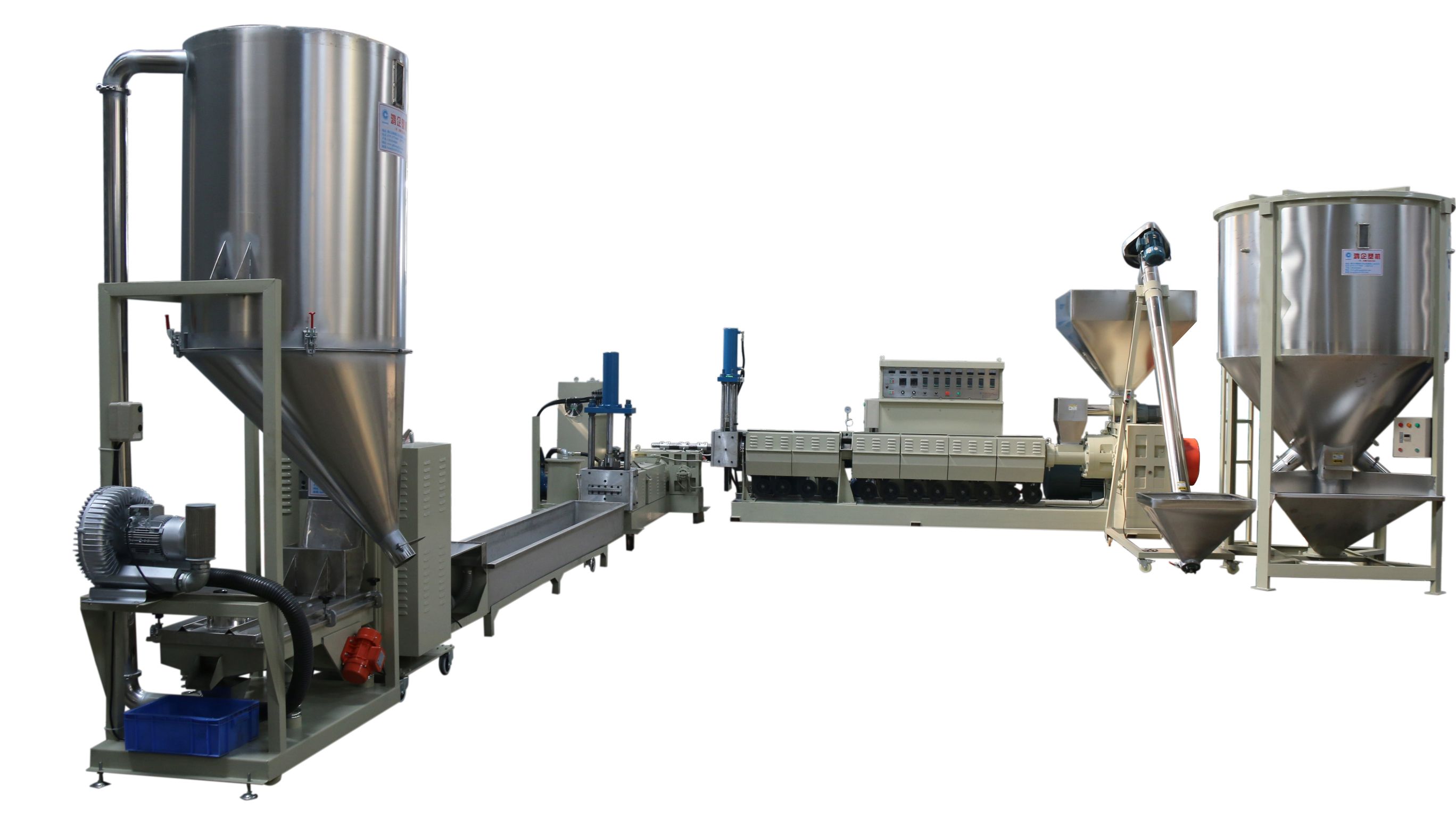
This is why experienced buyers usually evaluate extrusion lines as complete production systems rather than simple equipment purchases. In pelletizing and compounding projects, machine structure, temperature control, screw design, cooling, cutting, screening, and maintenance access all influence the final result. Our double-stage pvc pelletizing extrusion line fits naturally into this discussion because it is developed for large-scale PVC granulation where output, stability, and process control matter at the same time.
Why Importing an Extrusion Line Requires More Than Price Comparison
In international sourcing, price is always visible first, but it is rarely the most important factor in the long run. A lower-cost line may still become expensive if output is unstable, wear parts fail too early, or the machine struggles with real production formulas. For manufacturers, recyclers, and industrial buyers, the bigger cost usually comes later through downtime, excess scrap, operator inefficiency, and repeated adjustments.
This is especially true for large-scale lines. Once the equipment is installed, buyers are not just testing one machine. They are committing floor space, labor, utilities, raw materials, and delivery expectations to that line. That is why a serious extrusion purchase should begin with process suitability, not only with initial unit price.
Why Process Matching Matters More Than Catalog Claims
Every extrusion line should be matched to a specific processing target. In PVC pelletizing, that means understanding whether the line can handle the raw material condition, formula complexity, desired pellet quality, and production volume that the buyer actually needs. A machine can look strong in a general specification sheet but still be a poor match if the process design is too narrow.
This is where a double-stage structure becomes more meaningful. A dual-stage extrusion line does more than add one more machine body. It gives the process a second step for refining the melt, stabilizing pressure, and improving degassing and plasticizing consistency. That matters in PVC applications because the material is sensitive to thermal balance, pressure control, and uniform mixing. For buyers working with recycled PVC, blended compounds, or additive-rich formulations, this kind of structure usually offers more real value than a simpler one-stage setup.
Why Output Should Be Evaluated Alongside Stability
Many buyers start by asking how many kilograms per hour a line can produce. That is an important question, but it should never be separated from production stability. High output only has commercial value when the pellets remain uniform, the melt stays controlled, and the machine can keep running without constant correction.
Our line is positioned for around 300 to 350 kilograms per hour, which places it in a practical range for larger PVC pelletizing operations. But the more important point is how that output is supported. The line combines a main extruder, secondary stage, controlled temperature sections, cooling, pellet cutting, and screening into one production flow. For importers and plant managers, that system view is more useful than raw capacity alone because stable throughput is what protects margin in real production.
Why Temperature Control Is One of the Most Important Checkpoints
When importing a PVC extrusion line, temperature control deserves close attention because PVC is more sensitive than many other plastics. If the melt runs too cold, plasticizing becomes incomplete. If it runs too hot, degradation risk rises. In both cases, product quality suffers.
That is why multi-zone temperature control is not just a feature to mention in passing. It is part of the core value of the line. In a well-designed pelletizing system, different barrel sections handle different parts of the process, from feeding to melting to pressure stabilization. Our line uses five-point temperature control on the main extruder and three-section control on the second stage, which gives operators more room to build a workable process window rather than relying on broad approximations.
For B2B buyers, this matters because easier process control reduces waste, shortens setup time, and makes the line more manageable when raw materials shift from batch to batch.
Why Dual-Stage Design Helps in Real PVC Production
A double-stage extrusion line is especially useful when buyers need more complete plasticizing and better control over gases, pressure, and melt uniformity. In PVC pelletizing, that second stage can reduce fluctuations that often appear in simpler lines, especially when the formula is complex or the feedstock is not perfectly uniform.
The practical benefit is not only technical. It is commercial. Better melting and degassing usually translate into more regular pellets, fewer defects, and less variation in downstream use. When the final granules are intended for pipes, profiles, wires, cables, or injection-molded PVC parts, consistency becomes even more important because the pellets are only one step in a larger manufacturing chain.
For importers and production buyers, this means the line should be judged by how it supports the buyer’s finished product goals, not only by whether it can extrude material at all.
Why Wear Resistance and Material Choice Affect Long-Term Value
Large-scale extrusion lines run under heavy mechanical load. Over time, screws, barrels, blades, and related parts face wear from friction, pressure, fillers, and repeated operation. This is why the material used in the screw and barrel system should be checked carefully during sourcing.
Our line uses SACM-1 for key screw and barrel parts, with alloy coating and hard chrome plating. That matters because wear resistance is directly connected to long-term process stability. A line with weak core materials may still run well at the beginning, but once wear changes the plasticizing and conveying conditions, production quality becomes harder to maintain.
For project buyers and factory owners, this is one of the clearest examples of why total ownership cost matters more than initial purchasing cost.
Why Cooling, Cutting, and Screening Should Never Be Treated as Secondary
Some buyers focus heavily on the main extruder and pay less attention to the downstream sections. In real pelletizing work, that is a mistake. Cooling, cutting, and screening directly affect the shape, temperature, and uniformity of the final granules. If these stages are weak, even a good extrusion section cannot fully protect product quality.
This is why the full line deserves attention. A stainless steel cooling water tank, stable suction support, properly powered pellet cutter, durable blades, and a reliable multi-layer vibration screening system all contribute to pellet quality and process efficiency. Buyers who evaluate the whole downstream section usually make stronger sourcing decisions because they understand that pellet quality is built across the line, not at only one machine point.
Why Degassing and Pressure Stability Matter in PVC Pelletizing
PVC processing often demands better control of moisture, trapped gas, and melt pressure than some buyers first expect. If gases are not removed efficiently, defects such as bubbles, weak pellets, or unstable strand formation can appear. Pressure variation can also reduce pellet consistency and complicate downstream handling.
This is one reason a dual-stage line is easier to position for demanding applications. The secondary stage helps refine the melt and gives the line more control over pressure and degassing. For recycling plants and compounders, this can be a major advantage because feed quality is not always perfectly stable. A line that tolerates real-world variation more effectively is often more profitable over time than one that only performs well under ideal conditions.
Why Lead Time and Delivery Planning Matter More Than Many Buyers Expect
Importing a large-scale extrusion line is not a small accessory purchase. Delivery planning affects plant scheduling, utility preparation, installation timing, labor planning, and raw material readiness. If lead time is uncertain, the buyer may face delayed production launch or unnecessary idle investment.
Our line is listed with an average lead time of one to two months, which gives buyers a more realistic planning basis than vague delivery promises. But beyond the calendar itself, what matters is whether the supplier can coordinate manufacturing, testing, shipment, and technical communication in an orderly way. For importers and engineering buyers, supplier coordination is often just as important as machine specification.
Why Application Range Matters for Future Business Flexibility
A strong extrusion line should not be evaluated only for one current order. Buyers often benefit from checking how widely the line can support future business development. If the equipment can handle different grades of PVC, recycled input, and multiple application directions, it becomes easier to protect long-term investment.
Our line is positioned for recycled PVC, PVC blends, hard and soft PVC, and downstream pellet use in pipes, profiles, cables, building materials, electrical products, and automotive-related applications. That wider application logic matters because it gives buyers more production flexibility. For a solution provider, wholesaler, or manufacturing investor, broader adaptability usually means stronger long-term value.
Why Supplier Capability Matters as Much as Machine Design
An extrusion line is not only a machine. It is also a project. Buyers often need support in model selection, material matching, plant layout logic, maintenance planning, and Spare Parts understanding. If the supplier only sells equipment but cannot discuss process suitability clearly, the risk rises after installation.
This is where serious B2B buyers become more selective. They want a supplier that understands production targets, not only hardware names. They also want clearer communication about warranty, commercial terms, replacement parts, and process configuration. A supplier that can support those discussions usually creates more confidence for importers, recyclers, and industrial buyers who are making a long-term equipment decision.
Conclusion
When importing a large-scale extrusion line from China, the most important thing is not finding the cheapest offer. It is finding a line that matches your material, output target, pellet quality requirement, and long-term operating plan. Temperature control, dual-stage plasticizing, wear resistance, degassing, downstream pelletizing, delivery planning, and supplier capability all deserve close attention before the order is placed.
Our double-stage PVC pelletizing extrusion line fits well into that evaluation process because it combines practical output, dual-stage process control, multi-zone temperature management, durable screw and barrel materials, and a complete pelletizing flow designed for PVC production and recycling. For manufacturers, project buyers, and industrial importers, this creates a more workable solution than a machine chosen only by price.
If you are reviewing extrusion line options for PVC pelletizing, recycling, or compound production, feel free to contact us. We can help you discuss material conditions, output expectations, and line configuration so you can choose a solution that is easier to run, easier to maintain, and better suited to long-term production.