If you walk through a plastic factory, you’ll notice one thing quickly—there is always material that doesn’t go straight into final products. It might be edge trim, rejected parts, powder residue, or crushed scrap. None of it is useless, but none of it is easy to reuse in its raw form either.
That is where granulation comes in. It takes material that is difficult to handle and turns it into something that can go back into production without causing trouble. For many factories, this step is not optional. It is what makes recycling inside the workshop actually work.
It Solves A Very Practical Problem On The Shop Floor
Loose plastic waste is unpredictable. It feeds unevenly, melts inconsistently, and often creates unstable output if it is used directly. Operators end up spending more time adjusting machines than running them.
Granulation changes that. Once the material is converted into pellets, feeding becomes smoother and more controlled. The process becomes easier to repeat. The same material that was once a problem becomes something usable again.
This is why many production teams do not see granulation as a separate process. They see it as part of keeping the whole line stable.
It Makes recycled Material Usable Again
Recycling only works when the material can actually go back into production. Without granulation, that step is often incomplete. Scrap may exist, but it cannot be used efficiently.
When the material is turned into granules, it becomes easier to store, transport, and blend with virgin material. That makes it much more practical for real production use. In many factories, this is what allows internal recycling to become part of daily operation instead of an occasional effort.
This is especially important for plants working with ABS, PP, PE, PET, or engineering plastics, where material cost and consistency both matter.
Smaller Granulation Lines Still Play An Important Role
Not every factory needs a large system. In many cases, a smaller output line fits the job better. Labs, trial production, and smaller workshops often need controlled output rather than maximum capacity.
A compact granulation setup allows operators to test materials, adjust formulations, and recover in-house waste without overloading the system. It also fits more easily into existing production space.
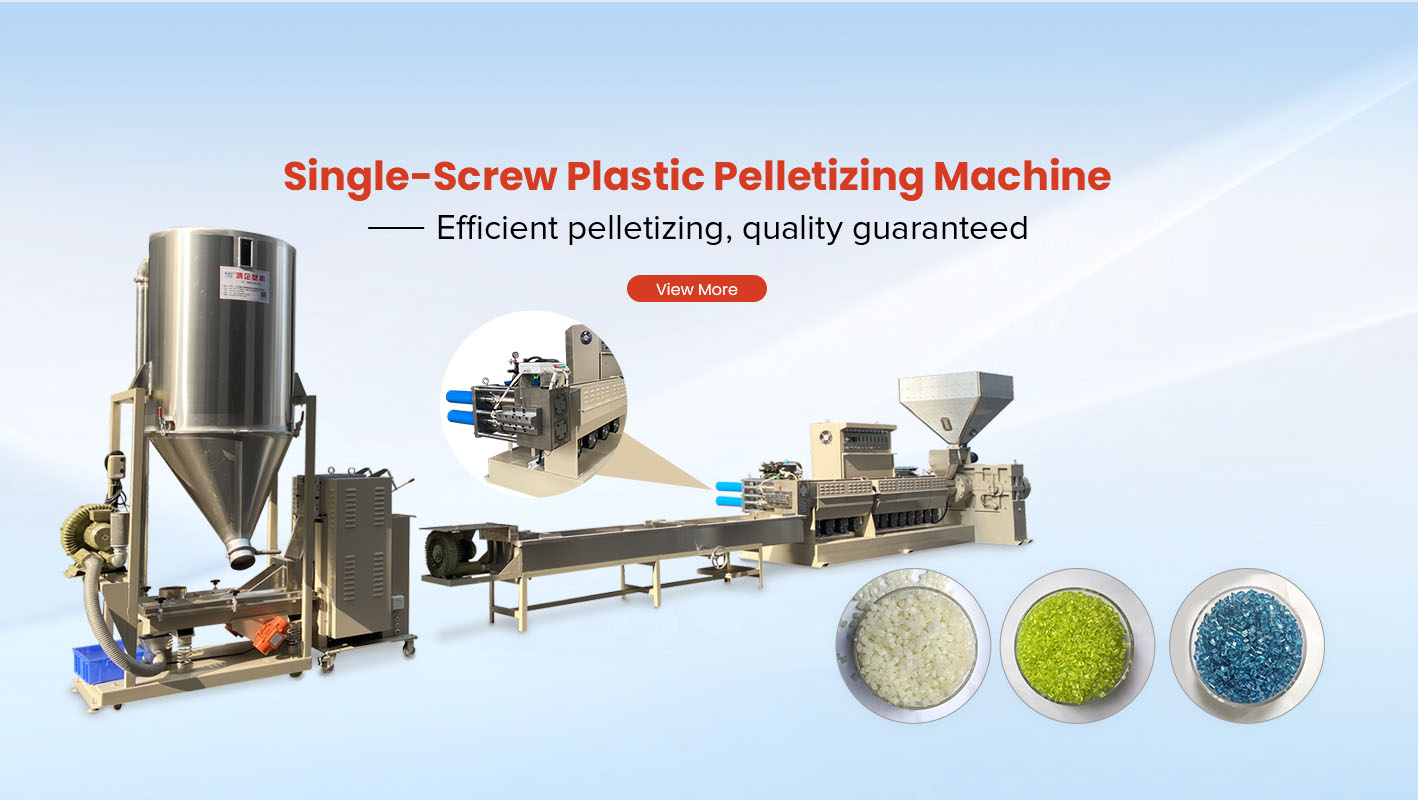
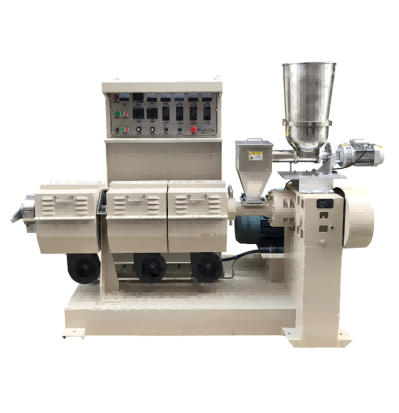
The machine line here follows that idea. It is designed for smaller output ranges, making it suitable for lab work, sample production, and small-scale recycling where flexibility matters more than sheer volume.
It Helps Reduce Material Cost Without Complicating Production
Material waste is one of the quiet costs in plastic processing. It builds up over time, especially in continuous production environments. Without a proper way to reuse it, that cost is simply absorbed.
Granulation creates a path to bring that material back. Once it is processed into pellets, it can be reused in a controlled way instead of being treated as loss.
For many buyers, this is not just about saving material. It is about making production more efficient without adding unnecessary complexity. A well-matched granulation setup should fit into the workflow, not disrupt it.
Stability Matters More Than Output Alone
When buyers look at granulation equipment, output is usually the first number they ask about. But in real use, stability matters just as much.
If the pellets are inconsistent, the next process becomes harder. If the machine is difficult to control, operators lose time. If the setup does not match the material, the result is unpredictable.
That is why many experienced buyers spend more time discussing material type, feeding method, and process matching than just looking at capacity. A smaller machine that runs smoothly is often more valuable than a larger one that is harder to manage.
Why An Industrial plastic granulator Is Still Relevant In Smaller Operations
The term industrial plastic granulator often sounds like something designed only for large factories. In reality, the same principle applies across different scales.
Even a small workshop benefits from having a reliable way to turn scrap into reusable pellets. What changes is not the need, but the size of the solution.
A compact system can still deliver the same core value—turning unstable material into something usable—while fitting better into limited space and more controlled production environments.
Buyers Usually Think About The Long Term
Granulation equipment is not something that gets replaced often. Once it is installed, it becomes part of the daily process. That is why buyers tend to look beyond the first purchase.
They consider how easy the machine is to run, how it handles different materials, and whether it can adapt if production changes later. They also look at support—how quickly parts can be replaced, how easily the system can be adjusted, and whether the supplier understands the application.
In many cases, this is where OEM or ODM-style support becomes useful. It is not always about redesigning the whole machine. Sometimes it is about small adjustments that make the equipment fit better into a specific workflow.
Granulation Connects Waste Back To Production
At its core, granulation is about closing a loop. It takes material that would otherwise sit outside the process and brings it back in a form that can be used again.
That is why it remains a necessary step in so many factories. Without it, recycling is limited. With it, production becomes more flexible and more efficient.
Conclusion
So, why is granulation necessary? Because it turns irregular plastic waste into a form that can actually be reused in production. It improves feeding, stabilizes processing, and helps reduce material loss without making the workflow more complicated.
For many factories, a smaller granulation setup is often enough to solve real problems on the shop floor, especially when it matches the material and output needs.
If you are looking at how to handle in-house plastic waste, or trying to make your production more efficient without adding unnecessary complexity, it may be worth discussing your material type and output expectations first. From there, it becomes much easier to see what kind of granulation setup makes sense.