In the world of plastic extrusion, choosing the right machine is one of the most important decisions a manufacturer will make. Whether you are producing film, profiles, pellets, or sheets, your choice between single screw and twin screw extruders will directly affect production speed, energy consumption, material quality, and long-term profitability. Both types of extruders are widely used across industries, but each serves a distinct purpose based on processing requirements, material type, and output goals. This guide breaks down their key differences, working principles, advantages, and ideal applications to help you make the most suitable investment for your production line.
1. Understanding the Basics of Plastic Extrusion
Plastic extrusion is a continuous manufacturing process where thermoplastic materials are melted, homogenized, and forced through a die to form a specific shape. The plastic extruder machine acts as the heart of this process, and its performance determines product consistency and efficiency.
How an Extruder Works
At its core, the extruder operates on a simple principle:
Feeding – Plastic pellets or powders are fed into the hopper.
Melting – The rotating screw(s) push the material forward while heaters melt it.
Mixing – The molten plastic is homogenized to ensure uniform temperature and composition.
Shaping – The material is forced through a die to form sheets, films, pipes, or profiles.
Cooling & Cutting – The extrudate is cooled and cut to the desired length or shape.
The Role of Screw Design
The screw is the most critical part of the extruder. It determines how efficiently the raw materials are melted and mixed.
The screw’s rotation speed, compression ratio, and design geometry influence:
2. Single Screw Extruder: Simplicity and Efficiency
Working Principle
A single screw extruder relies on one rotating screw to convey and melt materials. It operates under the principle of friction and heat transfer. As pellets move through the screw channel, mechanical shear and external heaters melt them into a viscous flow.
Key Advantages
| Feature | Description |
|---|
| Simplicity | The structure is straightforward, making it easy to operate, clean, and maintain. |
| Cost Efficiency | Lower initial investment and operational cost compared to twin screw extruders. |
| Stable Output | Provides consistent performance for standard thermoplastics like PE, PP, PS, and PVC. |
| Energy Saving | Fewer moving parts lead to less power consumption and reduced maintenance downtime. |
| Long Service Life | Fewer wear components mean the machine can operate continuously for years with minimal servicing. |
Limitations
However, single screw extruders also have constraints:
Limited ability to mix multiple materials or additives uniformly.
Not suitable for reactive or heat-sensitive compounds.
Difficult to handle materials with high filler content or unstable viscosity.
Ideal Applications
A single screw extruder is the best fit when you need to process standard thermoplastic polymers without complex formulations. Typical applications include:
Relevance to Modern Manufacturing
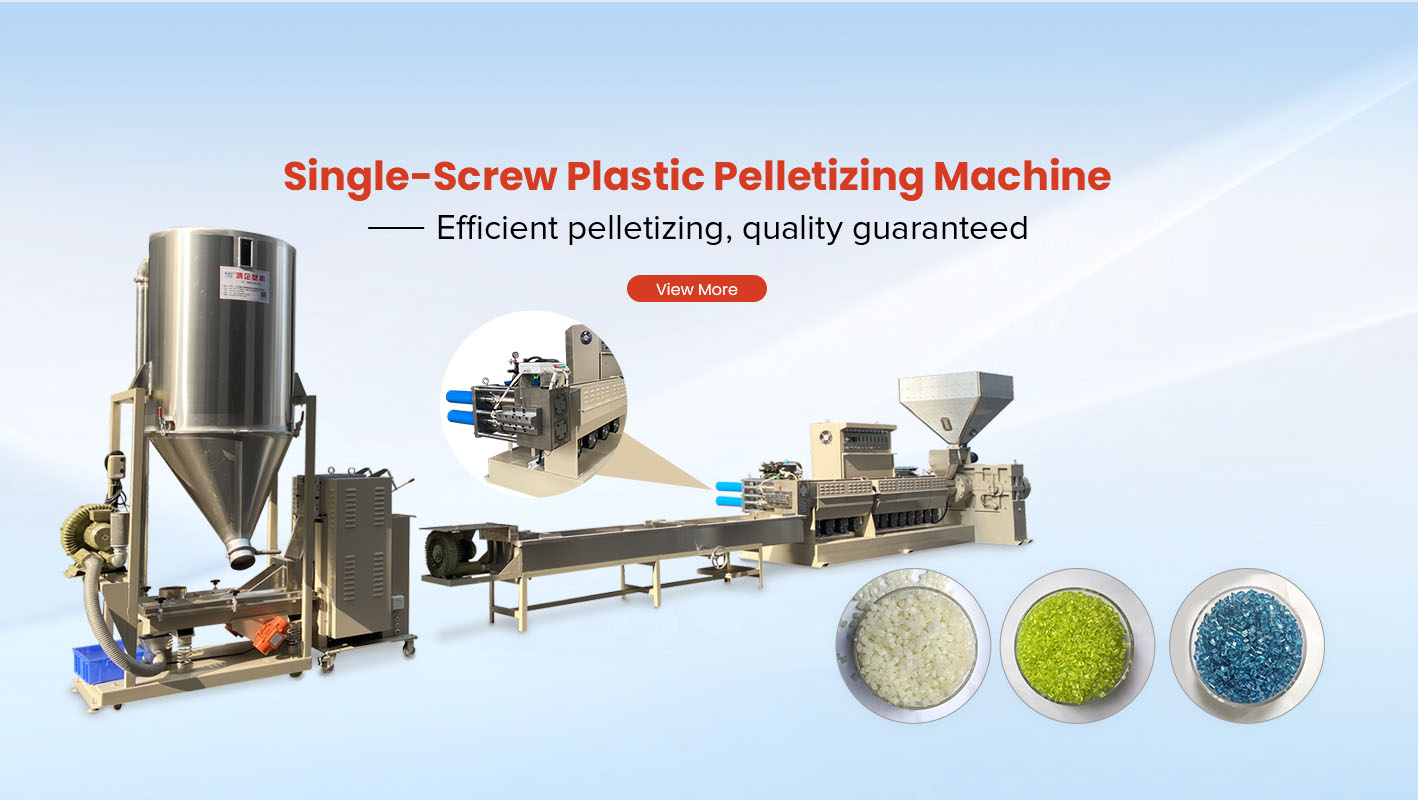
At Hongli Energy’s extrusion machinery division, our plastic extruder machines are designed with advanced temperature control and precision screw geometry to ensure high output rates and stable operation. These single screw systems are popular among small and medium-scale producers due to their reliability and cost-effectiveness.
3. Twin Screw Extruder: Power and Versatility
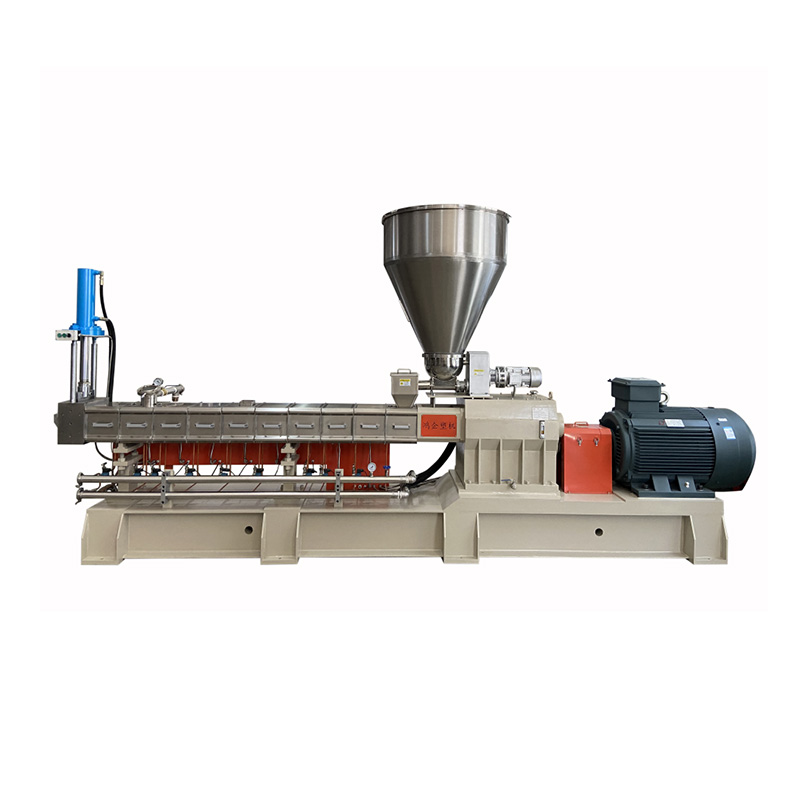
A twin screw extruder integrates two screws that rotate either in the same direction (co-rotating) or opposite directions (counter-rotating). This design provides higher shear mixing, greater process flexibility, and better material distribution.
Working Principle
Twin screw extruders use two synchronized screws within the barrel, which can be intermeshing or non-intermeshing. The intermeshing type provides intensive mixing and self-cleaning effects. Material moves through zones designed for feeding, melting, mixing, venting, and shaping.
Advantages of Twin Screw Design
| Advantage | Explanation |
|---|
| Superior Mixing Ability | Perfect for blending multiple materials, additives, and colorants evenly. |
| Precise Temperature Control | Each segment can be independently heated or cooled, preventing material degradation. |
| Self-Cleaning Function | Intermeshing screws scrape material off each other, reducing residue and downtime. |
| High Output Consistency | Excellent dispersion ensures consistent density, color, and performance. |
| Flexible Operation | Capable of compounding, devolatilization, reactive extrusion, and other advanced processes. |
Types of Twin Screw Extruders
Co-rotating twin screw extruder – Both screws rotate in the same direction. Ideal for compounding, masterbatch, and high-performance plastic formulations.
Counter-rotating twin screw extruder – Screws rotate in opposite directions. Commonly used for PVC pipe, sheet, and profile extrusion where high pressure and low shear are required.
Typical Applications
Twin screw extruders are widely used in high-end applications, including:
Plastic compounding and blending
Masterbatch production
Biodegradable material extrusion
Filling and reinforcement with glass fiber or calcium carbonate
Reactive extrusion (e.g., polymer grafting or crosslinking)
Material Compatibility
Twin screw extruders handle a broader range of polymers and fillers:
| Material Type | Example | Processing Benefit |
|---|
| Thermoplastics | PE, PP, PET | Smooth, uniform melting |
| Thermosets | Epoxy, phenolic | Precise temperature zoning |
| Elastomers | TPU, TPE | High shear dispersion |
| Biopolymers | PLA, PBS | Controlled thermal exposure |
| Filled Compounds | CaCO₃, Talc | Even distribution and stabilization |
4. Choosing Between Single Screw and Twin Screw Extruders
Selecting the right extruder depends on the nature of your product, raw material composition, budget, and production goals. Below is a comparative overview to guide decision-making:
Comparison Table
| Criteria | Single Screw Extruder | Twin Screw Extruder |
|---|
| Structure | Simple, single rotating screw | Complex, two rotating screws |
| Mixing Capacity | Moderate | Excellent |
| Material Types | Best for pure thermoplastics | Suitable for blends and composites |
| Operation Cost | Low | High (more components and power) |
| Maintenance | Easy and inexpensive | Requires expertise and more maintenance |
| Output Consistency | Stable for standard materials | Very consistent even with complex formulations |
| Applications | Film, pipe, sheet, recycling | Compounding, masterbatch, reactive extrusion |
| Energy Consumption | Lower | Higher but more efficient for mixing |
| Flexibility | Limited | Highly versatile |
| Investment Level | Affordable | Higher initial cost |
Key Decision Factors
To make an informed choice, consider:
Material Type – Use a single screw for simple thermoplastics; choose twin screw for multi-component blends or fillers.
Process Complexity – If your product requires precise control over temperature and composition, twin screw is ideal.
Production Volume – For large-scale compounding or continuous operations, twin screw extruders deliver consistent output.
Budget and Maintenance – Small and medium enterprises often prefer single screw extruders due to lower investment and easier handling.
End Product Requirements – Evaluate surface finish, dimensional accuracy, and strength to match extruder type.
Integration with Modern Production Lines
Advanced manufacturers like Hongli Energy provide customizable extruder machines equipped with:
Variable frequency drive systems
Precision temperature control
High torque motors for stable output
Optional vacuum venting and pelletizing modules
These features enable processors to upgrade production flexibility without sacrificing cost control. Whether it’s a single screw or twin screw system, both can be configured to meet unique extrusion needs for film, sheet, granule, or coating lines.
Conclusion
The debate between single screw and twin screw extruders isn’t about superiority but suitability. Each has its own set of strengths tailored to specific production requirements.
Single screw extruders stand out for their simplicity, lower cost, and reliable output, ideal for standard plastics and recycling.
Twin screw extruders excel in mixing complexity, process flexibility, and high-performance material processing.
For manufacturers aiming to achieve the right balance between efficiency, quality, and investment, understanding these distinctions ensures long-term competitiveness in the plastic extrusion market.
At Hongli Energy, our plastic extruder machines are engineered to meet diverse industrial demands. Whether you require a single screw system for high-volume film production or a twin screw line for advanced compounding, we provide tailor-made solutions backed by precision engineering and strong technical support — helping you produce better, faster, and smarter.