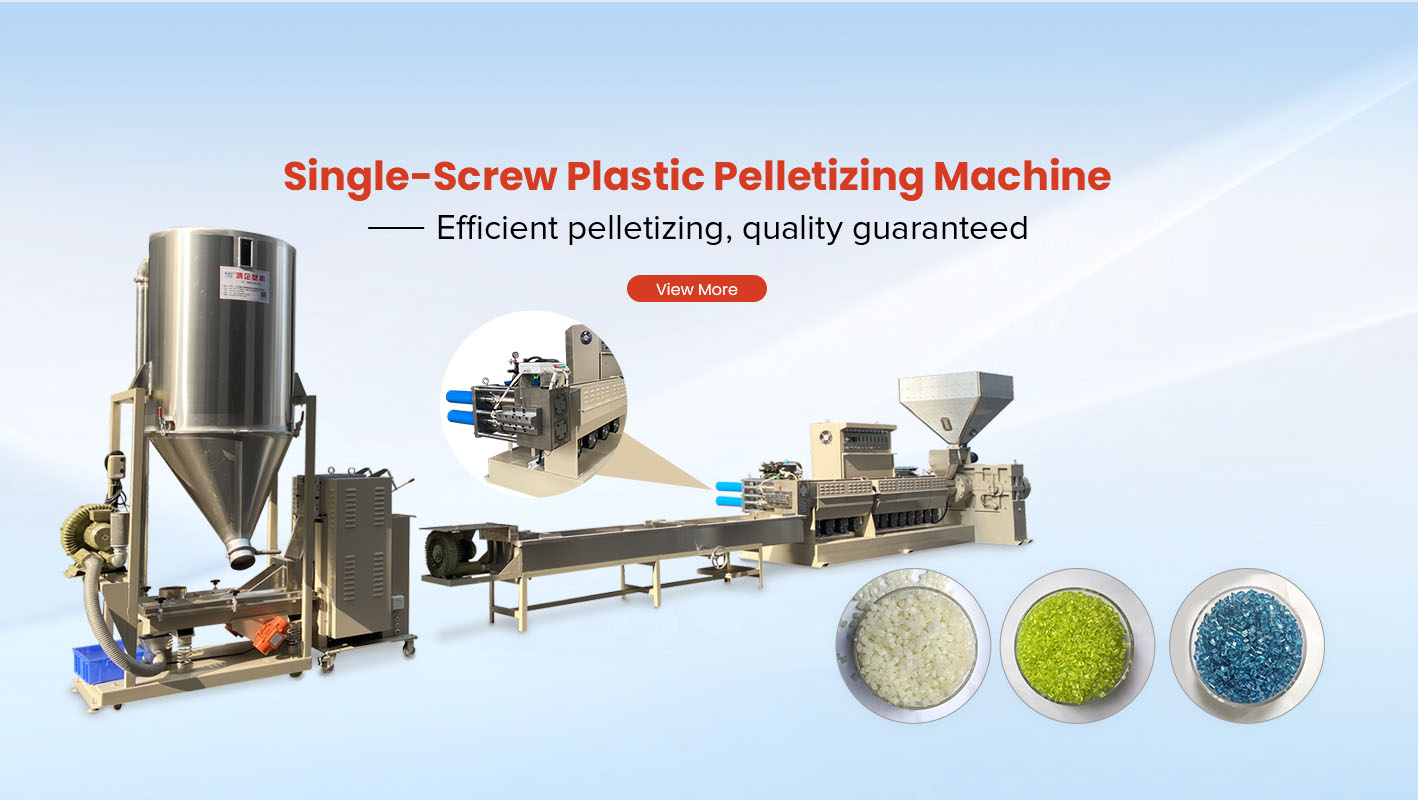
A ribbon blender is one of the most widely used industrial mixing machines due to its efficiency, uniform blending capability, and adaptability to different types of powders, granules, and low-viscosity materials. Industries such as plastics, chemicals, food processing, pharmaceuticals, and construction rely heavily on this machine because it delivers fast, repeatable mixing results with low operating costs. Understanding why a ribbon blender is beneficial helps manufacturers choose the right equipment for consistent quality and productivity.
In the plastics and compounding industry, machines like the HONGQI plastic color mixer play an essential role in preparing pigments and additives before extrusion or molding. You can explore the product here: HONGQI Plastic Color Mixer Machine. The working principles of a ribbon blender directly relate to how colorants, resins, and granules need to be handled. This makes the ribbon blender a preferred solution across various production environments.

1. How a Ribbon Blender Works
A ribbon blender uses a U-shaped horizontal trough with a central shaft mounted with spiral mixing blades. These blades—known as inner and outer ribbons—rotate simultaneously to push materials in opposite directions. The outer ribbon moves material toward the center, while the inner ribbon pushes material outward. This counter-flow movement creates a continuous, efficient mixing pattern.
The objective of this dual-motion design is to ensure that no material stays stagnant. Every particle, from the heaviest granule to the finest powder, is constantly being shifted, lifted, and folded. This is why ribbon blenders achieve uniform mixtures even when materials differ in density, shape, or size.
A key reason industries choose ribbon blenders is that the mechanism works well without requiring high speeds or excessive power. The slow yet powerful movement protects delicate materials from degradation and reduces heat generation during mixing. For manufacturers handling color granules, masterbatch, or plastic additives—such as users of HONGQI mixers—this stable mixing environment is ideal.
2. Advantages of Using a Ribbon Blender
Ribbon blenders are favored for several reasons that relate directly to performance, efficiency, and ease of operation. Their versatility and simple structure allow businesses to incorporate them into a wide variety of production lines.
Key advantages include:
Uniform Mixing Quality
The dual-ribbon structure ensures consistent blending with minimal variation in particle concentration across the batch.
Short Mixing Time
Because of the efficient counter-flow movement, most mixtures reach uniformity in a short period, improving productivity.
Low Energy Consumption
Ribbon blenders rely on slow rotational speed, resulting in reduced energy usage compared to high-speed mixers.
Adaptability
They can handle powders, granules, flakes, pellets, and small amounts of liquid additives.
Scalable Design
Available in both small and large capacities, they fit operations ranging from small labs to large manufacturing plants.
Easy Cleaning and Maintenance
The open-top structure and simple internal components simplify maintenance and cleaning processes.
Many of the functional characteristics of ribbon blenders align closely with the goals of plastic color mixing. For example, HONGQI’s color mixer relies on controlled agitation to prevent pigment separation or inconsistent blending. Ribbon blending principles match perfectly with such requirements.
3. Applications Across Different Industries
Ribbon blenders are used in many industries because their motion pattern suits a wide range of materials. The following table summarizes common applications and reasons ribbon blenders are chosen for each sector:
| Industry | Materials Mixed | Why Ribbon Blender is Preferred |
|---|
| Plastics | Color powders, resins, granules, additives | Gentle mixing, uniform color distribution, low heat generation |
| Chemicals | Fertilizers, detergents, catalysts | Handles powders with varying density and flow properties |
| Food Processing | Flour, spices, sugar blends, drink powders | Hygienic design, precise ingredient distribution |
| Pharmaceuticals | Fine powders, excipients, medicinal additives | Consistent mixing required for dosage accuracy |
| Construction | Cement powder, dry mortar, gypsum blends | Large capacity and low energy consumption |
The plastic industry particularly benefits from ribbon blending technology. Manufacturers who prepare pigments, additives, and granules—using machines like the HONGQI plastic color mixer—rely on stable mixing patterns to ensure that every pellet or powder particle carries the correct concentration of colorant.
Ribbon blenders provide that uniformity, making them a foundational machine for material preparation before pelletizing, extrusion, injection molding, or compounding.
4. Efficiency, Capacity, and Production Advantages
Ribbon blenders excel in production environments where both batch consistency and output volume matter. Their simple structure accommodates large capacity without affecting mixing quality. This is a significant advantage for busy manufacturing lines.
One important factor is batch uniformity. Ribbon blenders achieve this through simultaneous radial, axial, and transverse mixing. Because materials are continuously moving in opposite directions, the final product achieves a high level of homogeneity even when additives make up a very small percentage of the mix.
Efficiency advantages include:
Predictable Batch Cycles
The mixing time is consistent, which allows manufacturers to schedule production more accurately.
High Load Capacity
Ribbon blenders can operate efficiently even when filled up to 70–80% of their total volume.
Low Operational Cost
Fewer moving parts and slow-speed operation reduce wear and maintenance expenses.
Minimal Heat Generation
Ideal for materials sensitive to thermal changes, including many plastic colorants.
Many of these benefits translate directly into better mixing outcomes when using color preparation equipment such as the HONGQI mixer. Uniform output reduces the chance of visual defects in finished plastic products, improves extrusion stability, and enhances production yield.
5. Maintenance, Safety, and Cleaning Simplicity
Another major reason to use a ribbon blender is the simplicity of maintenance. Compared to high-shear mixers or vertical screw mixers, ribbon blenders feature fewer mechanical components, resulting in fewer breakdowns and easier repairs. This significantly lowers long-term operating costs.
Cleaning is also straightforward, which is an essential factor for industries where cross-contamination must be avoided—such as plastics and food processing. The U-shaped trough is accessible, and the ribbons can be brushed or washed without special tools.
Routine maintenance tasks include:
Checking the drive system for lubrication
Inspecting seals to prevent leakage
Tightening bolts and clamps
Cleaning ribbon surfaces after each batch
Monitoring electrical connections
Removing leftover powders from corners to avoid buildup
Ribbon blenders are also known for safe operation. Their slow rotational speed reduces the risk of overheating or causing airborne dust. Additionally, optional safety covers can prevent accidental contact during operation.
In environments where masterbatch or color powder is prepared—such as with the HONGQI plastic color mixer—reliable cleaning and safety help maintain consistent product quality and operational stability.
6. Why Choose Ribbon Blending for Plastic Color Mixing
For plastic processors working with pigments, additives, and granules, ribbon blenders provide the balance of gentle handling and thorough mixing that these materials require. Coloring materials must be evenly distributed throughout the base plastic to achieve consistent visual results. Ribbon blenders accomplish this without damaging the physical structure of the material.
In addition:
The gentle ribbon movement helps maintain particle shape, crucial for granules and pellets.
Uniform mixing prevents streaks, color patches, or uneven distribution during molding.
Fast blend times reduce production downtime.
Ribbon blenders can combine powders with small liquid additions, making them useful for preparing modified materials.
When used alongside high-quality equipment such as the HONGQI Plastic Color Mixer Machine, ribbon blending becomes even more efficient. The mixer ensures even distribution, supports consistent extrusion results, and helps manufacturers maintain stable product quality batch after batch.
Conclusion
Ribbon blenders are widely used because they are versatile, efficient, and capable of producing uniform mixtures across large batches. They are suitable for powders, granules, and low-viscosity materials across industries ranging from plastics to pharmaceuticals. Their slow-speed mixing mechanism prevents heat buildup, reduces energy consumption, and protects the integrity of delicate materials.
For manufacturers in the plastics industry, ribbon blenders are especially valuable due to their ability to create consistent color mixtures and additive blends. When paired with reliable equipment like the HONGQI plastic color mixer, companies can achieve high-quality results, improve production efficiency, and maintain stable material characteristics.
Ribbon blenders are an essential investment for any operation requiring uniform mixing, predictable output, and long-term durability.