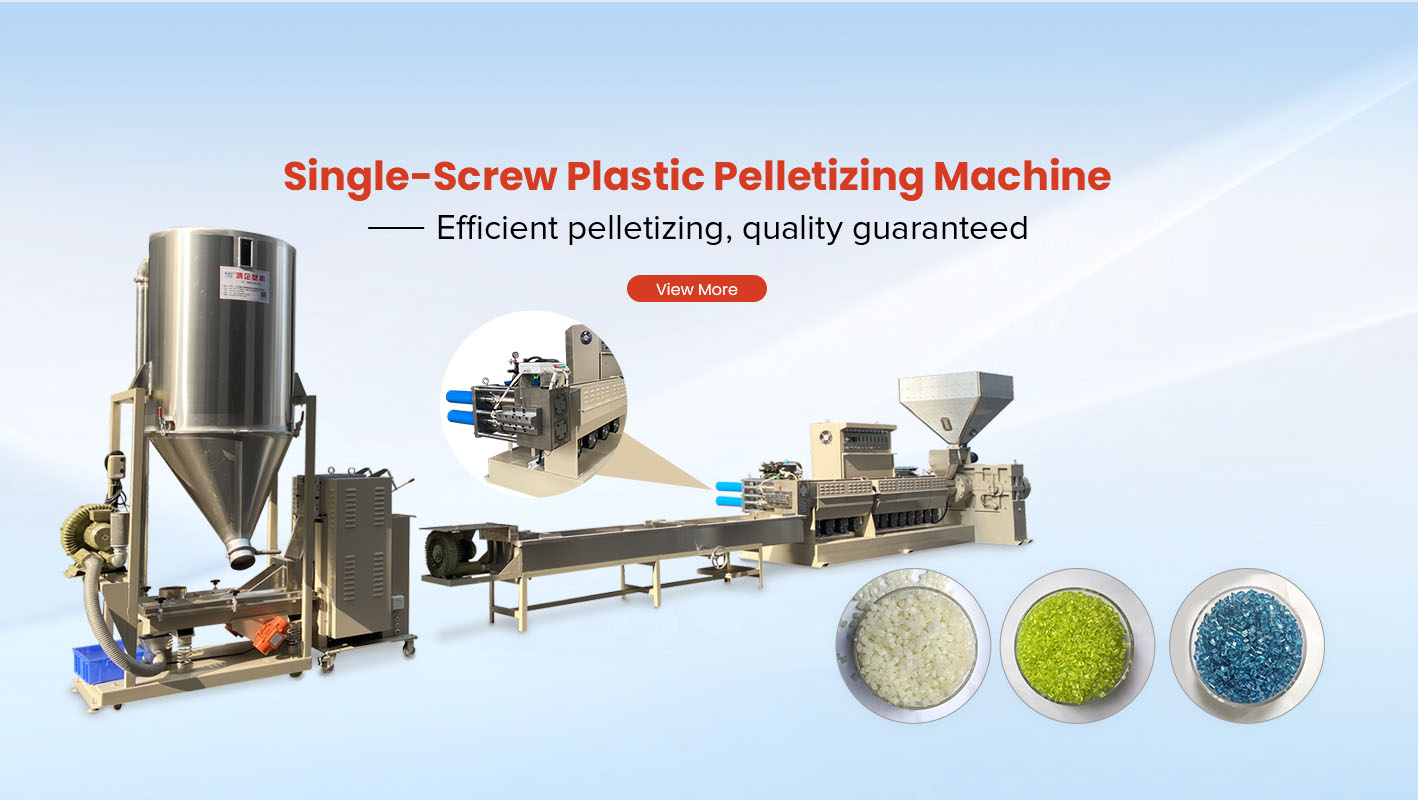
In the plastic compounding and extrusion industry, pelletizing is a crucial step for converting molten polymer into uniform, transportable pellets. Two major pelletizing systems dominate the field: underwater pelletizers and Strand Pelletizers. Although both systems serve the same core purpose, they operate using entirely different mechanisms, cooling methods, and production flows. Their differences greatly influence pellet shape, consistency, production efficiency, and suitability for various polymers. Understanding these distinctions helps manufacturers choose the pelletizing method that matches their production capacity, material characteristics, and quality requirements. For companies seeking precision and reliable performance, equipment like HONGQI’s strand pelletizer provides stable cutting for numerous thermoplastic applications.
Differences Between Underwater Pelletizer and Strand Pelletizer
Underwater pelletizing and strand pelletizing represent two contrasting approaches: one cuts pellets directly in water at the die face, while the other cools polymer strands in air or water before cutting. Their structure, process flow, and output characteristics differ significantly.
1. Pelletizing Method and Cutting Position
The most fundamental difference lies in where and how pellets are formed.
Underwater pelletizers cut the melt at the die face inside a water-filled chamber. The polymer exits the die holes and is immediately sliced into pellets while submerged. The water both forms and cools the pellets instantly.
strand pelletizers, on the other hand, extrude continuous strands that travel along an air-cooled or water-cooled channel. These strands are conveyed to a pelletizer where rotating knives cut them into uniform lengths.
This contrast in workflow directly affects pellet shape, temperature control, and the type of polymers each machine can process.
2. Cooling Method
Underwater systems rely on immediate water quenching. Because pellets are cut directly underwater, they cool rapidly and solidify within seconds. This rapid cooling is ideal for heat-sensitive materials and high-throughput applications.
Strand systems use either air cooling or water baths before drying. The strands must maintain structural integrity throughout the cooling pathway, making the method more suitable for polymers that can be drawn into stable strands without breaking.
The cooling difference is crucial because some materials become too brittle or sticky when pulled into strands, while others benefit from slow cooling.
3. Pellet Shape and Surface Quality
Pellets produced by underwater systems are typically round, smooth, and highly uniform due to the continuous die-face cutting. Their spherical shape offers excellent flow properties during feeding and packaging.
Strand pelletizers produce cylindrical pellets with flat-cut ends. These pellets are consistent in length and widely accepted in compounding, masterbatch, and injection-molding industries.
The desired pellet appearance often depends on downstream processing equipment and feeding requirements.
4. Output Capacity and Production Scale
Underwater pelletizers are well suited to high-capacity operations. Because cutting happens directly at the die, they can handle large production volumes without strand breakage issues.
Strand pelletizers are scalable but have mechanical limits. At very high outputs, strands may break or fail to cool evenly, causing interruption. However, they remain highly efficient for medium-capacity production lines.
HONGQI strand pelletizers are engineered to maintain stable cutting even at elevated speeds, supporting demanding operations without compromising pellet quality.
5. Material Compatibility
Underwater pelletizing is ideal for polymers that do not form stable strands—such as sticky materials, low-viscosity resins, elastomers, and materials prone to deforming before cooling.
Strand pelletizing is excellent for most thermoplastics that can maintain consistent strand shape during cooling. Materials like PP, PE, ABS, PS, PET, and various engineering plastics work exceptionally well in strand systems.
Choosing the wrong system for the material leads to quality issues such as pellet deformation, strand breakage, or inconsistent pellet size.
6. Equipment Design and Maintenance
Underwater pelletizers feature a complex chamber, water system, cutting unit, and drying system. Their maintenance requires regular inspection of the die plate and seals.
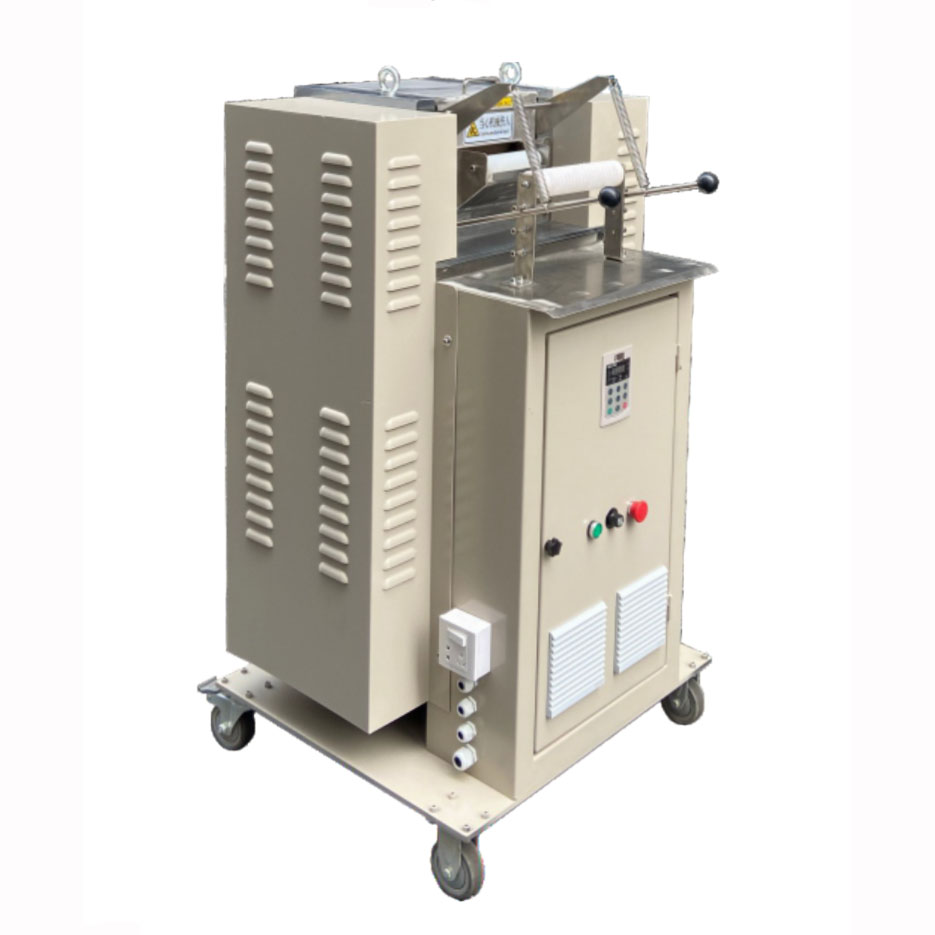
Strand pelletizers are comparatively simpler. They include a feeder, cutting chamber, and conveyor path for strands. Maintenance focuses on knife replacement, roller condition, and consistent feed pressure.
Because of their simpler structure, strand pelletizers are often considered more economical in both operation and upkeep.
Comparison Table: Underwater vs Strand Pelletizing
| Feature | Underwater Pelletizer | Strand Pelletizer |
|---|
| Cutting Location | At die face underwater | After cooling strands |
| Cooling Method | Instant water quench | Air/water cooling before cut |
| Pellet Shape | Round, smooth | Cylindrical, flat ends |
| Suitable Materials | Sticky, low-viscosity, elastomers | Most thermoplastics, stable strands |
| Production Capacity | Very high | Medium to high |
| System Complexity | High | Lower |
| Maintenance Needs | More frequent | Simple and economical |
| Typical Use | Large-scale industrial production | Compounding, masterbatch, general plastics |
Advantages of Each System
Both systems have strengths depending on the production goal. Understanding these advantages guides the correct equipment choice.
Advantages of Underwater Pelletizers
Excellent for large production lines
Can pelletize materials that cannot be strand-cut
Produces highly uniform, spherical pellets
Very fast cooling
Continuous operation with minimal strand handling
These advantages attract large chemical producers and resin manufacturers.
Advantages of Strand Pelletizers
Simple installation and maintenance
Lower operational cost
Pellets have stable dimensions suitable for many molding applications
Easy adjustment and cleaning
Ideal for multi-material manufacturing and laboratory use
Strand pelletizers, such as HONGQI’s precision cutting systems, are commonly used in compounding, recycled materials processing, and additive manufacturing environments.
Application Scope of Each Pelletizer
Both pelletizers serve different industrial needs based on processing requirements.
Underwater Pelletizer Applications
Used most often in:
High-volume resin manufacturing
TPU, TPE, and elastomer pelletizing
Sticky or low-viscosity materials
Specialty engineering plastics that deform at high temperature
Strand Pelletizer Applications
Best suited for:
Masterbatch production
Thermoplastic compounding
Recycled-plastic pelletizing
Material testing laboratories
Engineering plastics with stable strand properties
HONGQI strand pelletizers are widely used in these fields due to their consistent cutting accuracy and reliable mechanical structure.
Common Questions About Underwater vs Strand Pelletizers
Manufacturers often have similar concerns when deciding between the two systems. Below are clear explanations to help guide the selection process.
“Which system gives better pellet quality?”
Both give excellent quality, but underwater systems produce smoother, rounder pellets. Strand systems produce clean-cut cylindrical pellets suitable for most manufacturing processes.
“Which is more cost-effective?”
Strand pelletizers are generally more economical due to simpler structure, lower maintenance requirements, and reduced energy consumption. Underwater systems require more components and higher operating costs.
“Can one system replace the other?”
It depends entirely on the material. Materials that cannot maintain strand integrity must be pelletized underwater. Stable thermoplastics can be pelletized in either system, but strand systems usually offer lower cost.
“Which system is easier to maintain?”
Strand pelletizers are easier to clean, repair, and manage. Underwater systems require water pump servicing, chamber cleaning, and die-plate maintenance.
“Which system is better for recycled materials?”
Strand pelletizers are commonly used for recycled plastics because they handle variable viscosities well and offer easy cleaning between batches.
“Does underwater pelletizing reduce dust?”
Yes. Because pellets are cut underwater and cooled instantly, dust generation is minimal. Strand pelletizers may create slight dust during cutting depending on knife sharpness.
The difference between underwater pelletizers and strand pelletizers lies in their cutting method, cooling process, material compatibility, pellet shape, production capacity, and maintenance requirements. Underwater pelletizers are ideal for high-output operations and materials that cannot form strands, producing round pellets through die-face cutting. Strand pelletizers, on the other hand, are simpler, cost-effective systems that create uniform cylindrical pellets, making them suitable for most thermoplastics and compounding applications.
For manufacturers seeking reliable, consistent performance in strand cutting, HONGQI’s strand pelletizer solutions offer durable structure, stable feeding, and precise cutting that supports a broad range of polymer-processing needs. Understanding the strengths and specific applications of each system ensures optimal pelletizing results and efficient production performance.