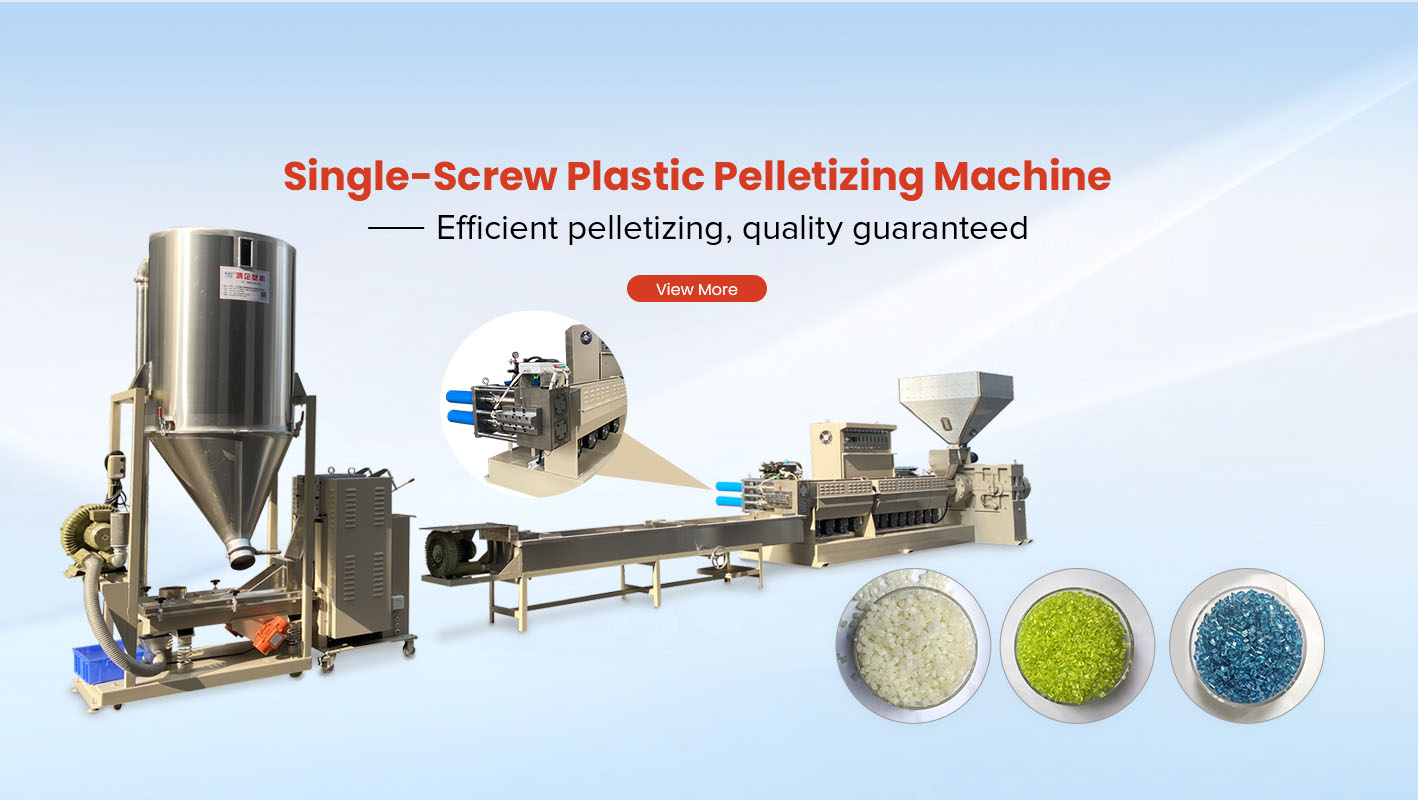
Plastic recycling is a multi-stage industrial process that converts waste plastics into reusable raw materials. As global manufacturing continues to emphasize sustainability and resource efficiency, recycling systems have become essential equipment for factories, compounding companies, plastic processors, and environmental facilities. Each step of the recycling process requires specific machinery—responsible for shredding, washing, separating, melting, pelletizing, and drying.
For businesses seeking stable, complete recycling solutions, HONGQI provides integrated machinery for pelletizing, mixing, de-coating, dewatering, conveying, and screening, all accessible through our product line.
This article explains the primary machines used in plastic recycling and how they function together to transform waste into high-quality pelletized material.
What Machines Are Used to Recycle Plastic?
Recycling plastic involves a sequence of mechanical transformations. The waste must be broken down, cleaned, melted, and reformed into new pellets that can be used for manufacturing. Below is a detailed breakdown of essential machines used in the recycling chain, with explanations of how they work and where HONGQI equipment fits into the process.
1. Shredding and Size-Reduction Machines
The recycling process begins by reducing the size of waste plastic using shredders, crushers, or granulators. These machines break large pieces—such as buckets, electronic casings, pipes, containers, or production scrap—into smaller flakes suitable for further processing.
Size-reduction ensures uniform feeding into washing systems and extrusion machines.
2. Washing and De-Contamination Equipment
After shredding, plastics must be washed to remove labels, dirt, oils, and surface residues. Washing lines typically include friction washers, hot-water tanks, and separation systems.
For coated plastics, an additional step—paint and plating removal—is required. This is where equipment such as HONGQI’s Plastic De-Coating Machine is used. The machine removes paints, sprays, plating layers, and surface coatings, ensuring a purer material stream before pelletizing.
3. Plastic Mixers for Material Preparation
Before melting, different plastic streams may require mixing to stabilize quality and upgrade consistency. Mixers blend recycled flakes with additives or colorants to create uniform feeding material.
HONGQI offers several types of mixers:
Plastic color mixer for pigment blending
Vertical mixer for high-volume dry mixing
Horizontal mixer for multi-material consistent homogenizing
These machines help stabilize melt pressure and produce high-quality pellets.
4. Conveying Systems for Automated Material Flow
Throughout the recycling process, conveyors move plastic flakes, pellets, and feedstock between machines. Screw Conveyors are commonly used due to their ability to transport materials smoothly without clogging.
HONGQI’s screw conveyor ensures stable and continuous feeding into extruders, mixers, or dewatering systems.
5. Dewatering Machines
After washing, the plastic flakes contain water that must be removed before entering the extrusion system. Centrifugal dewatering machines spin the material at high speed to remove surface moisture.
HONGQI’s vertical dewater machine provides rapid water removal, saving drying time and improving production efficiency.
6. Pelletizing Extrusion Machines
Pelletizing is the core stage of plastic recycling. Melted plastic is transformed into uniform pellets through extrusion.
Two main types of extruders are used:
Single-screw pelletizing extruder:
Ideal for stable recycled materials like PE, PP, and PS. Melts, filters, and extrudes material efficiently.
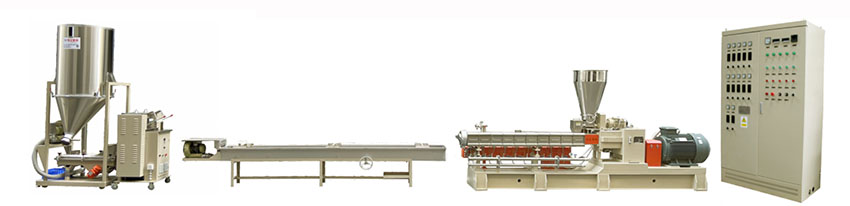
Twin-screw pelletizing extruder:
Used for more complex materials requiring excellent mixing and dispersion (ABS, PC, PA, engineering plastics, composite materials).
These form the heart of the recycling line, converting shredded and cleaned plastic into a molten flow ready for pelletizing.
7. Cooling and Strand Handling Systems
Once extruded, plastic exits the die as continuous strands. These strands are cooled in water troughs or air channels until they solidify. Proper cooling prevents deformation and keeps strands stable for cutting.
8. Pelletizer for Final Cutting
When strands are fully cooled, they enter a pelletizer, where rotating knives cut them into evenly sized pellets.
HONGQI’s Strand Pelletizer is engineered for clean cutting and stable output, ensuring pellet uniformity even at high production speeds.
The pelletizer is a crucial component since pellet dimensions affect feeding performance in downstream molding and extrusion machines.
9. Vibrating Screen for Pellet Sorting
After cutting, pellets need to be screened to remove dust, fines, and oversized pieces. Vibrating screens classify pellets into consistent sizes.
HONGQI’s linear vibrating screen machine improves quality control before final packaging.
10. Final Packaging Systems
Once sorted and dried, pellets are packaged for transport to manufacturers. Packaging may involve automatic weighing, bagging, and sealing systems. The resulting pellet batches are ready to be used for injection molding, extrusion, film blowing, and compounding.
How the Machines Work Together (Process Flow Table)
| Stage | Machine Used | Main Function | HONGQI Equipment |
|---|
| Size Reduction | Shredder / Crusher | Break plastic into flakes | — |
| Surface Cleaning | Washing system | Remove dirt/labels | — |
| De-Coating | Plastic paint removal machine | Strip coatings | Plastic De-Coating Machine |
| Mixing | Vertical mixer / color mixer | Blend materials | Plastic Color Mixer, Vertical Mixer |
| Conveying | Screw conveyor | Move materials between machines | Screw Conveyor |
| Dewatering | Centrifugal dewater machine | Remove water | Vertical Dewater Machine |
| Melting & Extrusion | Single- or twin-screw extruder | Melt and homogenize plastic | Pelletizing Extrusion Machines |
| Cooling | Water trough | Cool strands | — |
| Pelletizing | Strand pelletizer | Cut strands into pellets | Strand Pelletizer |
| Screening | Vibrating screen | Remove fines/oversize | Linear Vibrating Screen Machine |
| Packaging | Bagging system | Prepare pellets for shipment | — |
Common Questions About Our Plastic Recycling Equipment
Below are typical concerns customers raise when selecting recycling equipment. These answers explain key topics without repeating earlier descriptions.
“Which extruder should I choose for recycled plastic?”
Single-screw systems are ideal for simple, stable materials, while twin-screw models are preferred for mixed or engineering plastics where dispersion and melt quality matter.
“Can your equipment handle dirty or coated plastics?”
Yes. By integrating washing systems with HONGQI’s plastic de-coating machine, impurities and coatings can be removed before pelletizing, ensuring clean, high-value pellets.
“Is the system compatible with both rigid and soft plastics?”
Most HONGQI equipment supports PE, PP, ABS, PS, PC, PA, and various engineering plastics. Material compatibility depends on melting temperature, viscosity, and strand behavior.
“Is maintenance complicated?”
No. Machines such as mixers, conveyors, and dewatering systems are designed for easy access. Pelletizers require periodic knife replacement. Overall mechanical designs prioritize simplicity, stability, and low downtime.
“Can I customize the recycling line?”
Yes. HONGQI provides fully configurable solutions, allowing customers to select machine types, capacities, screw designs, strand pelletizers, and Auxiliary Equipment according to their factory needs.
“What is the typical output capacity?”
Capacity varies by model and polymer type, ranging from small laboratory-scale systems to high-output industrial lines. The extrusion system and pelletizer determine the final throughput.
“Do you offer complete recycling solutions?”
Yes. HONGQI specializes in integrated recycling and pelletizing systems, ensuring that all machines—from mixers to pelletizers—fit together smoothly for continuous production.
Summary
Recycling plastic requires a coordinated set of machines: shredders, de-coating systems, mixers, conveyors, dewatering machines, extruders, cooling equipment, pelletizers, and vibrating screens. Each machine plays a critical role in transforming waste plastics into reusable pellets.
With a full line of industrial equipment available through HONGQI, manufacturers can set up stable, efficient, and customizable recycling lines that support high-quality pellet production. By choosing the right machines and integrating them correctly, factories improve yield, reduce waste, and enhance sustainability across the production chain.