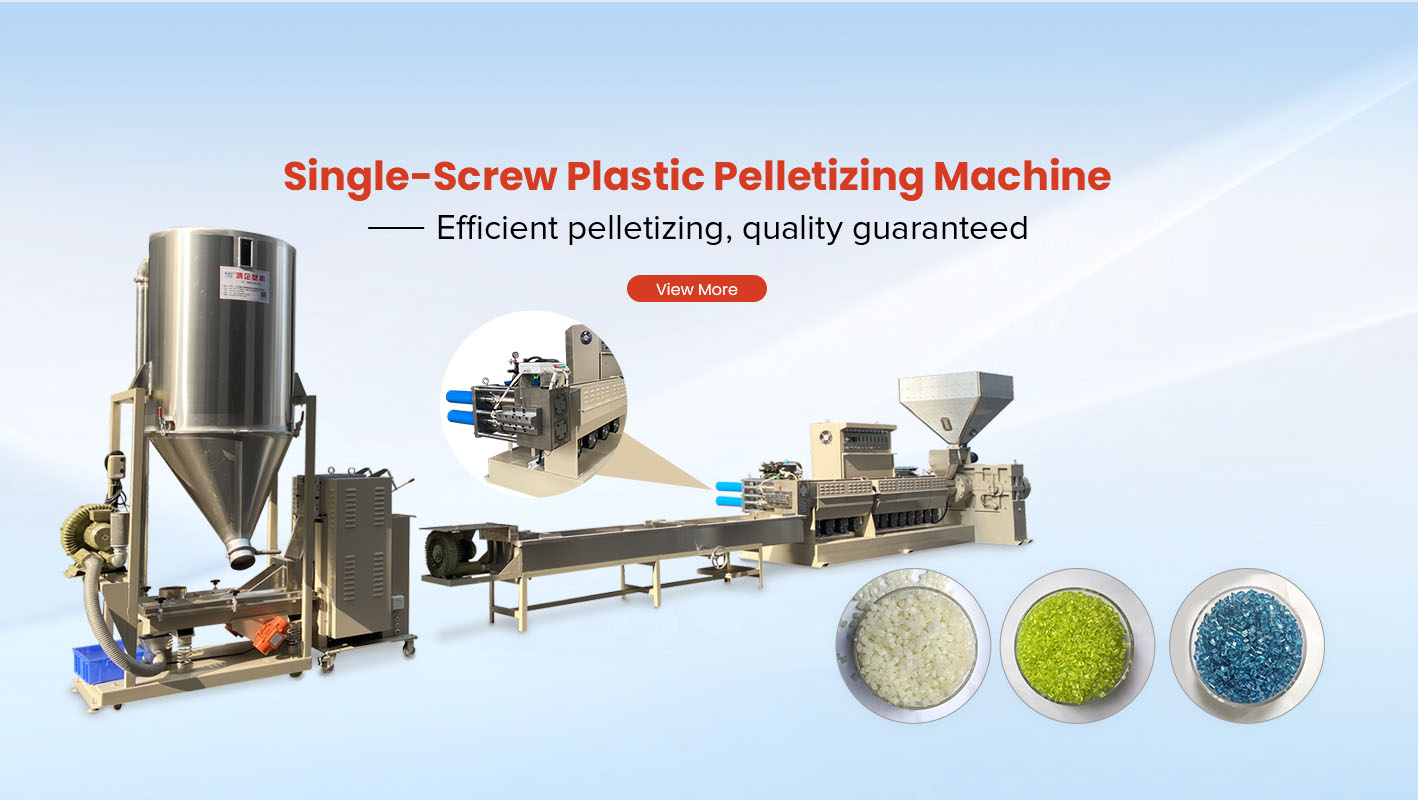
Energy consumption is one of the most important factors for factories running continuous plastic compounding, pelletizing, profile extrusion, and material modification lines. A twin screw extruder operates as a high-torque, high-shear, and constant-load machine, meaning its power demand affects overall production cost, machine efficiency, and long-term return on investment. Many manufacturers evaluating new equipment ask a critical question: How many kWh does a twin screw extruder use? This depends on several variables including screw diameter, motor rating, processing temperature, material formula, feeding rate, torque load, and downstream equipment.
HONGQI’s Twin Screw Plastic Pelletizing Extrusion Machine is designed with optimized torque distribution, high-efficiency motors, and precise temperature control to reduce unnecessary energy loss. But understanding the energy profile of a twin screw extruder requires examining how electricity is consumed across the entire system. This article explains the real factors that determine kWh usage and provides realistic benchmarks for production planning.
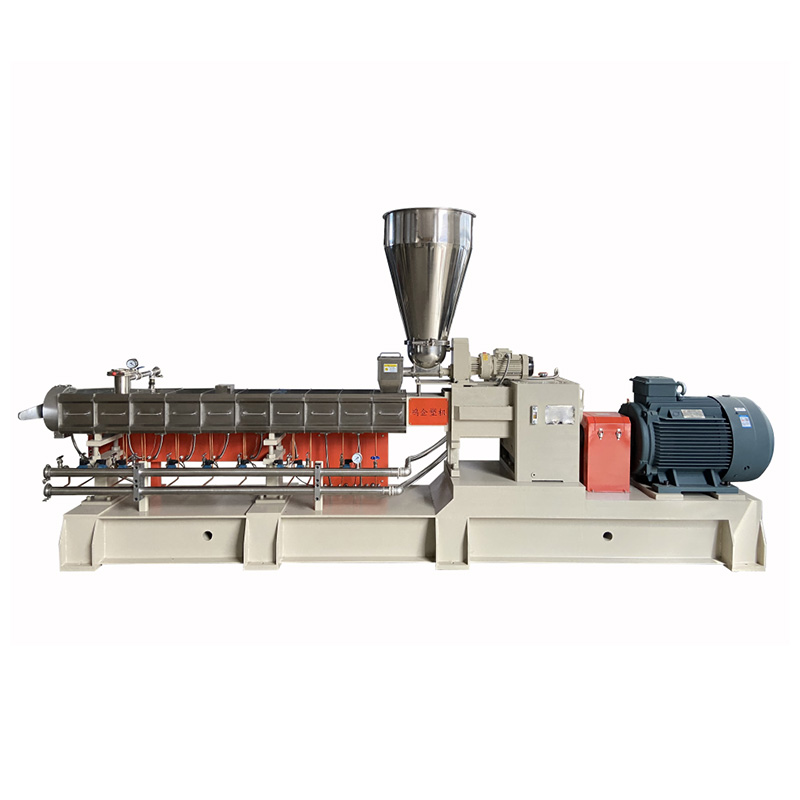
1. Understanding the Power Consumption Structure of a Twin Screw Extruder
A twin screw extruder does not rely on a single energy source. Instead, its consumption comes from multiple operational modules. Each module contributes to the total kWh used per hour, and the load fluctuates depending on material viscosity, torque resistance, screw speed, and melting requirements. To evaluate electricity usage accurately, every component in the system should be considered.
Key Components Contributing to kWh Usage
Main motor (largest electricity consumer)
Heating zones including barrel heaters, die heaters, and adaptor heaters
Cooling system such as water pumps, blower fans, and vacuum cooling
Feeding units including gravimetric or volumetric feeders
Side feeders or liquid injection units
Pelletizing units such as Strand Pelletizers or die-face cutting systems
Each part consumes kWh based on duty cycle, operating temperature, torque demand, and production speed.
Typical Power Distribution Table
| Component | Percentage of Total Energy |
|---|
| Main Motor | 55%–70% |
| Heaters | 15%–25% |
| Cooling System | 8%–12% |
| Feeders | 2%–5% |
| Pelletizer | 5%–8% |
This breakdown helps identify which areas affect kWh usage the most and where efficiency improvements can be achieved.
2. How Screw Diameter and Motor Rating Influence kWh Requirements
A twin screw extruder’s electricity consumption is mainly determined by motor power, which is proportional to the extruder’s screw diameter. Larger diameters require higher torque and motor wattage, directly increasing hourly kWh use. For example, small laboratory extruders may use only 5–10 kWh per hour, while large industrial systems may exceed 150 kWh per hour.
Common Motor Ratings by Screw Diameter
| Screw Diameter | Typical Motor Power | Approx. kWh per Hour |
|---|
| 35–40 mm | 11–18 kW | 10–20 kWh |
| 50–65 mm | 30–55 kW | 25–45 kWh |
| 75–95 mm | 75–132 kW | 60–110 kWh |
| 110 mm+ | 160–315 kW | 130–250 kWh |
The extruder’s torque profile also affects consumption. High-torque models consume more kWh during heavy compounding loads, such as filled materials with CaCO₃, glass fibers, flame retardants, or impact modifiers.
HONGQI’s Twin Screw Plastic Pelletizing Extrusion Machine uses high-efficiency motors with optimized torque curves to ensure strong output while minimizing unnecessary power spikes.
3. Material Type, Processing Formula, and Melt Behavior Directly Change Energy Demand
Different polymer formulations require different levels of mechanical energy and thermal energy, altering the extruder’s electricity needs. This is one of the biggest reasons energy consumption varies widely even among extruders with identical motor power.
How Materials Influence kWh Use
High-fill compounds (CaCO₃ 30–70%) demand more torque → higher kWh
Glass fiber materials require strong shearing → increased motor load
TPE/TPU soft materials may require less torque but higher heating energy
Heat-sensitive additives increase the need for precise temperature control
recycled materials vary in moisture and viscosity → unstable load
A system working at 50% torque consumes far less electricity than one operating at 90% torque even if the machine size is identical.
Example Material Energy Consumption Table
| Material | Typical Load | kWh per Hour |
|---|
| PP / PE unfilled | Low–Medium | 20–40 kWh |
| Engineering plastics (ABS, PA, PC) | Medium–High | 40–70 kWh |
| High-fill CaCO₃ masterbatch | High | 60–120 kWh |
| Glass fiber reinforced | Very High | 80–150 kWh |
| Soft materials (TPV, TPE) | Medium | 25–45 kWh |
Energy consumption is always tied to the melt’s rheology and torque resistance.
4. Production Throughput and Screw Speed Change kWh per Ton
When calculating energy consumption, factories often focus on kWh per ton rather than kWh per hour, because this better reflects cost efficiency. Higher throughput reduces the energy cost per ton if motor and heater loads remain stable.
For example, if an extruder uses 60 kWh per hour but produces 300 kg per hour, its energy cost is lower per ton than a slower line using the same energy.
kWh per Ton Efficiency Comparison
| Throughput | Hourly Energy | Energy per Ton |
|---|
| 150 kg/h | 60 kWh | 400 kWh/ton |
| 250 kg/h | 60 kWh | 240 kWh/ton |
| 350 kg/h | 60 kWh | 171 kWh/ton |
Higher screw speeds can increase energy consumption, but they also increase throughput, which can decrease cost per ton if material allows stable processing.
HONGQI extruders are engineered with balanced screw geometry, allowing high throughput without excessive torque spikes, enabling better kWh-per-ton performance.
5. Heating System, Cooling System, and Auxiliary Equipment Affect Total kWh Usage
Extruders require significant auxiliary energy beyond the main motor. Heating zones, vacuum systems, pelletizers, and water cooling loops each add to total kWh consumption. The balance between heating and cooling efficiency determines operational cost.
Heating System:
Barrel heaters: 6–30 zones depending on machine size
Die heaters: continuous temperature maintenance
Adaptor heaters: stable melt flow requirement
Once the system reaches stable temperature, heating energy decreases due to insulation.
Cooling System:
Blower fans run continuously for air cooling
Water pumps operate for vacuum vents and pelletizing
Chillers may operate depending on formulation
Example Auxiliary Energy Table
| System | kW Load Range | kWh per Hour |
|---|
| Barrel & Die Heaters | 8–40 kW | 5–20 kWh |
| Air Cooling Fans | 1–3 kW | 1–2 kWh |
| Water Pumps | 2–5 kW | 2–5 kWh |
| Vacuum Pump System | 2–7 kW | 2–7 kWh |
| Pelletizer | 3–11 kW | 3–11 kWh |
Together, auxiliary systems account for roughly 25–40% of the extruder’s total energy consumption.
HONGQI uses optimized heating insulation and efficient cooling systems to reduce auxiliary kWh loss.
6. Realistic kWh Usage Summary and How HONGQI Improves Energy Efficiency
Actual energy consumption varies based on machine size, material type, and production conditions. However, realistic industrial data shows most twin screw extruders fall into predictable ranges.
Realistic Energy Consumption Summary
| Extruder Size | Approx. kWh per Hour | Typical Production | kWh per Ton |
|---|
| Small Lab Model | 10–20 kWh | 10–40 kg/h | 250–900 kWh/ton |
| Medium Industrial | 40–80 kWh | 150–300 kg/h | 180–450 kWh/ton |
| Large High-Torque | 100–180 kWh | 300–600 kg/h | 170–350 kWh/ton |
The most efficient systems are those achieving higher throughput with stable torque and optimized screw design.
How HONGQI Improves Energy Efficiency
High-efficiency motors reduce wasted electrical load
Optimized screw geometry minimizing unnecessary torque peaks
Precision temperature control reducing heater consumption
Strong gearbox design ensuring consistent mechanical efficiency
Stable extrusion performance reducing kWh per ton
Fine-tuned feeding systems preventing overload or underload
HONGQI’s Twin Screw Plastic Pelletizing Extrusion Machine is engineered to improve productivity while minimizing energy usage—helping factories reduce both cost and carbon footprint.
Conclusion
The kWh usage of a twin screw extruder is not determined by a single component but by a combination of machine size, material formula, torque load, throughput, auxiliary equipment, and operational stability. Typical consumption ranges from 20 kWh/h for small extruders to 150+ kWh/h for large compounding lines, with actual values influenced by material behavior and processing conditions.
Factories evaluating operational cost should consider both kWh per hour and kWh per ton, as throughput significantly affects cost efficiency. HONGQI’s technical design ensures high output with optimized torque distribution and enhanced energy-saving systems, delivering lower operational costs and more stable long-term performance.
For manufacturers seeking reliable, energy-efficient pelletizing or compounding solutions, choosing the right twin screw extruder is essential—especially one engineered to control energy demand effectively while maintaining high-quality output.