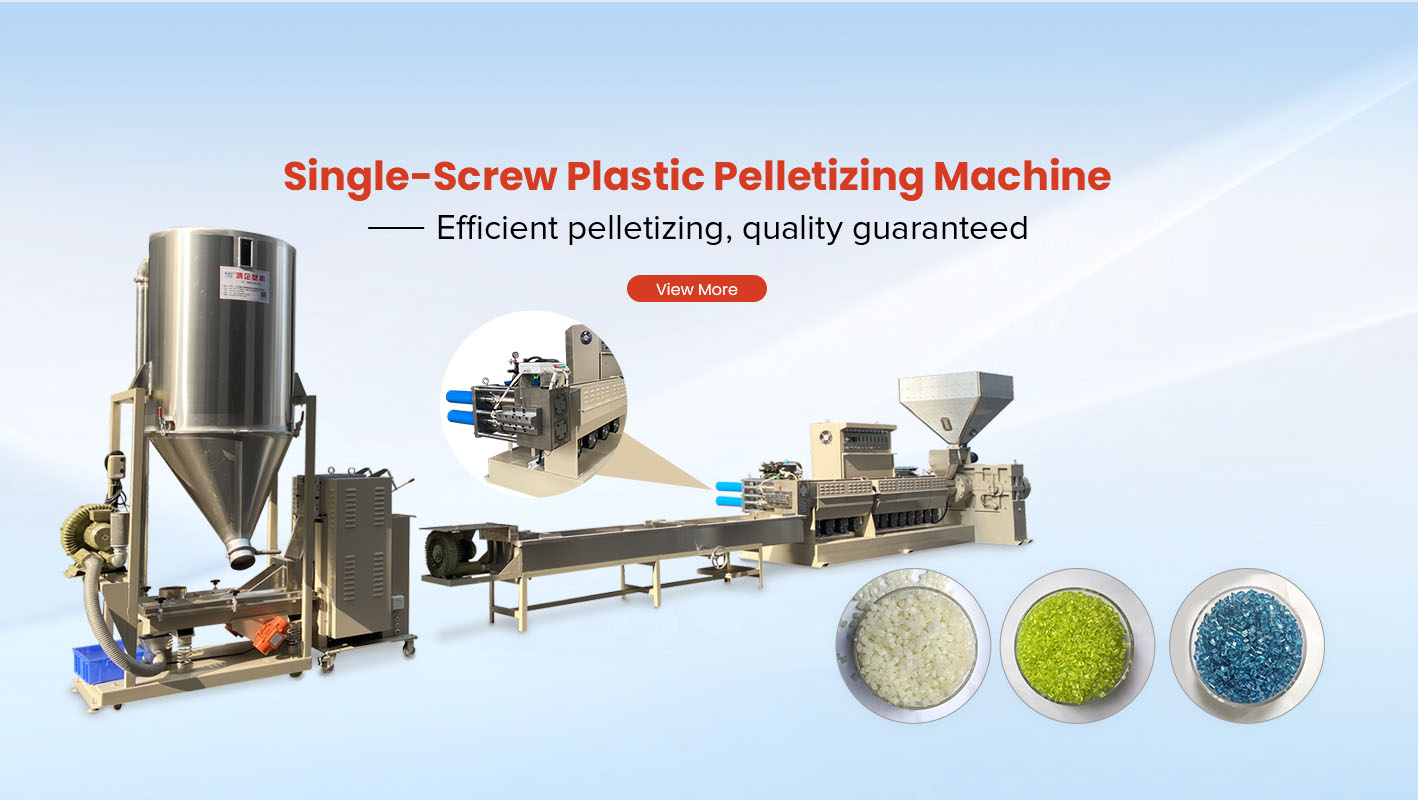
Operating a Plastic Extrusion Machine requires a combination of technical preparation, process understanding, equipment familiarity, and continuous monitoring. From material feeding to temperature control, screw rotation, melt formation, and pelletizing or shaping, each stage influences the quality, consistency, and safety of the extrusion process. Because extrusion machines operate under high temperature, high torque, and continuous load, it is essential to follow standardized procedures to ensure stable performance, prevent material degradation, and protect operators.
Whether the extrusion line uses a single screw configuration or a twin screw system, the control logic and operational workflow share many similarities. HONGQI manufactures both Single Screw Plastic Pelletizing Extrusion Machine units and high-output Twin Screw Plastic Pelletizing Extrusion Machine systems designed with user-friendly control panels, stable torque architecture, and precise temperature zoning to make operation safe and efficient.
The following sections explain how to operate a plastic extrusion machine step by step, covering preparation, temperature configuration, feeding control, start-up, running adjustments, and shutdown procedures.
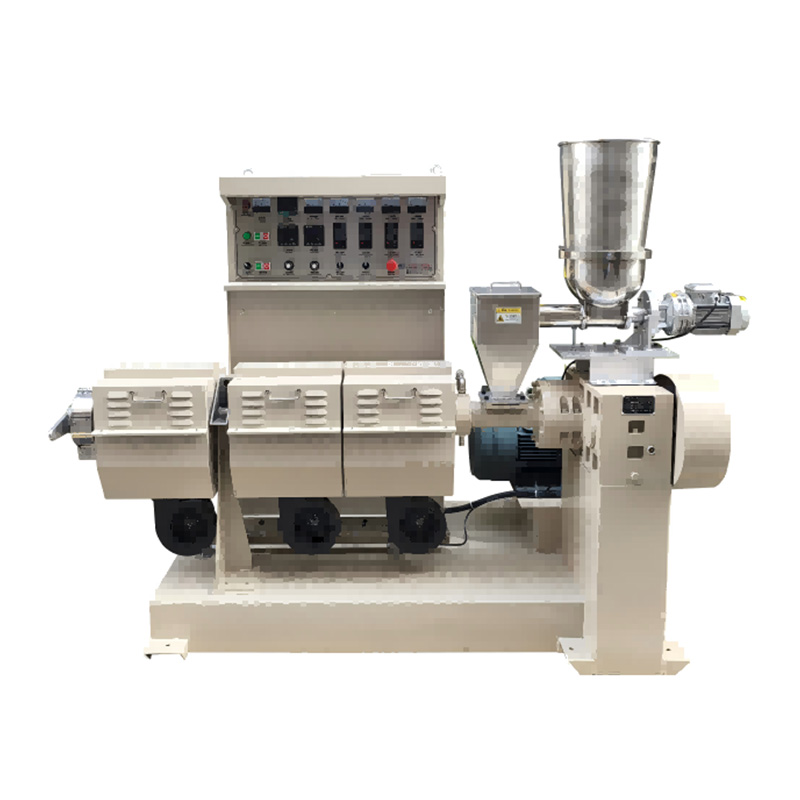
1. Preparing the Extrusion Line Before Start-Up
Preparation is the foundation of smooth extrusion. Before powering on the machine, every part of the line must be inspected—from hopper dryness to gearbox lubrication, heater band connection, cooling system functionality, and pelletizer readiness. A well-prepared line prevents temperature fluctuations, screw overload, material burning, and safety risks.
Operators generally begin by confirming that the material is suitable for the extrusion process. Moisture-sensitive plastics such as ABS, PA, PET, or PC must be dried thoroughly. Dust, contaminants, and oversized fragments need to be removed to avoid feeding issues.
Typical Pre-Operation Checks
Verify that the hopper contains the correct formulation
Ensure material dryness and proper moisture level
Inspect heaters, thermocouples, and electrical connections
Check water cooling pipes, pumps, and tank levels
Confirm gearbox oil level and lubrication conditions
Clean the die head and ensure bolts are properly tightened
Set safety guards and emergency stop switches to ready mode
Once all components pass inspection, the extrusion machine can proceed to temperature setting and zone heating.
2. Configuring Temperature Zones and Machine Parameters
Temperature control is one of the most critical aspects of extrusion machine operation. Barrel temperatures must increase progressively from feeding to the melting and metering zones. If the temperature is too low, material will be under-melted; if too high, polymer degradation may occur. The operator configures each heating zone based on resin type, formulation, and screw design.
In addition to temperature settings, operators must adjust screw speed, feeding rate, and vacuum venting (if applicable). Twin screw machines, depending on formulation complexity, may require finer control of vent zones, kneading sections, and side feeders.
Example Temperature Zone Table
| Zone | Typical Range |
|---|
| Feeding Zone | 140–170°C |
| Compression / Melting Zone | 170–210°C |
| Metering Zone | 180–220°C |
| Die Head | 180–230°C |
These numbers change depending on material type, but the general principle is to maintain a smooth temperature gradient that supports stable melting.
HONGQI's control systems on both the single screw extruder and twin screw extruder allow precise temperature settings with PID algorithms, ensuring minimal fluctuation and optimal melt consistency.
3. Starting the Extruder: Screw Rotation, Feeding, and Melt Formation
After the temperature zones stabilize, the extruder can be started. Operators initially run the screw at low speed without feeding material. This ensures lubrication flow, verifies that the gearbox is functioning, and confirms that the screw rotates smoothly without abnormal noise. Once stable, material feeding begins gradually.
The melt forms as polymer progresses through the screw flights. Pressure builds up in the metering zone and pushes molten plastic through the die.
Start-Up Steps
Turn on the main motor at low RPM
Check rotation direction (important for twin screw co-rotating machines)
Gradually introduce material using the feeder
Increase screw speed step by step
Observe melt pressure, amperage, and torque load
Inspect melt color and consistency at the die
A well-executed start-up prevents torque overload, feeding blockage, and inconsistent output.
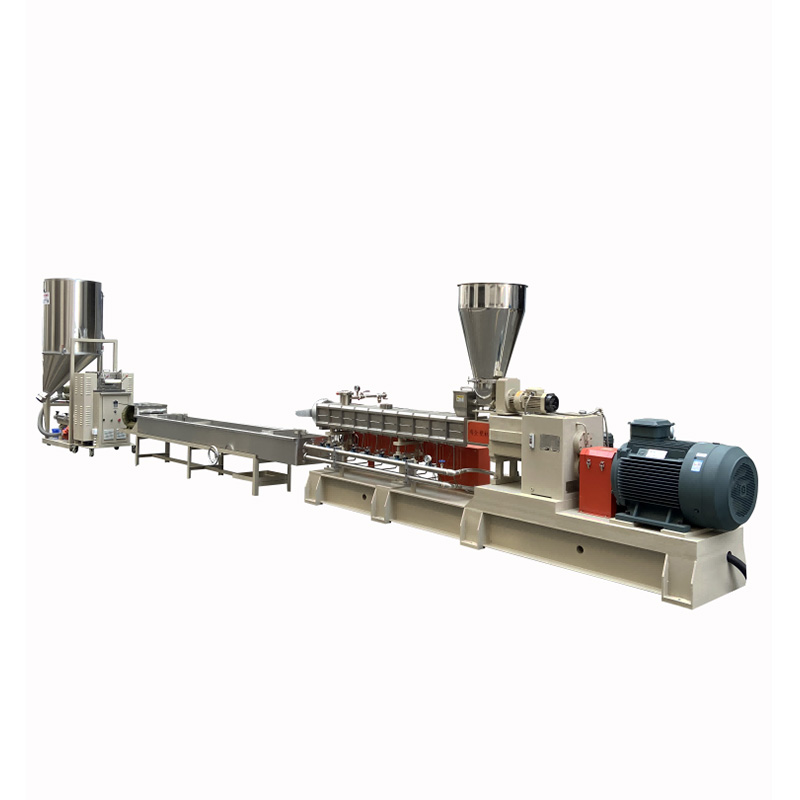
4. Monitoring Running Conditions and Adjusting the Process
Extruder operation requires continuous observation. Temperature, torque, melt pressure, and output must be monitored and adjusted in real time. Even small changes in raw material moisture, formulation ratio, or feeding uniformity can influence melt quality.
Single screw machines typically show stable load once running, while twin screw extruders—especially when processing filled, recycled, or high-viscosity materials—may show larger variations that operators must manage. HONGQI’s twin screw systems incorporate stable gearbox design and torque protection to ensure continuous processing under high-load conditions.
Common Running Adjustments
Increase or decrease screw speed to stabilize pressure
Modify feeding speed when the melt becomes too thick or too thin
Adjust temperature slightly if material shows degradation or unmelted particles
Use vacuum venting to remove moisture or volatile components
Regulate cooling water to maintain pellet hardness
Example Operating Parameter Table
| Indicator | Normal Condition | Action if Abnormal |
|---|
| Torque | Stable, not exceeding rated | Lower feed rate / reduce speed |
| Melt Pressure | Consistent | Check die blockage |
| Temperature | Within target range | Adjust heater or cooling |
| Output Rate | Stable | Check feeder uniformity |
| Pellet Shape | Uniform | Modify die temperature / cutter speed |
Continuous monitoring ensures consistent product quality and prevents unexpected shutdowns.
5. Operating Pelletizing, Cooling, and Downstream Equipment
Plastic extrusion lines often include pelletizing systems such as Strand Pelletizers, die face cutters, or water ring pelletizers. Each system has unique operating requirements. For strand pelletizing, stable cooling bath temperature and smooth strand flow are essential. For die face pelletizing, die temperature determines pellet clarity and cutting consistency.
Cooling and drying units must also be correctly adjusted to prevent pellet moisture retention or deformation. Improper cooling may cause soft pellets, while excessive cooling can cause strand brittleness.
Downstream System Overview
| Unit | Operating Focus |
|---|
| Water Tank | Maintain stable water temperature |
| Blower / Dryer | Complete moisture removal |
| Pelletizer | Adjust blade pressure and speed |
| Conveyor | Ensure smooth pellet discharge |
Both single and twin screw extruders from HONGQI can integrate with multiple pelletizing methods depending on material, output, and end-use requirements. Operators should coordinate extrusion speed with pelletizer load to avoid strand breakage or cutter overload.
6. Proper Shutdown and Cleaning Procedures
A controlled shutdown is essential to prevent material burning, carbonization, or die blockage. Shutdown typically starts by stopping the feeding system and allowing remaining material to flush through the screw. Once the barrel is mostly empty, screw speed is gradually lowered. Temperature settings may be lowered in stages depending on polymer type.
Cleaning procedures vary by resin. Some factories use purging compounds, while others switch to a neutral material such as HDPE to push out the residue. Die cleaning must be performed when the system cools sufficiently to ensure safe removal.
Shutdown Steps
Stop feeder and allow material to clear
Reduce screw speed gradually
Lower temperatures if required
Turn off main motor once melt stops flowing
Shut down heaters, cooling systems, and pelletizer
Clean die head and remove residue
Inspect screws and barrels if maintenance is scheduled
A clean shutdown prepares the extruder for the next start-up cycle and extends machine lifespan.
Conclusion
Operating a plastic extrusion machine requires a systematic approach that includes preparation, temperature configuration, controlled start-up, continuous monitoring, precise adjustments, and proper shutdown. Each stage influences melt stability, production capacity, and final pellet or product quality. Whether using a single screw system for general-purpose pelletizing or a twin screw extruder for advanced compounding applications, the principles remain consistent: stable feeding, accurate temperature control, responsive torque management, and careful operator supervision.
HONGQI provides both Single Screw Plastic Pelletizing Extrusion Machine solutions for standard pelletizing operations and Twin Screw Plastic Pelletizing Extrusion Machine for high-performance compounding and material modification. Through optimized screw design, advanced temperature control, and durable mechanical components, HONGQI ensures that extrusion operations achieve consistency, efficiency, and long-term stability.