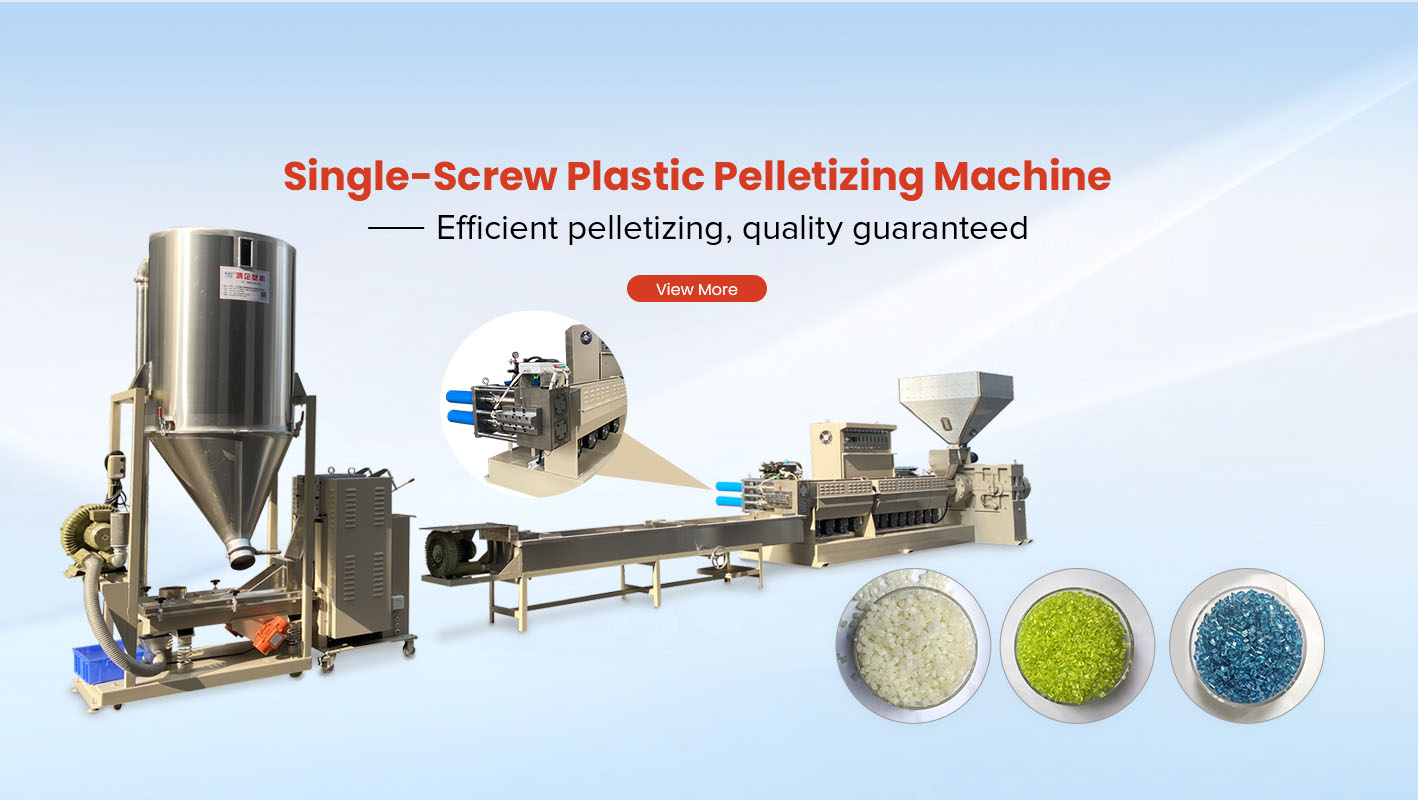
plastic recycling machines form the backbone of modern waste-to-resource systems, enabling manufacturers, recyclers, and environmental enterprises to convert discarded plastic into usable raw material. These machines transform contaminated, mixed, or degraded plastic waste into clean, uniform, and process-ready recyclate that can be used for extrusion, injection molding, film blowing, or pelletizing.
Understanding how plastic recycling machines work is crucial for industries looking to optimize production efficiency, reduce environmental impact, and increase material recovery rates. At the industrial level, recycling systems include shredders, washers, dewatering machines, pelletizers, extruders, and Auxiliary Equipment. Manufacturers such as HONGQI, whose full line of recycling equipment is presented here: HONGQI plastic recycling machines, specialize in integrated systems designed for stable, long-term, high-capacity operation.
This article explains each stage of how plastic recycling machines work, what equipment is involved, and why a well-engineered process contributes to higher-quality recycled plastic output.
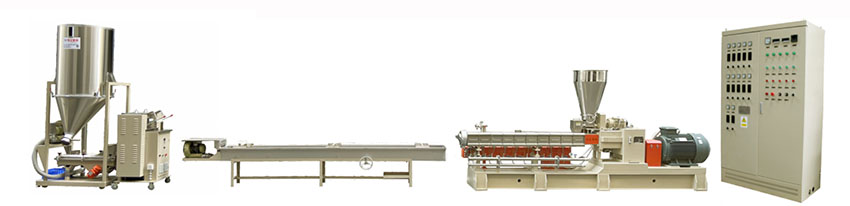
The Overall Workflow of Plastic Recycling Machines
Although plastic recycling systems differ depending on material type—such as PP woven bags, PE film, PET bottle flakes, or rigid HDPE components—the overarching process follows a universal sequence. Below is a simplified view:
Feeding and Size Reduction
Separation and Pre-Cleaning
Washing and Rinsing
Dewatering and Drying
Extrusion or Pelletizing
Cooling and Final Processing
Each step involves specialized machinery that performs a targeted mechanical or physical function. The automation level varies from semi-automatic systems to fully continuous production lines like those offered by HONGQI.
Stage 1: Feeding and Size Reduction
Before plastics can be washed or melted, they must be reduced to manageable sizes. Recycling lines typically use:
Shredders for large pieces such as barrels, crates, or film bundles
Crushers or granulators for rigid plastics and thick-walled materials
These machines break down plastic into smaller flakes or strips, increasing surface area for cleaning. Proper size reduction ensures improved washing efficiency and more uniform downstream processing.
The cutting chamber design, knife configuration, and rotor stability directly influence throughput and material consistency.
Stage 2: Separation and Pre-Cleaning
Once plastics are shredded, pre-cleaning removes contaminants like soil, metal, paper, and organic debris. Common systems include:
Air separation devices to remove lightweight impurities
Magnetic separators to extract ferrous metals
Sink-float tanks to classify plastics based on density differences
These steps ensure that the material entering the washing stage is already partially purified, reducing water contamination and improving efficiency.
Stage 3: Hot Washing and Rinsing
Washing is one of the most important functions of a recycling line. It typically includes:
Friction washers that use high-speed blades and water jets
Hot washing tanks to remove oil, adhesives, and labels
Rinse tanks to flush away loosened contaminants
The process improves the purity of recycled plastic, which translates to higher-value end products. HONGQI’s washing components, included in its recycling system lineup, are engineered for long-term stability and high contamination removal rates.
Stage 4: Dewatering and Moisture Extraction
After washing, plastics retain moisture. Dewatering machines prepare the material for drying or extrusion.
A vertical centrifugal unit:
This mechanical removal reduces the load on thermal dryers and improves energy efficiency. HONGQI is widely known for its robust dewatering equipment, which integrates easily with complete recycling lines.
Stage 5: Thermal Drying or Air Drying
Depending on material and end use, the next stage may involve:
Hot air drying systems
Cyclone separators
Pipe drying solutions
Heat evaporates residual moisture, producing flakes or pellets suitable for extrusion. Uniform drying is essential, as moisture can cause bubbles, voids, or poor mechanical performance in finished plastic products.
Stage 6: Extrusion or Pelletizing
Extrusion represents the transformation stage where reclaimed plastic becomes a form-ready raw material.
How Extrusion Works:
Material enters the extruder hopper.
A rotating screw pushes the plastic along a heated barrel.
Controlled temperature zones melt the plastic gradually.
The melt passes through a filter to remove micro-contaminants.
The molten plastic exits through a die, forming strands or shapes.
The material is then cut into uniform pellets by:
Water-ring pelletizers
Strand-cut pelletizers
Underwater pelletizers
These pellets become feedstock for manufacturing new plastic products.
HONGQI’s pelletizing equipment, part of its plastic recycling machinery product range, is designed for stability, precise temperature control, and strong output consistency.
Equipment Used in Plastic Recycling Machines
| Equipment Type | Core Function | Typical Output Impact |
|---|
| Shredder | Reduce size of large plastic waste | Higher washing efficiency |
| Crusher / Granulator | Produce uniform flakes | Better extrusion consistency |
| Friction Washer | Remove fine contaminants | Cleaner, purer flakes |
| Hot Washer | Eliminate oil & labeling residue | Suitable for food-grade recycling |
| Vertical Dewatering Machine | Remove majority of moisture | Faster drying time |
| Thermal Dryer | Evaporate final moisture | Stable pelletizing performance |
| Extruder / Pelletizer | Melt and reform plastic | Produces finished recycled pellets |
This overview highlights how each machine plays a distinct role in the recycling chain.
Why Plastic Recycling Machines Must Be Precisely Engineered
Recycling seems simple at first: shred, wash, dry, and melt. However, the engineering behind each step is highly specialized. Variations in plastic type, contamination level, and moisture content require machinery built for durability and adaptability.
Key engineering considerations include:
Rotor balance to prevent vibration
High wear-resistant materials for long-term use
Temperature control accuracy
Efficient blade geometry in shredders and crushers
Optimized water flow patterns for cleaning
Precision filtration during extrusion
HONGQI’s machinery is built with these requirements in mind, ensuring customers achieve consistent, reliable output even under continuous heavy operation.
How Automation Enhances Recycling Efficiency
Modern recycling lines often integrate automatic feeding, electronic control systems, and sensor-based monitoring. Automation benefits include:
Reduced labor requirements
More stable material flow
Lower contamination rates
Real-time monitoring of moisture, speed, and temperature
Increased product uniformity
These improvements help recycling facilities transform mixed waste into high-quality recycled plastic with minimal interruption.
Role of Integrated Systems in Large-Scale Operations
For high-capacity plants, single machines are not enough. Instead, companies rely on complete, interconnected systems. HONGQI provides full-line recycling equipment that integrates:
Crushing
Washing
Dewatering
Drying
Pelletizing
This prevents mismatched capacity or compatibility issues, optimizing the entire process from start to finish.
Environmental and Economic Impact
Recycling machines support sustainability by:
Reducing dependence on virgin plastic
Lowering CO₂ emissions associated with new plastic production
Minimizing landfill waste
Supporting circular economy initiatives
Economically, recycling enables manufacturers to lower raw material costs and diversify material supply.
Industrial-grade equipment such as the HONGQI recycling machinery series delivers long-term operational savings by improving energy use and minimizing maintenance downtime.
Conclusion
Plastic recycling machines work through a multi-step process involving feeding, shredding, washing, dewatering, drying, and pelletizing. Each step requires specialized machinery designed for precision, durability, and efficiency. When integrated together, these machines transform waste plastic into high-value raw material ready for manufacturing.
Companies focused on sustainable production or large-scale recycling rely on robust systems such as the HONGQI Plastic Recycling Equipment lineup to achieve consistent output and long-term cost savings. Understanding how each machine works within the system allows businesses to design more efficient recycling workflows and enhance the quality of their recovered materials.