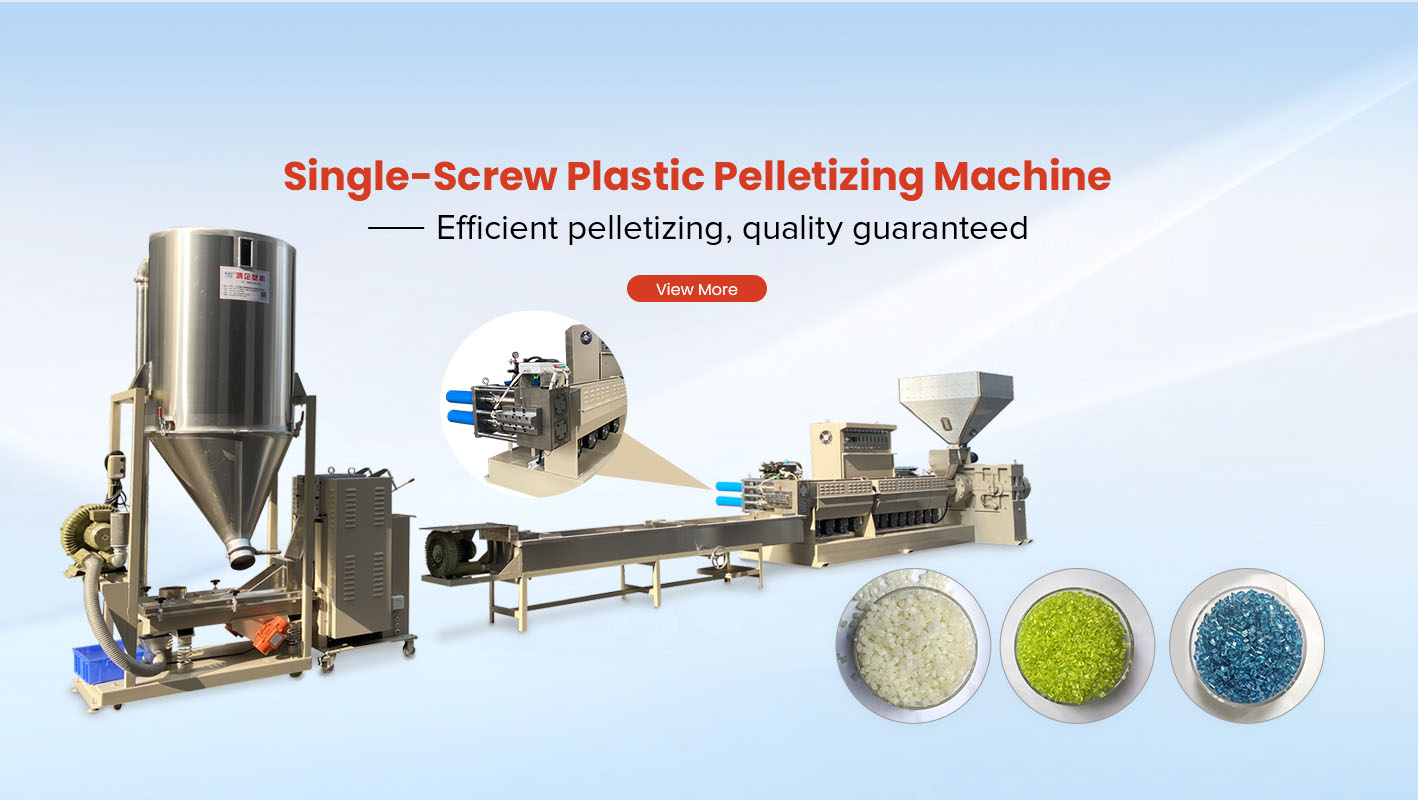
A Plastic Extrusion Machine is a core piece of equipment used in polymer processing industries, converting raw plastic materials into continuous, uniform products such as pellets, pipes, sheets, profiles, and films. Through controlled heating, melting, mixing, and pressure-driven shaping, extrusion enables high-volume, consistent, and repeatable production. It is one of the most widely used manufacturing technologies in packaging, construction, automotive components, electrical parts, and household goods.
For manufacturers seeking reliable and stable extrusion performance, HONGQI provides advanced single-screw and twin-screw pelletizing extrusion systems. Explore our solutions here:
• Single Screw Plastic Pelletizing Extrusion Machine
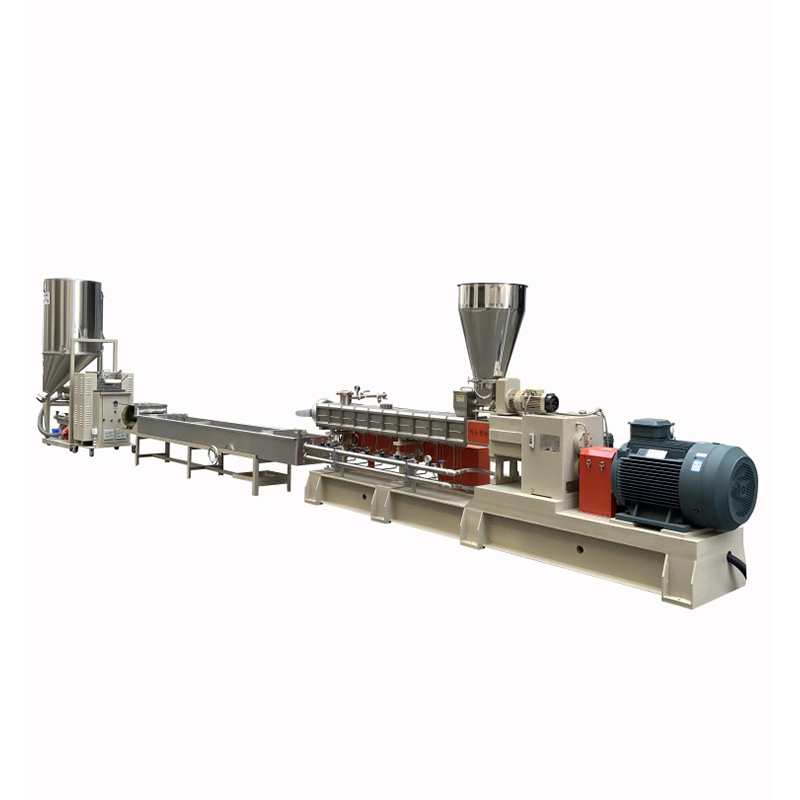
• Twin Screw Plastic Pelletizing Extrusion Machine
These machines are designed to improve output stability, mixing quality, and production efficiency across various polymer materials.
Understanding the Core Working Principle of Plastic Extrusion
Plastic extrusion works by feeding solid polymer—usually granules or flakes—into a heated barrel, where the rotating screw transports and gradually melts the material. As heat and shear forces combine, the plastic transitions into a uniform molten state. At the end of the barrel, the molten material is pushed through a die that determines its final shape.
Unlike injection molding, which produces discrete parts, extrusion creates continuous products that can be cut to any length. This makes extrusion ideal for pelletizing, pipe manufacturing, sheet forming, and profile production.
The overall process involves several stages:
Feeding – Plastic enters the screw barrel through a hopper.
Melting – Controlled heating and mechanical shear soften the polymer.
Mixing & Homogenizing – Additives and colorants integrate smoothly.
Pressurizing & Pumping – The screw forces molten plastic toward the die.
Shaping – Material exits the die opening in a continuous form.
Cooling – Water or air cooling stabilizes the final shape.
Cutting or Pelletizing – Continuous output is sized for downstream use.
HONGQI designs machines that optimize each stage to ensure consistent melt quality and stable throughput.
Main Components of a Plastic Extrusion Machine
Although different extrusion models vary in design, most systems include similar functional modules. Understanding these components helps users evaluate machine performance and maintenance requirements.
Key Components Include:
Hopper – Stores and feeds plastic material into the barrel.
Screw & Barrel – The heart of the extrusion process; responsible for melting and conveying.
Heating Zones – Multiple temperature-controlled bands ensure uniform melting.
Die Head – Shapes the molten material into specific forms.
Cooling System – Stabilizes the extruded material.
Pelletizer (for pelletizing lines) – Cuts strands or melts drops into uniform pellets.
Control Panel – Digital systems regulate temperature, speed, and production parameters.
HONGQI machines integrate durable screw–barrel combinations and precise temperature-control systems, ensuring longevity and consistent processing quality.
Types of Plastic Extrusion Machines
Plastic extrusion machines can be categorized primarily by screw configuration. Each type serves different production requirements and material needs.
Single-Screw Extrusion Machines
Single-screw machines are the most common extrusion systems. They are well-suited for stable melting and conveying of homogeneous polymer materials.
HONGQI offers high-performance models such as the
Single Screw Plastic Pelletizing Extrusion Machine,
designed for:
General-purpose pelletizing
recycled material processing
Polyolefin granulation
Efficient output with simple operation
Twin-Screw Extrusion Machines
Twin-screw machines provide stronger mixing capability, especially for formulations requiring blending of additives, fillers, or colorants.
HONGQI provides advanced systems like the
Twin Screw Plastic Pelletizing Extrusion Machine,
commonly used for:
High-strength compounding
Color masterbatch production
Reinforced materials
Chemical modification of polymers
Processing heat-sensitive materials
Twin-screw extruders achieve better dispersion and homogeneity, improving the final product’s mechanical performance.
What Materials Can Be Processed Through Extrusion?
Plastic extrusion accommodates a wide range of polymers. Each material has unique melting characteristics, flow behavior, and processing temperature requirements.
Common extrusion materials include:
PE (Polyethylene) – Flexible, widely used in pipes, films, and packaging.
PP (Polypropylene) – Excellent chemical resistance and lightweight properties.
PVC (Polyvinyl Chloride) – Rigid or flexible forms for pipes, cables, and profiles.
ABS – Tough engineering plastic used for structural components.
PS (Polystyrene) – Lightweight and suitable for household goods.
PET/PLA – Used in eco-friendly applications and fiber production.
Recycled plastics – Granulated waste materials reprocessed through pelletizing lines.
HONGQI machines are built to handle virgin, recycled, and blended materials, allowing manufacturers to diversify product applications.
Advantages of Plastic Extrusion Machines
Extrusion remains one of the most efficient plastic manufacturing processes due to its high throughput and material versatility. Its key advantages include:
Continuous production resulting in uniform output.
High efficiency with low energy consumption per kilogram processed.
Flexibility to produce pellets, films, sheets, profiles, and pipes.
Excellent compatibility with recycled materials, supporting sustainability.
Scalable output, from small production lines to industrial-scale operations.
Strong mixing control in twin-screw systems.
HONGQI machines maximize these benefits through optimized screw design and stable control systems.
Challenges and Considerations in Plastic Extrusion
While extrusion offers significant advantages, operators must consider several technical factors to ensure stable processing:
Temperature control – Overheating may degrade polymer chains; low temperatures cause poor melting.
Screw speed – Affects throughput and mixing quality.
Material moisture – Some plastics require drying to avoid defects.
Wear and tear – Barrel and screw must be durable for long-term usage.
Die design – Influences shape accuracy and product stability.
HONGQI’s machines integrate precision control systems that maintain optimal conditions throughout production, reducing risk and improving consistency.
Applications of Plastic Extrusion in Modern Industry
Plastic extrusion is indispensable across multiple industries. Below is a summarized table showcasing common applications:
| Industry | Extruded Product Types |
|---|
| Packaging | Films, wraps, sheets, pellets |
| Construction | Pipes, profiles, window frames, panels |
| Automotive | Seals, trims, under-hood components |
| Electrical | Cable insulation, conduits |
| Home Goods | Containers, household products |
| Textile | Fibers, monofilaments |
| Recycling Sector | Reprocessed pellets from waste plastics |
Pelletizing extrusion machines—such as HONGQI’s single-screw and twin-screw systems—are widely used to produce high-quality granules for downstream manufacturing.
Differences Between Single-Screw and Twin-Screw Extrusion
To highlight how each type fits different industrial needs, here is a comparison:
| Feature / Function | Single-Screw Extruder | Twin-Screw Extruder |
|---|
| Mixing Strength | Moderate | High-strength mixing and dispersion |
| Material Flexibility | Best for simple, uniform polymers | Ideal for filled, reinforced, and modified materials |
| Throughput | Stable, efficient | Higher throughput for complex formulations |
| Operating Cost | Lower overall cost and maintenance | Higher investment but superior performance |
| Application Focus | General pelletizing and recycling | Compounding, masterbatch, advanced formulations |
Both systems are essential in modern plastics manufacturing, and HONGQI supports both with robust engineering solutions.
How HONGQI Enhances Plastic Extrusion Performance
HONGQI machines are designed with features that address common extrusion challenges:
Screws optimized for melting stability
Strong wear-resistant barrel metallurgy
Precise heating and cooling zones
Stable pelletizing systems for uniform output
Intelligent PLC controls for automation
Energy-efficient motors and drive systems
Our single-screw pelletizing machines deliver simplicity and steady performance, while our twin-screw pelletizing systems offer superior mixing and compounding capabilities.
Conclusion
A plastic extrusion machine is essential for transforming raw polymers into usable products across nearly every plastic-related industry. Its continuous, efficient, and versatile nature makes extrusion a cornerstone of modern manufacturing. By choosing high-quality equipment, manufacturers achieve consistent melt performance, improved product quality, and greater operational reliability.
HONGQI provides advanced single-screw and twin-screw extrusion solutions engineered for stability, efficiency, and long-term industrial performance. Whether the application involves basic pelletizing or complex material compounding, HONGQI machines help manufacturers expand capabilities and maintain high output quality.
Explore our extrusion technology here:
• Single Screw Plastic Pelletizing Extrusion Machine
• Twin Screw Plastic Pelletizing Extrusion Machine
These systems reflect HONGQI’s dedication to quality machinery and innovative plastic processing solutions.