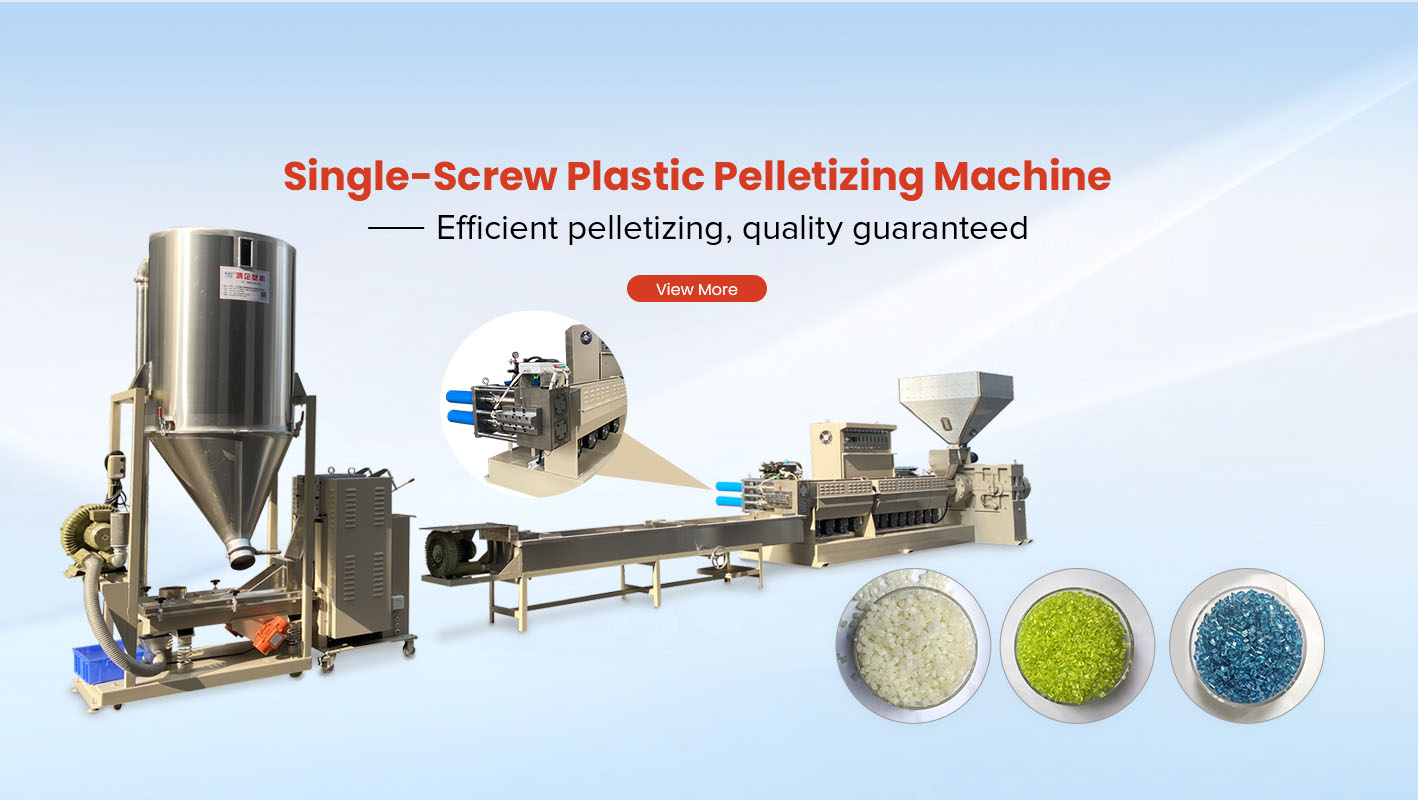
Energy consumption is one of the biggest operating costs in plastic pelletizing. It affects not only electricity bills, but also throughput stability, pellet quality, and overall equipment lifespan. In most factories, energy waste does not come from a single obvious issue. It typically comes from a combination of unstable feeding, inefficient screw design, poor temperature management, high melt pressure, and mismatched motor and drive systems.
For producers working with engineering plastics, recycled streams, and high-performance polymers, reducing energy use requires a practical approach that links process control with machine structure. HONGQI provides complete solutions through its range of plastic pelletizing machines, including single-screw pelletizing machines, twin-screw systems, two-stage pelletizing machines, and supporting recycling equipment. Our systems are designed around stable output and efficient power use, supported by in-house CNC machining and self-made screen changers.
Why pelletizing lines consume more energy than necessary
Most pelletizing lines waste power in predictable areas. Once you identify the dominant energy drain, improvements become measurable.
Unstable feeding and inconsistent bulk density
When feeding fluctuates, the screw alternates between under-load and over-load conditions. Under-load reduces throughput and wastes heater energy. Over-load increases torque demand, raises melt pressure, and forces the drive system to work harder.
Excessive shear and unnecessary melt temperature
When screw design or operating speed creates excessive shear, polymer temperature rises faster than needed. This increases cooling demand, raises power draw, and can degrade polymer properties, especially for sensitive blends or recycled materials.
High melt pressure caused by filtration resistance
Clogged screens or poorly matched filtration systems restrict melt flow. As pressure rises, motor torque increases and energy consumption grows. This also accelerates wear on screws, barrels, and downstream components.
Inefficient thermal management
Unstable temperature control leads to repeated heater cycling. Energy is consumed first to heat the melt and then again to remove excess heat through cooling systems, reducing overall efficiency.
A practical energy reduction strategy for pelletizing operations
Energy savings are achieved when the same output is produced with lower torque, lower pressure, and fewer interruptions. The following methods reflect how efficient pelletizing lines are optimized in real production.
1) Matching motor and inverter systems to real load conditions
Pelletizing lines rarely operate at constant load. Material variation, screen changes, and start-stop cycles cause frequent torque fluctuations. A properly matched motor and inverter system improves efficiency across these changes.
HONGQI emphasizes optimized drive configuration in its plastic pelletizing machines, ensuring smooth speed control, stable torque output, and reduced peak power demand. Stable speed control prevents the screw from compensating through excessive shear, directly reducing energy consumption per ton.
| Drive performance factor | Energy impact without optimization | Energy improvement with proper matching |
|---|
| Torque response | Power spikes during load changes | Stable load and reduced peak demand |
| Speed stability | Pressure fluctuation and scrap | Lower pressure and consistent throughput |
| Partial-load efficiency | High kWh per ton | Improved efficiency across production ranges |
2) Reducing melt pressure through efficient screen changer design
Filtration is essential in recycling and pelletizing, but it is also a major source of energy loss. As screens load with contaminants, pressure increases gradually and motor energy demand rises.
HONGQI manufactures screen changers in-house, allowing precise control over flow channel design and machining accuracy. This reduces unnecessary restriction, maintains stable melt flow, and supports planned maintenance instead of emergency shutdowns. Stable pressure directly translates into lower motor load and reduced energy consumption.
3) Optimizing screw geometry for higher output at lower power
Screw design determines whether output is achieved through efficient conveying or excessive shear. Many lines increase screw speed to boost output, but this often raises kWh per ton when screw geometry is not optimized.
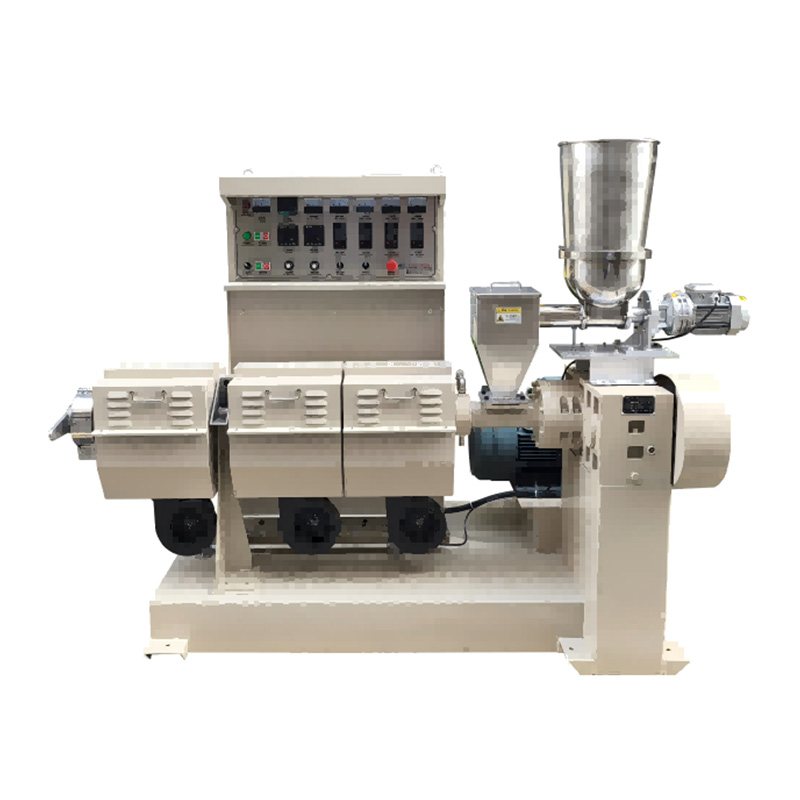
HONGQI single-screw systems use a refined screw head design that supports higher-speed operation with efficient material conveying. Under the same configuration level, a thinner screw head and optimized flow path allow higher output while keeping torque and energy consumption under control.
4) Improving temperature stability to avoid heater energy waste
Although motors consume most of the energy, unstable heating indirectly increases overall power use. Temperature overshoot raises melt viscosity variation and forces the motor to work harder.
Energy-efficient pelletizing lines focus on stable temperature control rather than higher setpoints. Improved insulation, reduced heat loss, and precise zone control lower heater cycling frequency and reduce total power consumption.
5) Selecting pelletizing modes that improve energy balance
Pelletizing mode influences the overall energy profile of the line. In many applications, water-cooling pelletizing is chosen for its stability and controlled heat removal.
From an energy perspective, water-cooling pelletizing helps reduce restart waste, stabilize pellet formation, and avoid excessive cooling spikes. Stable operation lowers energy consumption per ton even if instantaneous power draw remains similar.
Choosing the right single-screw output range for energy efficiency
Incorrect machine sizing is a common cause of unnecessary energy use.
Oversized machines often run at partial load, where base energy losses remain constant while output drops. Undersized machines run at maximum speed, increasing shear, pressure, and wear.
HONGQI offers multiple output ranges across its plastic pelletizing machine portfolio, allowing producers to select equipment that matches real production demand and operates within an efficient load window.
| Equipment sizing | Typical energy outcome | Operational impact |
|---|
| Oversized system | Higher kWh per ton | Low utilization efficiency |
| Undersized system | Power spikes and wear | Unstable quality |
| Properly matched system | Lower kWh per ton | Stable output and quality |
Recycling PA or PC sprues with 35 to 40 percent glass fiber
Recycling PA or PC injection sprues containing 35 to 40 percent glass fiber is energy-intensive due to high viscosity, abrasive fillers, and filtration load.
Energy reduction in this scenario depends on controlling shear, maintaining stable filtration, and ensuring mechanical precision. HONGQI systems combine optimized screw design, stable inverter control, and precision CNC-machined components to reduce unnecessary pressure and torque increases during GF material processing.
Manufacturing advantages that support lower energy consumption
Energy efficiency is closely linked to equipment manufacturing quality.
In-house screen changer production
Self-made screen changers allow better control over flow paths and pressure stability, directly reducing energy loss caused by restriction.
In-house CNC machining capability
Precision machining improves screw-barrel alignment and reduces mechanical friction, supporting high-speed operation with lower power demand.
Simple operation and power-saving design philosophy
Simplified operation reduces operator-induced instability, keeping the pelletizing line within its optimal efficiency range.
How to evaluate energy improvement in practice
Meaningful energy reduction should be measured through production data rather than monthly electricity bills alone. Common indicators include kWh per ton, average motor load, melt pressure stability, restart frequency, and scrap rate.
Plants that stabilize pressure and reduce unplanned downtime typically achieve the fastest and most sustainable energy savings.
Conclusion
Reducing energy consumption in plastic pelletizing requires a system-level approach that combines optimized drive systems, efficient screw geometry, stable filtration, precise temperature control, and correctly sized equipment. When these factors are aligned, energy use per ton decreases while throughput and pellet quality improve.
With in-house CNC machining, self-made screen changers, and a focus on stable high-speed operation, HONGQI plastic pelletizing machines are designed to help producers lower energy consumption while maintaining reliable and efficient production.