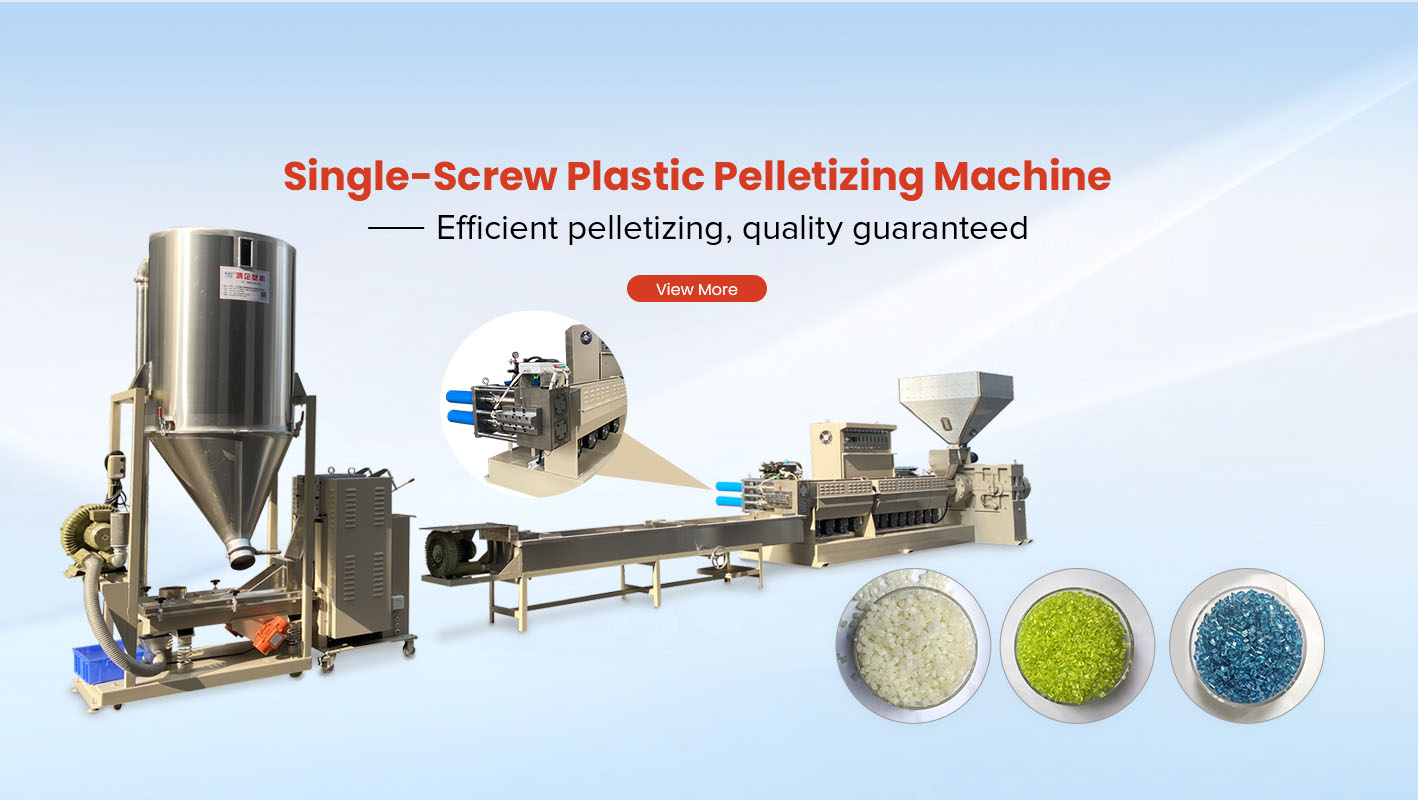
A single screw plastic pelletizing extrusion machine is widely used in recycling and reprocessing lines because it can handle a broad range of thermoplastic materials with stable output, simple operation, and relatively low energy consumption. Compared with more complex systems, the single screw structure offers a practical balance between melting efficiency, conveying stability, and maintenance simplicity.
This article explains what materials a single screw pelletizing extrusion machine can process, what material conditions affect performance, and why many producers choose HONGQI equipment for multi-material pelletizing applications.
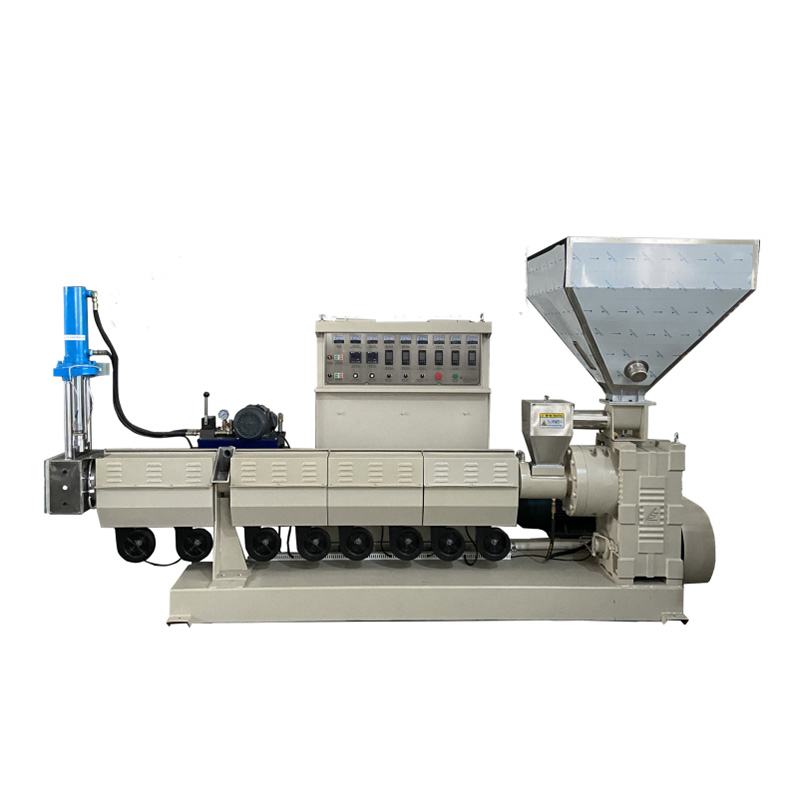
Core principle of material suitability
A single screw pelletizing extrusion machine is designed to process thermoplastics. These materials soften when heated and solidify when cooled, making them suitable for melting, filtration, and pellet formation.
In practical production, single screw pelletizing is most suitable when the following conditions are met.
Material flow is relatively stable after shredding and feeding
The melt does not require intensive dispersive mixing
Output stability and energy efficiency are primary goals
The recycling or reprocessing line prioritizes reliability and ease of operation
When these conditions are present, a single screw system delivers consistent pellets with controlled energy use and manageable maintenance requirements.
Commodity plastics commonly processed by single screw pelletizing machines
Commodity plastics are the most widely processed materials in single screw pelletizing lines. With correct temperature control and feeding preparation, they perform very reliably.
Polyethylene materials
LDPE
LLDPE
HDPE
These materials are commonly sourced from films, bags, bottles, and molded parts. In single screw pelletizing, PE materials benefit from stable feeding density. When films or thin scraps are densified or agglomerated, the screw can convey material smoothly and maintain consistent output.
Polypropylene
PP is widely used in packaging, household goods, and injection molded components. It pelletizes efficiently in single screw systems when the feedstock is clean and moisture is controlled. PP typically shows stable melt behavior and predictable pellet formation.
Polystyrene
PS is often recycled from sheets, packaging parts, and industrial scrap. With correct barrel temperature control, PS can be pelletized smoothly, producing uniform pellets suitable for secondary processing.
Polyvinyl chloride
PVC can be processed in single screw pelletizing lines, but it requires strict temperature management. Thermal sensitivity and formulation stability are critical factors, and processing parameters must be carefully controlled to avoid degradation.
Engineering plastics suitable for single screw pelletizing
Single screw extrusion is also widely used for engineering plastics, especially in recycling applications where the material comes from production scrap rather than fresh compounding.
ABS
ABS is commonly recycled from appliance housings and automotive components. In pelletizing, ABS requires clean input material and stable melt temperature to maintain viscosity consistency and pellet surface quality.
Polyamide and polycarbonate
PA
PC
PA and PC are widely used in high-strength and high-temperature applications. They can be processed effectively in single screw pelletizing lines, but moisture control is critical. Excess moisture leads to pressure fluctuation, surface defects, and reduced pellet quality.
HONGQI single screw systems are designed to support stable processing of PA and PC recycling streams, where filtration reliability and temperature stability are essential.
Glass fiber reinforced materials in single screw pelletizing
Many recycling lines need to process injection sprues and runners containing glass fiber, such as PA or PC with 35 to 40 percent glass fiber content. These materials can be pelletized using a single screw machine when the system is properly configured.
Key technical considerations include the following.
Higher abrasion on screw and barrel components
Increased melt pressure caused by fiber fragments and contaminants
Greater sensitivity to shear-induced temperature rise
Higher demand for stable and reliable screen changing
HONGQI emphasizes in-house CNC machining and self-made screen changers to support pressure stability and wear control in glass fiber reinforced material processing. These production capabilities help maintain stable output and reduce energy waste caused by rising pressure.
Recycled material streams suitable for single screw pelletizing
Single screw pelletizing machines are widely used in recycling lines where feedstock consistency can be controlled upstream.
Post-industrial recycling materials
Injection sprues and runners
Edge trims from sheet and film production
Rejected molded parts
These materials are typically clean and uniform, making them ideal for single screw pelletizing with high output stability.
Clean post-consumer plastics
When sorting and washing systems provide consistent input quality, a single screw pelletizing line can produce pellets suitable for reuse. In these applications, melt filtration and degassing play a larger role in maintaining pellet quality.
Mixed or variable recycled streams
Single screw systems can handle mixed streams when upstream preparation is strong. However, highly inconsistent feedstock may require more advanced mixing capability. In such cases, the performance of a single screw line depends heavily on feed preparation and filtration design.
Material-related factors that affect pelletizing performance
Material suitability is not determined by polymer type alone. Several material conditions directly influence output stability and energy consumption.
Moisture content
Excess moisture causes bubbles, unstable pressure, and poor pellet appearance. PA and PC are especially sensitive and require reliable drying systems.
Contamination level
Contaminants increase filtration load and raise melt pressure. Stable screen changer operation helps maintain consistent pressure and reduces downtime.
Bulk density
Low bulk density materials such as films feed inconsistently. Densification improves feeding stability and reduces torque fluctuation.
Thermal stability
Heat-sensitive materials require stable temperature control to prevent degradation and color change.
Overview of material compatibility in single screw pelletizing
| Material category | Typical materials | Suitability level | Main process focus |
|---|
| Commodity plastics | PE, PP, PS | High | Feeding stability and temperature control |
| PVC | PVC scrap and compounds | Medium | Tight thermal control |
| Engineering plastics | ABS, PA, PC | Medium to high | Moisture control and filtration |
| Glass fiber reinforced | PA GF, PC GF | Medium | Wear resistance and pressure stability |
| Recycled scrap | Sprues, trims, flakes | High | Sorting quality and screen management |
Actual suitability depends on feed preparation quality and machine configuration.
Why HONGQI single screw pelletizing machines handle diverse materials effectively
Material processing capability depends not only on polymer type, but also on machine stability across different operating conditions.
HONGQI focuses on practical production performance through the following strengths.
Stable output design for recycling and reprocessing applications
Optimized screw structure supporting efficient conveying at higher speeds
In-house CNC machining ensuring component accuracy and alignment
In-house screen changer manufacturing supporting stable melt flow
Equipment layouts designed for simple operation and reliable daily use
These factors allow HONGQI systems to adapt to different materials while maintaining consistent pellet quality.
Conclusion
A single screw plastic pelletizing extrusion machine can process a wide range of thermoplastics, including PE, PP, PS, ABS, PA, PC, and many post-industrial recycled materials. With correct preparation and system configuration, it can also handle glass fiber reinforced materials such as PA or PC with 35 to 40 percent glass fiber content.
For producers seeking stable output, efficient energy use, and reliable pellet quality across multiple material types, the Single Screw Plastic Pelletizing Extrusion Machine from HONGQI provides a practical and production-focused solution.