Inconsistent pellet size is one of the most frequent quality issues in twin screw pelletizing lines. It affects downstream handling, packaging uniformity, and customer acceptance, especially in recycling and compounding applications where pellet appearance is closely inspected. In most cases, pellet size variation is not caused by a single faulty component. Instead, it is the result of flow instability, thermal imbalance, cutting inconsistency, or cooling fluctuation within the pelletizing system.
From our production experience, stable pellet size can only be achieved when the entire extrusion and pelletizing process is balanced. This is the core design logic behind our Twin Screw Plastic Pelletizing Extrusion Machine, which is configured to maintain consistent melt flow, stable cutting conditions, and reliable cooling under real industrial loads.
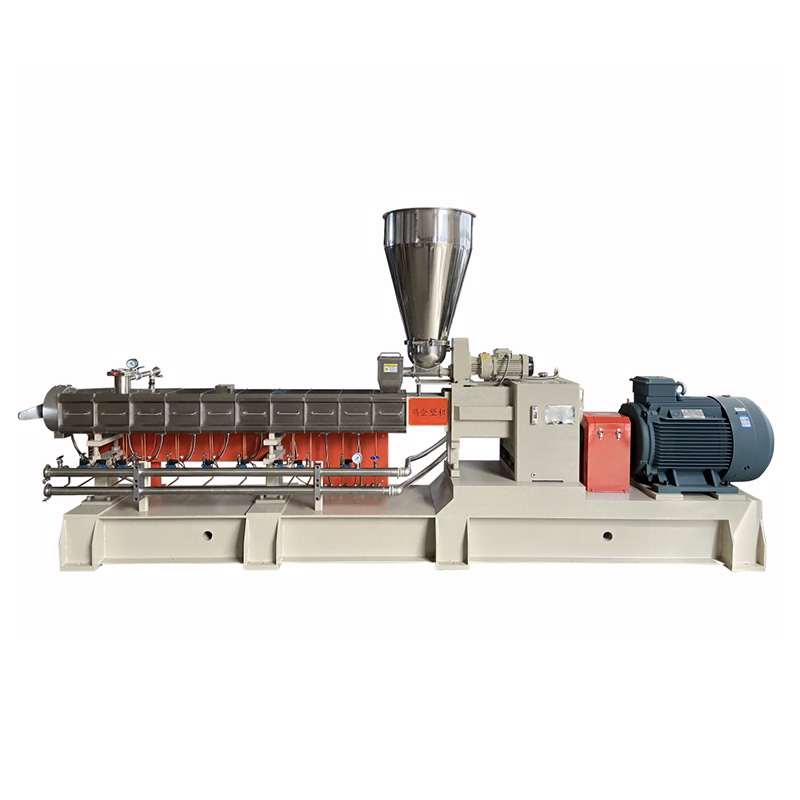
What inconsistent pellet size looks like in real operation
Pellet inconsistency usually presents itself in several recognizable ways. Identifying the pattern helps narrow down the root cause faster than adjusting parameters blindly.
Some lines show fluctuating pellet length while the diameter remains stable. Others produce pellets with uneven thickness, oval shapes, or a mix of fines and long tails. In longer runs, pellet size may gradually drift as pressure builds or thermal conditions change. Each pattern points to a different part of the system that needs attention.
Melt pressure instability at the die
Melt pressure stability is the foundation of pellet consistency. Even small pressure fluctuations at the die cause changes in strand thickness, which directly translate into pellet length variation during cutting.
Common reasons for pressure instability include gradual screen clogging, inconsistent feeding, moisture in the material, or temperature imbalance inside the barrel. When pressure rises and falls cyclically, the cutter cannot compensate, even if its speed remains constant.
The first corrective action should always be to stabilize pressure by improving feeding consistency, managing filtration before clogging becomes severe, and keeping barrel temperatures balanced.
Melt temperature drift and viscosity variation
Temperature directly affects melt viscosity. When viscosity changes, flow distribution across the die holes becomes uneven, producing pellets of different thickness and strength.
Temperature drift often comes from poorly balanced heating zones, over-aggressive cooling in certain sections, or sensor inaccuracies. In high-output operation, excessive shear can also raise melt temperature unevenly, especially in kneading sections.
A stable pelletizing process requires each zone to hold temperature within a narrow operating window. Once temperature stability is restored, pellet size variation often reduces significantly without changing cutter settings.
Die plate condition and flow balance
Even with stable pressure and temperature, pellet size can become inconsistent if the die face is not clean or evenly heated. Partial blockage, carbonized residue, or filler build-up alters local flow resistance, causing some strands to be thicker or thinner than others.
Uneven die plate heating can also create cold spots that restrict flow through specific holes. Regular die inspection and cleaning, combined with uniform die heating, are essential for maintaining pellet uniformity over long production runs.
Cutter system performance and blade condition
The cutter determines pellet length, but only when upstream flow is stable. Worn blades, incorrect blade-to-die clearance, or cutter speed fluctuation can all cause irregular pellet cutting.
Blade wear often leads to tearing instead of clean cutting, producing long tails and fines. Misalignment or bearing wear can introduce vibration, making pellet length inconsistent even at constant speed.
A consistent maintenance schedule for blades and a stable cutter drive system are critical to predictable pellet size.
Cooling and pellet transport stability
Cooling conditions have a direct impact on pellet shape and strength. If pellets are too soft when cut, they may smear or stick together. If they are cooled too aggressively, they may become brittle and break into fines.
Water temperature, flow rate, and turbulence near the die face must remain stable. Fluctuations in the cooling system often show up as pellet deformation or clumping downstream, even if cutting appears normal.
Maintaining stable cooling parameters is especially important in high-throughput twin screw pelletizing lines.
Feeding consistency and material preparation
Although twin screw extruders are more tolerant than single screw systems, unstable feeding still leads to throughput fluctuation and pellet size variation. Low bulk density materials, mixed regrind, or uneven particle size distribution can all cause short-term flow instability.
Proper feeder control, material pre-drying when needed, and consistent upstream preparation help reduce surging and improve pellet size uniformity.
Practical troubleshooting order
To avoid unnecessary downtime, pellet size issues should be addressed in a fixed sequence:
First, confirm die pressure stability. Second, verify temperature stability across all zones. Third, inspect die face condition and heating uniformity. Fourth, check cutter blade condition and speed stability. Finally, review cooling water temperature and flow.
This sequence resolves most pellet inconsistency problems without repeated trial-and-error adjustments.
Common symptom-to-cause reference
| Pellet Issue | Likely Cause | Primary Check |
|---|
| Length variation | Cutter instability or blade wear | Cutter speed and blade condition |
| Diameter variation | Pressure or temperature fluctuation | Die pressure and zone temperatures |
| Fines and long tails | Die contamination or tearing cut | Die face cleanliness and blade sharpness |
| Gradual drift over time | Screen clogging or thermal drift | Pressure trend and filtration status |
| Pellet sticking | Unstable cooling conditions | Water temperature and flow |
How system design improves pellet consistency
Stable pellet size is easier to maintain when the machine is designed for continuous, balanced operation. Key design priorities include stable torque delivery, responsive temperature control, reliable filtration, and easy access for die and blade maintenance.
Our twin screw pelletizing systems are configured with these priorities in mind, allowing operators to maintain pellet quality without constant manual correction. This approach is especially important in recycling and compounding environments where raw material conditions can change frequently.
Preventive practices for long-term stability
Preventing pellet inconsistency is more effective than correcting it after quality issues appear. Establishing pressure-based screen change rules, maintaining a regular blade replacement schedule, recording temperature and pressure trends, and cleaning the die face on a defined cycle all contribute to long-term stability.
Upstream material preparation, including moisture control and size consistency, further reduces the risk of pellet size fluctuation.
Conclusion
Inconsistent pellet size in a twin screw pelletizer is usually caused by instability in melt pressure, temperature, die flow, cutting action, or cooling conditions. Addressing these factors in the correct order restores pellet uniformity more reliably than adjusting cutter speed alone.
For operations that require consistent pellet geometry across long runs and variable materials, a system engineered for stability is essential. Our Twin Screw Plastic Pelletizing Extrusion Machine is designed to help manufacturers achieve predictable pellet size by maintaining balanced flow, stable thermal control, and reliable cutting performance in real production environments.