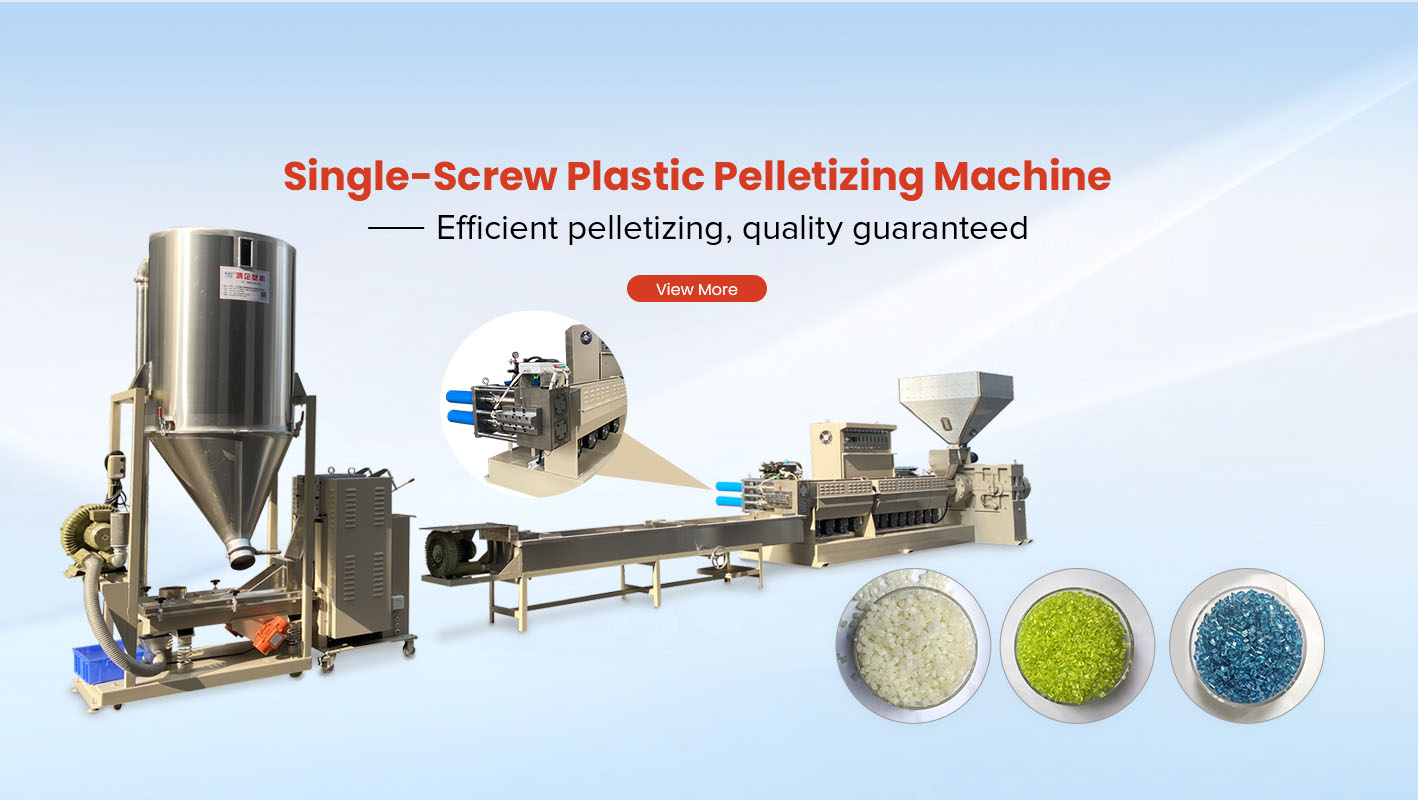
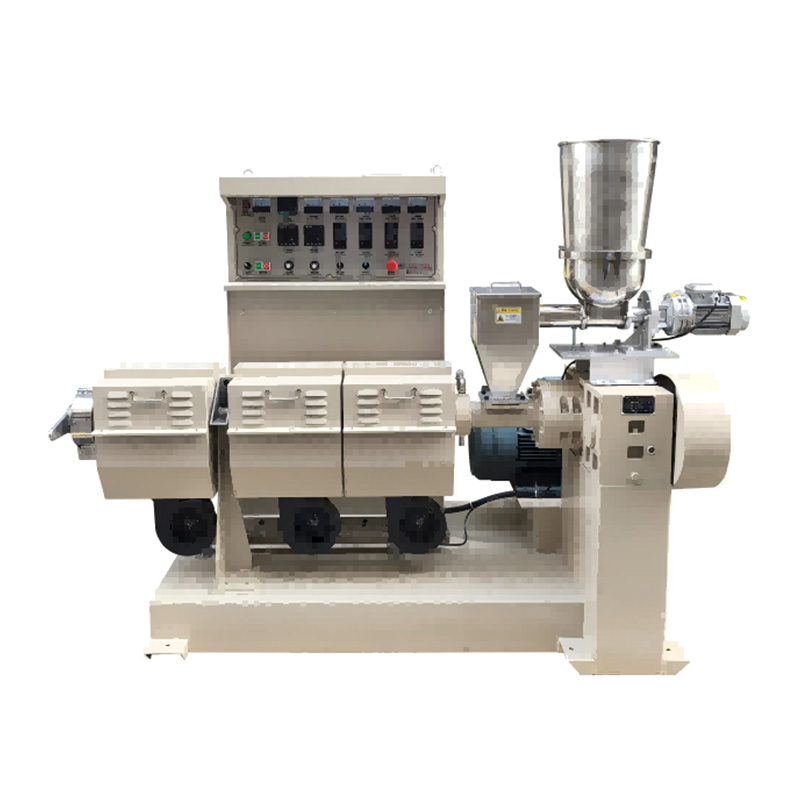
Single screw pelletizing machines are widely used to turn plastics into uniform pellets for stable feeding, storage, and downstream extrusion or molding. In daily production, most issues are not caused by a single defective component. They usually come from an imbalance between material condition, screw and barrel wear, temperature profile, filtration, and pelletizing downstream settings. When that balance shifts, the line may still run, but output quality and throughput drop quickly.
This article summarizes the most common problems seen on single screw plastic pelletizing extrusion lines and provides field-proven solutions. The focus is on actionable checks that maintenance teams and operators can apply without guesswork. If you need to learn more about system configurations and application matching, please browse our single screw plastic pelletizing extrusion machine.
I. Unstable Output and Low Throughput
A frequent complaint is that the line cannot reach rated capacity, or output fluctuates even though the motor load looks normal. This usually indicates inconsistent feeding, poor melting stability, or a mismatch between screw design and the material blend.
Common causes include material bulk density variation, bridging in the hopper, regrind percentage changes, or pellets with uneven size entering the screw. When feeding pulses occur, melt pressure also pulses, which shows up as unstable strand thickness or uneven die flow. Another common cause is a temperature profile that melts the polymer too early near the feed zone, creating a sticky layer that reduces solids conveying efficiency.
Solutions should start from the upstream side. Verify that feeding is mechanically stable and consistent in material level. Check the hopper throat cooling and feed zone temperature to prevent premature softening. Then confirm the screw speed and barrel heating profile are aligned with the polymer type. If the line runs multiple materials, consider standardizing the operating window for each recipe rather than using one profile for everything.
Practical checks that often resolve output instability:
Confirm material is dry and free-flowing, especially when processing hygroscopic polymers or high-regrind blends
Inspect the hopper throat and ensure cooling is effective to avoid feed zone melt sticking
Verify melt pressure stability at the die and observe whether pressure oscillations correlate with feeder behavior
Check for screen pack clogging that forces pressure cycling and reduces throughput
II. Poor Pellet Quality
Pellet quality problems can show up as long tails, irregular shapes, excessive fines, pellets that stick together, or pellets with trapped bubbles. Even when output is high, these defects reduce downstream feeding stability and customer acceptance.
Pellet defects typically originate from three zones: melt quality, die condition, and pelletizing/water system control. If the melt contains unmelted particles or gels, the strands are inconsistent and the cutter produces fines. If the die holes are partially blocked or worn, strand diameter varies and pellet size control becomes difficult. If cooling is uneven, strands can deform before cutting, leading to tails and sticking.
Solutions should separate melt issues from cutting issues. If pellets are inconsistent but the strands already look unstable, focus on melting and filtration first. If strands are stable but pellets are still irregular, focus on cutter speed, knife sharpness, die face cleanliness, and water temperature or air cooling settings depending on the pelletizing type.
A quick symptom-to-fix guide:
| Symptom | Likely root cause | Practical solution direction |
|---|
| Long tails | Knife wear, incorrect cutter speed, die face buildup | Sharpen/replace knife, adjust cutter RPM, clean die face |
| Excess fines | Brittle strands, overcutting, unstable strand thickness | Improve melt uniformity, tune cutter, stabilize die pressure |
| Pellets stick together | Cooling insufficient, water too warm, high melt temperature | Improve cooling, lower water temperature, tune melt temp |
| Bubbles or voids | Moisture, entrained air, poor degassing | Improve drying, check venting, stabilize feed |
| Pellet size variation | Die hole inconsistency, pressure fluctuation | Clean/replace die plate, improve filtration, stabilize feed |
III. Melt Pressure Fluctuation and Screen Pack Clogging
Pressure fluctuation often signals filtration problems. A screen pack that clogs quickly causes rising pressure, frequent screen changes, and unstable strand flow. In recycled materials, contamination and fine solids can overload the filter, but even in virgin materials, degraded polymer or additives can accelerate blockage if temperature and residence time are not controlled.
Solutions are typically a combination of better material preparation, correct screen selection, and stable melt temperature. If contamination is high, using a staged screen pack approach and monitoring differential pressure helps predict changes before quality drops. If the line is equipped with a screen changer, verify seal condition and switching procedure to avoid bypass leaks or pressure shocks.
Operational discipline matters here. Running too cold increases viscosity and pressure, making filters clog faster. Running too hot increases degradation, creating gels and carbon that also clog filters. The best approach is to define a pressure window and treat pressure as a quality indicator rather than only a mechanical value.
Key improvements:
Standardize screen mesh combinations based on material cleanliness level
Track pressure rise rate, not only absolute pressure, to identify contamination trends
Control melt temperature to reduce viscosity swings and degradation byproducts
If recycling content is high, consider upstream sorting and cleaning improvements
IV. Overheating, Degradation, and Burn Marks
Burn marks, black specks, strong odor, and yellowing are common signs of thermal degradation or carbon buildup. In single screw pelletizing, degradation is often caused by excess residence time, dead zones in the barrel or adapter, or overheating in one zone that triggers localized burning. Once carbon forms, it can release periodically, creating quality spikes that are difficult to predict.
The solution is usually not simply lowering temperature. You need to locate where degradation is happening and remove the conditions that create it. Confirm that heaters, thermocouples, and temperature controllers are calibrated, because a faulty sensor can cause real melt temperature to be much higher than displayed. Check for stagnant zones in the screen changer, adapter, and die, especially if the line runs frequent material changes.
Practical actions that reduce degradation:
Verify actual melt temperature using a reliable measurement method during troubleshooting
Reduce unnecessary residence time by optimizing screw speed and throughput balance
Implement a controlled purging routine during material changes
Inspect and clean die and adapter areas where dead zones can trap polymer
V. Moisture, Bubbles, and Porous Pellets
Moisture-related issues are common in recycled materials and in polymers that absorb water. Moisture can create bubbles in the melt, cause porosity, weaken pellets, and lead to unstable strand formation. In vented extrusion, poor vent performance can also allow moisture and volatiles to remain in the melt.
Solutions depend on whether the issue is moisture before processing or volatiles generated during processing. Start by confirming drying capacity and storage handling. Material can reabsorb moisture if it is exposed to ambient air after drying. If you rely on venting, ensure the vent port is not blocked by melt surging and that the vent vacuum system is stable if used.
Checks and improvements:
Validate moisture content at the hopper, not only in storage
Control conveying air and avoid humid air exposure after drying
Ensure vent zone temperature and screw design support stable devolatilization
For high-contamination recycling, improve washing and drying upstream
VI. Screw and Barrel Wear, Leakage, and Process Drift
Over time, wear changes how the machine behaves. Output drops, melt temperature rises, pressure stability worsens, and energy consumption increases. Wear is common when processing filled compounds, abrasive additives, or contaminated regrind. The problem is that wear often appears slowly, so teams compensate by changing temperature and speed, which hides the mechanical issue until quality becomes unacceptable.
A structured wear diagnosis is more reliable than trial adjustments. Monitor key indicators such as output per RPM, motor load trend at the same throughput, melt pressure trend, and the stability of strand formation. If the machine requires higher speed to achieve the same output compared to historical baselines, wear is likely.
Solutions include using wear-resistant screw and barrel materials or surface treatments for abrasive recipes, implementing contamination control, and scheduling measurement of screw and barrel clearances. Seals and connections also matter. Melt leakage at flanges or screen changer seals can introduce safety risk and contamination, so regular seal inspection should be part of preventive maintenance.
VII. Electrical, Heating, and Control Problems That Look Like Process Issues
Many production problems are blamed on materials, but the true cause is often control instability. Heater band failure, loose wiring, drifted thermocouples, or poor PID tuning can cause temperature fluctuations that lead to pressure instability and inconsistent pellets. Similarly, drive system issues such as unstable screw speed or poor torque control can create melt inconsistency.
The solution is to separate mechanical performance from control performance during troubleshooting. Record zone temperatures, actual screw speed stability, motor current behavior, and melt pressure simultaneously. If temperature fluctuations correlate with quality swings, focus on controller and sensor health. If screw speed wobbles under constant setpoint, inspect the drive and feedback loop.
A practical approach is to establish a simple baseline test after maintenance: run a stable material at a known recipe and confirm that temperature deviation, speed deviation, and pressure deviation are within acceptable ranges before switching back to variable materials.
VIII. Preventive Practices That Reduce Downtime
Most single screw pelletizing issues become expensive only when they are discovered late. A preventive approach uses measurable indicators to catch drift early and reduce unscheduled downtime.
Recommended routine practices:
Keep a recipe log that includes material batch, regrind percentage, temperature profile, screw speed, melt pressure, and output rate
When quality changes, the log shortens diagnosis time dramatically.
Monitor pressure rise across filtration and define a change threshold
Screen changes based on trend prevent sudden strand instability.
Schedule inspection points for wear and sealing
Periodic measurement and seal checks reduce sudden leakage and output loss.
Standardize cleaning and purging routines
Consistent shutdown and changeover practices reduce carbon formation and contamination.
Align downstream pelletizing parameters with melt stability
Cutter condition, water temperature, and cooling performance should be treated as controlled variables, not afterthoughts.
HONGQI focuses on practical production reliability by supporting stable configuration matching, consistent build quality, and service-oriented guidance that helps users maintain output and pellet consistency over long operating cycles.
If you need to learn more about machine options and application matching, please browse our single screw plastic pelletizing extrusion machine.
Conclusion
Common problems in single screw pelletizing machines usually come from system imbalance, not a single isolated fault. Unstable output often starts with feeding and melting stability. Poor pellet quality typically traces back to melt uniformity, die condition, and pelletizing control. Pressure fluctuation and frequent screen clogging signal filtration and contamination issues. Degradation and burn marks point to overheating, dead zones, and poor changeover discipline. Moisture and bubbles are usually solved by better drying and vent performance, while long-term drift often indicates screw and barrel wear or control instability.
When troubleshooting follows a structured path and preventive indicators are tracked, pelletizing lines become far more predictable. For configuration options, materials compatibility, and system details, please browse our single screw plastic pelletizing extrusion machine.