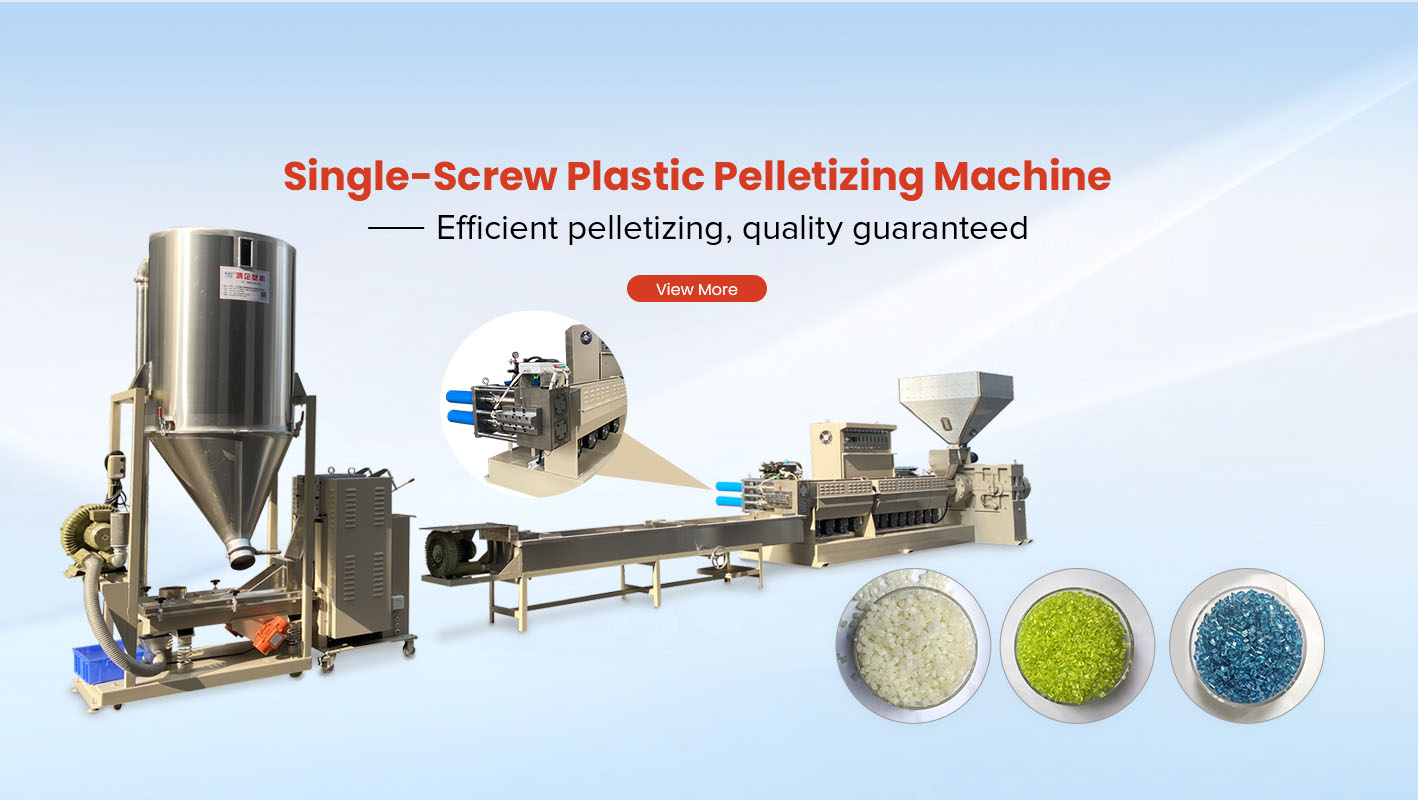
PVC pelletizing is different from many other polymers because the process window is narrower and the consequences of poor control show up fast as discoloration, unstable melt, rough pellet surfaces, excessive fines, or even material degradation. Efficient PVC pelletizing with a twin screw machine depends on how well the line controls shear, temperature, residence time, degassing, and downstream cooling and cutting, while keeping dispersion uniform and throughput stable.
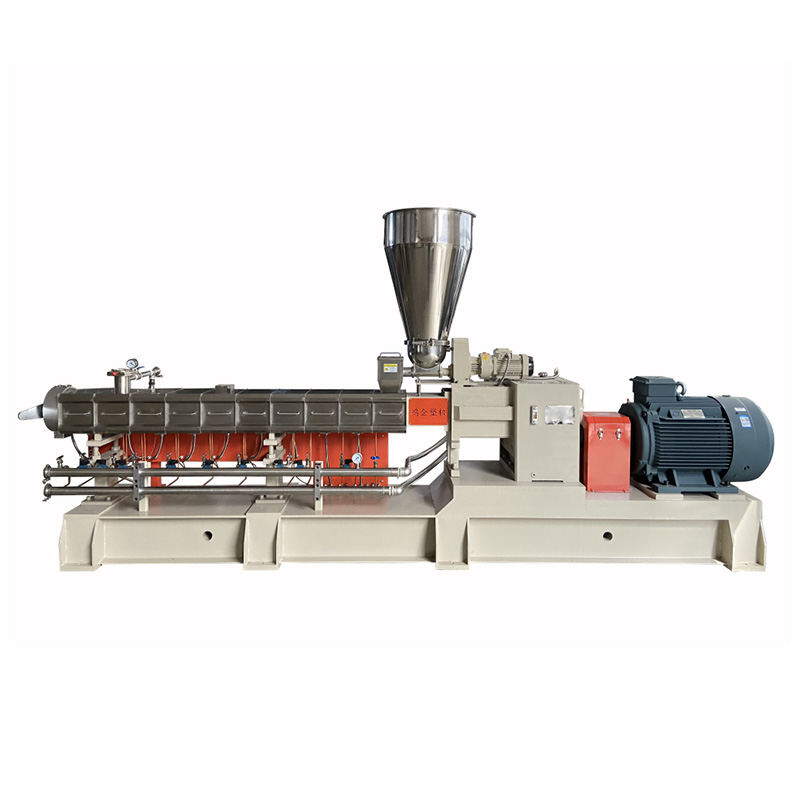
HONGQI twin screw pelletizing extrusion machines are built around the core needs of high-efficiency compounding and recycling, including strong mixing and homogenization, multi-zone temperature control, durable screw and barrel construction, and integrated degassing capability. These design choices directly support the key factors that determine PVC pelletizing efficiency and pellet consistency.
If you need to learn more about configurations and available models, please browse our twin screw plastic pelletizing extrusion machine page.
I. Temperature Control Stability and a PVC-Safe Thermal Window
PVC is sensitive to overheating and localized hot spots. Efficient pelletizing starts with temperature stability, because stable temperature means stable viscosity, stable pressure, and stable strand or die-face cutting behavior. In practice, the most common efficiency loss is not low motor power, but the need to slow down due to instability such as burn marks, odor, or inconsistent melt flow.
A twin screw machine supports this factor by distributing heat control across zones and maintaining a repeatable profile along the barrel. HONGQI machines use multi-zone temperature control, including 10-zone systems with Omron control, which helps maintain a stable processing window and reduces the risk of localized overheating. When temperature stability improves, plants usually see fewer interruptions, fewer off-spec pellets, and higher effective output per shift.
Operational benefit for PVC pelletizing efficiency:
Fewer quality stops caused by discoloration and unstable melt
More consistent pellet surface finish and bulk density
Higher sustainable throughput because the line runs closer to its stable limit rather than its cautious limit
II. Screw Configuration, Mixing Efficiency, and Shear Management
PVC pellet quality depends heavily on dispersion and homogenization, especially when formulations include stabilizers, lubricants, fillers, and pigments. A twin screw platform is favored because it can deliver strong distributive and dispersive mixing while maintaining controllable shear, which is critical for efficient pelletizing without overheating.
HONGQI twin screw systems are positioned for advanced polymer recycling and compounding where homogenization and consistent pellet size are required. For PVC, the most important idea is not maximum shear, but controlled shear that achieves uniform mixing without creating excessive heat. When the screw and process are aligned, the melt becomes uniform earlier, the die flow stabilizes, and pelletizing becomes smoother with fewer fines.
Practical efficiency outcomes when mixing is correct:
Faster stabilization after start-up and recipe change
Lower scrap rate from poor dispersion and visible defects
Reduced torque spikes and fewer sudden pressure oscillations
III. Residence Time Control and Consistent Feeding Behavior
In pelletizing lines, unstable feeding creates unstable pressure, and unstable pressure creates unstable pelletizing. Small fluctuations can look minor at the hopper, but they multiply downstream as melt pressure variation, strand thickness variation, and pellet size variation. For PVC, residence time consistency matters because excessive residence time increases thermal exposure and raises degradation risk, while too short residence time can reduce fusion and dispersion.
Twin screw systems support stable conveying and controlled residence time through their geometry and process control. When the line runs with a stable feed rate, the operator can maintain a steady temperature profile and screw speed, resulting in stable output without constant manual correction.
Efficiency benefits for small and mid-sized plants:
Less time spent adjusting parameters to chase stability
More predictable output and easier shift-to-shift consistency
Higher overall equipment effectiveness because fewer micro-stops occur
IV. Degassing Performance and Volatile Control
PVC formulations and recycled PVC streams can introduce volatiles and entrained air that show up as bubbles, porous pellets, or unstable cutting behavior. Efficient pelletizing requires a melt that is not only well mixed, but also well devolatilized. A stable degassing section reduces defects and supports higher throughput because the line does not need to be slowed down to keep pellets from foaming or breaking.
HONGQI twin screw machines integrate vacuum systems for degassing, such as 1.5KW, 2.2KW, and 4KW vacuum units depending on model and application focus. Degassing capability is a direct contributor to pellet quality stability, and stable pellet quality is what allows a plant to run faster without creating downgrade material.
Typical results when degassing is sufficient:
Lower void rate in pellets and improved pellet strength
More stable die flow and improved pellet cutting consistency
Reduced odor and fewer quality complaints in downstream processing
V. Filtration Strategy and Pressure Stability at the Die
PVC pelletizing efficiency is strongly affected by how stable the die pressure remains. If filtration is overloaded, screen changes become frequent, pressure rises quickly, and throughput drops. Pressure instability also impacts pellet size control and increases fines.
A twin screw pelletizing line designed for recycling and compounding is typically paired with a screen changer approach matched to contamination level and production continuity expectations. HONGQI offers screen changer configurations including manual rotary and hydraulic pressure types in its twin screw lineup. For PVC pelletizing, this matters because stable filtration supports stable pressure, and stable pressure supports stable cutting, which reduces pellet defects and downtime.
Efficiency impact of pressure stability:
Longer continuous run time between filtration interventions
Fewer strand breaks or die-face irregularities caused by pressure swings
Better pellet size distribution and lower fines rate
VI. Pelletizing and Cooling System Matching
Even when the extruder runs well, pelletizing efficiency can be limited by cooling and cutting. If cooling is insufficient, pellets stick and deform, increasing rework and downtime. If cutting is unstable, pellet length variation increases and fines rise, reducing yield.
HONGQI configurations include complete downstream support such as stainless steel cooling water tanks and controlled cutting systems with frequency conversion. Matching the extruder output to the cooling and cutting capacity is a direct driver of efficiency because it determines whether the line can sustain throughput without pellet defects. When cooling and cutting are stable, operators can raise output without creating secondary problems that force slowdowns later.
A practical view of what stable downstream systems deliver:
Cleaner pellet shape and better packaging and handling performance
Reduced pellet sticking and improved pellet separation
More stable long-run production without frequent cleaning stops
VII. Durability, Wear Resistance, and Long-Run Consistency
PVC compounding often includes fillers and additives that can increase wear. When screws and barrels wear, mixing behavior changes gradually, output becomes less stable, energy use rises, and pellet quality drifts. Efficient pelletizing means not only high output today, but repeatable output over long operating cycles.
HONGQI machines use durable screw materials such as 6542 steel and alloy-coated barrels designed for long service life and reduced maintenance. Durability matters for efficiency because fewer unplanned maintenance events and less performance drift translate into higher annual output, lower cost per ton, and more consistent pellet quality for customers.
Long-term efficiency benefits of wear-focused design:
Lower downtime frequency and more predictable maintenance planning
More stable mixing performance across production batches
Reduced risk of sudden quality failure caused by mechanical drift
Conclusion
Efficient PVC pelletizing with a twin screw machine is achieved when temperature control, shear and mixing management, residence time stability, degassing performance, filtration pressure stability, and pelletizing cooling and cutting are aligned as one system. HONGQI twin screw pelletizing extrusion machines support these efficiency drivers through multi-zone temperature control, strong homogenization capability, integrated vacuum degassing, flexible screen changer configurations, durable screw and barrel construction, and complete downstream support options.
If you need to learn more about model options, configurations, and how a twin screw line can be matched to your PVC pelletizing targets, please browse our twin screw plastic pelletizing extrusion machine page.