Choosing a Screw Conveyor is not only about selecting a diameter and motor. The right unit must match your material behavior, target throughput, installation angle, and upstream or downstream equipment, while keeping operation stable over long runs. A well-matched screw conveyor delivers predictable flow, reduces bridging and surging, and helps protect motors and gearboxes from overload. A poor match can cause frequent blockages, excessive wear on the flighting, inconsistent feeding, and unnecessary downtime.
This guide explains a practical selection method you can use for plastics, powders, pellets, and other bulk materials. It also shows how model specifications translate into real production needs, using HONGQI’s auger conveyor range as a reference.
1. Define the Material You Need to Move
Start with the material, because the same screw geometry can perform very differently depending on particle shape, moisture, and flowability.
Focus on these material questions:
Particle form and size
Pellets, grains, and free-flowing granules usually convey smoothly. Fine powders may compact and require tighter internal clearances and stable rotation to avoid backflow and pulsation.
Bulk density and abrasiveness
Higher bulk density increases torque demand. Abrasive materials accelerate flight and tube wear, so the choice of tube thickness and blade thickness becomes more important.
Moisture, stickiness, and temperature sensitivity
Sticky or warm materials can build up on the tube, reducing effective area and increasing load. For these materials, stable feeding, proper inlet design, and cleanout access become critical.
HONGQI designs auger conveyors for bulk materials including grains, powders, and pellets, with an emphasis on controlled and consistent flow for real plant feeding conditions.
2. Set a Clear Throughput Target and Choose a Capacity Range
Capacity is the decision anchor. Once you define kg per hour and how steady the feed must be, you can narrow model size and motor power quickly.
Two practical rules help:
Use your peak requirement, not the average
If your line peaks during startup or when a hopper is refilled, size the conveyor to handle that peak without stalling. Under-sizing forces operators to slow the line or deal with frequent trip events.
Plan a safety margin
Most plants run better when the conveyor is not operating at the edge of overload. Margin improves stability, reduces heat buildup in the drive system, and gives flexibility for future material changes.
HONGQI provides multiple capacity classes across its models, from moderate feeding to high-throughput transfer, making it easier to match your process window rather than forcing a one-size choice.
If you want to compare configurations and request a matching recommendation, you can reference HONGQI’s product page here: screw conveyor.
3. Match the Conveyor Type to Your Layout and Angle
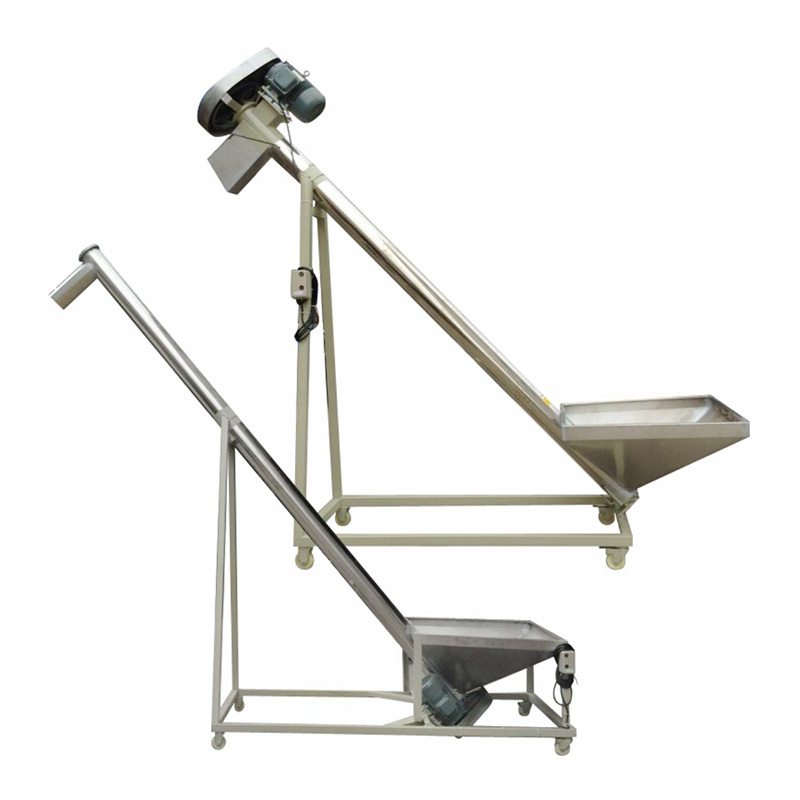
Screw conveyors can be configured for horizontal, inclined, or vertical conveying. Your layout affects not only footprint but also capacity stability and back-pressure at the outlet.
Key layout considerations:
Horizontal conveying
Often the easiest to stabilize because material loading is more uniform along the flighting. It is commonly used for consistent feeding into mixers, extruders, and storage bins.
Inclined conveying
Incline reduces effective capacity at the same screw speed because gravity works against upward transport. For inclined runs, it is safer to size up or select a model with higher baseline capacity so the system stays stable.
Vertical conveying
Vertical transport typically requires stronger control of inlet feeding and may need design features to prevent fallback. It is usually chosen when floor space is limited and the process requires elevation transfer.
HONGQI supports customizable conveyor arrangements for horizontal, inclined, or vertical applications, allowing the conveyor to be tailored to the actual plant route rather than forcing a redesign of your line.
4. Choose Tube Diameter, Blade Thickness, and Internal Clearance for Stability
Mechanical geometry affects whether the conveyor runs smoothly or fights blockages and compaction.
What to evaluate:
Tube diameter and wall thickness
Larger tube diameter generally supports higher throughput and reduces risk of compaction in dense materials. Tube wall thickness contributes to rigidity and service life in continuous-duty environments.
Blade thickness
Blade thickness influences durability and load tolerance, especially in abrasive or high-density materials. It also affects how well the flight maintains its shape under torque.
Internal clearance
Clearance between spiral blades and tube influences efficiency and control. Tight, consistent clearance improves feeding stability for powders by reducing slip and backflow. HONGQI uses laser-cut spiral blades designed to keep minimal clearance within the tube, improving efficiency even for powder transportation.
Material selection also matters. HONGQI’s standard configuration uses #201 stainless steel, supporting corrosion resistance in many typical plant environments while remaining practical for industrial use.
5. Select Motor Power and Speed for Your Duty Cycle
Motor sizing is not only about moving material. It is about handling startup torque, avoiding overload during surges, and sustaining a stable feed rate without overheating.
When choosing power and drive:
Consider startup and surge conditions
If the conveyor starts under load or sees sudden inflow surges, the motor must handle higher momentary torque.
Avoid overspeeding to chase capacity
Running too fast can increase wear, create unstable feeding, and cause material breakdown in fragile pellets. It is often better to choose a model that reaches target capacity at a moderate, stable speed.
Align duty cycle with plant operation
Continuous operations benefit from conservative drive sizing and stable thermal performance.
HONGQI’s model range shows a clear progression of motor power with capacity, helping buyers match power to throughput rather than guessing.
6. Use a Specification Snapshot to Match Models to Real Needs
Below is a practical way to interpret model specifications. Instead of reading the datasheet as isolated numbers, connect each parameter to your operating requirement.
Specifications for HONGQI screw conveyor models include motor power, capacity, tube size, internal tube size, blade thickness, and equipment dimensions.
| Model | Motor Power | Capacity | Tube size | Inside tube | Screw blades | Dimension |
|---|
| HQ-141 | 2.2 kW, 4 poles | 800 kg/hr | Φ141×2 mm | Φ51 mm | 3 mm | 800×1600 mm |
| HQ-159 | 3 kW, 4 poles | 1500 kg/hr | Φ159×3 mm | Φ51 mm | 3 mm | 800×1600 mm |
| HQ-219 | 4 kW, 4 poles | 2000 kg/hr | Φ219×3 mm | Φ63 mm | 4 mm | 1000×1800 mm |
How to apply this table in selection:
If your line needs stable mid-range feeding, a smaller tube and moderate motor can reduce energy use while keeping control predictable.
If your material is heavier, more abrasive, or your throughput target is high, a larger tube and thicker blades improve durability and reduce risk of overload.
If your layout is inclined and you need to preserve effective capacity, selecting a higher-capacity baseline model can keep operation stable under angle-related losses.
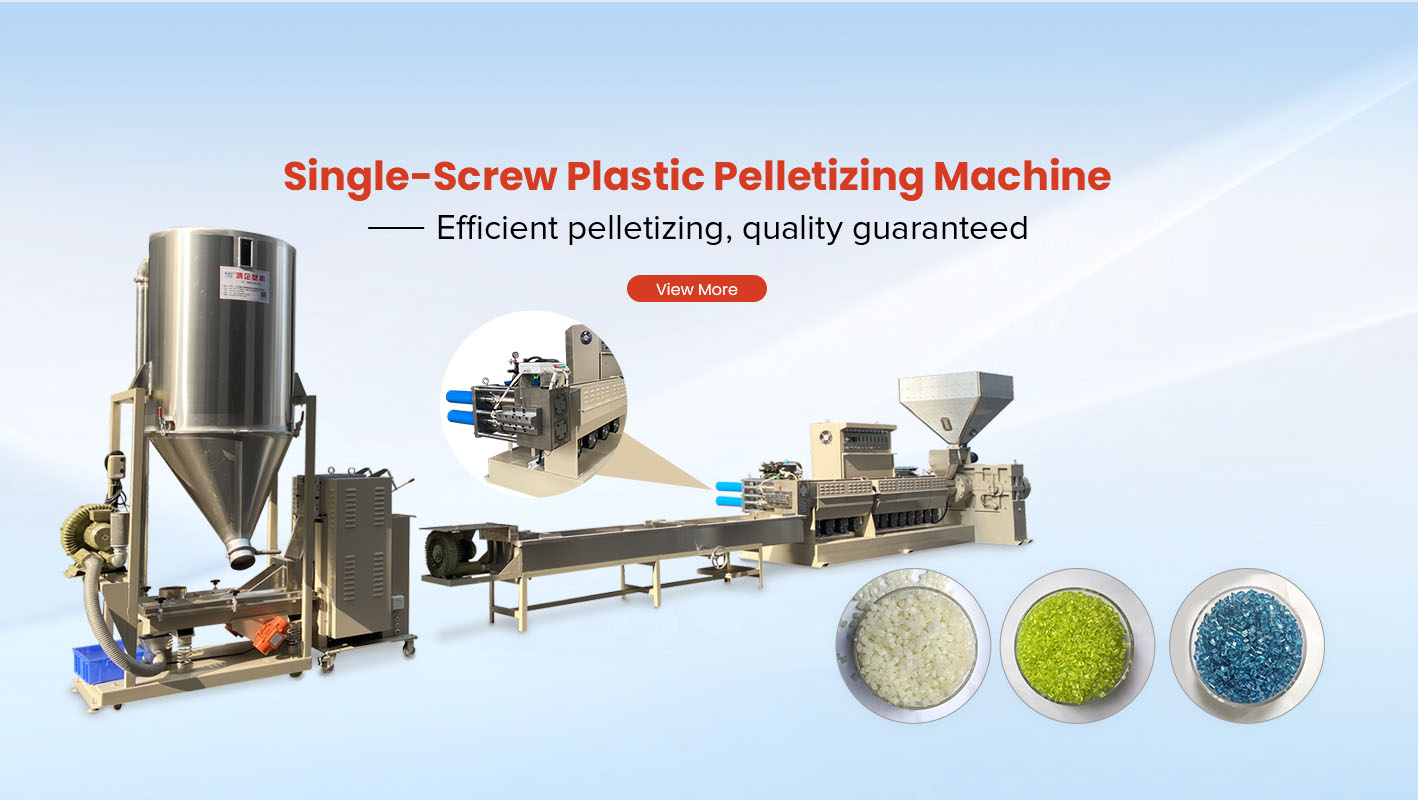
For many plastic processing and recycling lines, matching a conveyor to a consistent feed requirement is a direct way to improve pelletizing stability and reduce downtime. HONGQI positions these conveyors as essential Auxiliary Equipment for plastic recycling and pelletizing plants.
7. Evaluate Reliability Features and Customization for Your Plant
Two screw conveyors with similar size can perform very differently depending on build quality and fit to the process.
What to prioritize:
Consistent manufacturing and fit
Stable internal clearance and well-formed spiral blades reduce vibration, improve feeding consistency, and lower risk of material fallback. HONGQI’s laser-cut spiral blade approach is designed to maintain minimal clearance, supporting efficiency and reliability.
Material compatibility
Stainless construction supports applications where corrosion resistance and easier cleaning are valued. HONGQI’s standard #201 stainless steel option gives a solid baseline for many industrial environments.
Customizable length and configuration
Layout constraints are common in real factories. Having options across sizes and the ability to tailor for horizontal, inclined, or vertical routes reduces compromise and helps keep the line efficient.
Application fit across industries
HONGQI positions its screw conveyors for industries including plastic processing, agriculture, food processing, chemicals, and mining, which typically demand steady bulk handling and durable operation.
If your project requires a specific integration point, such as feeding into a pelletizer, mixer, hopper, or storage silo, selecting the right inlet and outlet arrangement early will reduce field modification risk.
Conclusion
The right screw conveyor choice comes from a structured match between material behavior, target throughput, and installation angle. Start by defining what you convey and how steady the feed must be, then select a model range that meets capacity with margin. Confirm tube diameter, blade thickness, and internal clearance for stable transport, and choose motor power that handles real duty conditions without overload.
HONGQI’s screw conveyor range supports this selection logic through scalable capacities, matched motor options, #201 stainless steel as a practical standard, and laser-cut spiral blades designed for minimal internal clearance to improve efficiency, including for powders.