

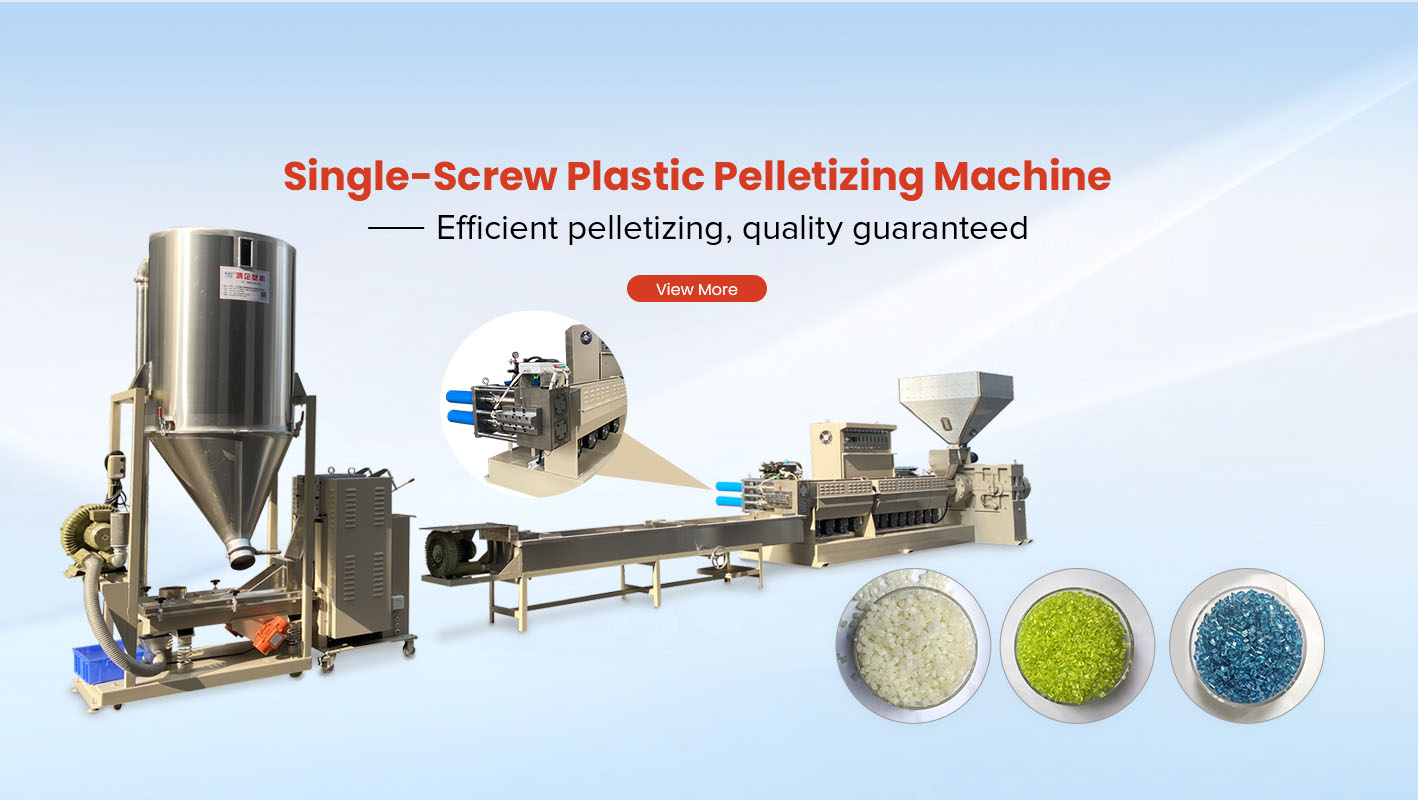
In the plastic compounding and extrusion industry, pelletizing is a crucial step for converting molten polymer into uniform, transportable pellets. Two major pelletizing systems dominate the field: underwater pelletizers and strand pelletizers.
Plastic recycling has become an essential part of global waste reduction efforts, and extrusion technology plays a central role in transforming discarded plastic into useful raw materials.
Sizing a single screw extruder is one of the most important steps in establishing a stable and efficient plastics production line. The extruder’s diameter, L/D ratio, motor power, output capacity, screw design, and feeding requirements must match the characteristics of the material being processed.
Extrusion machines play a central role in modern plastics manufacturing, transforming raw polymer materials into sheets, pellets, profiles, pipes, films, and molded components. Understanding which plastics are compatible with extrusion is essential for ensuring stable production, desired material properties, and long-term efficiency.
A ribbon blender is one of the most widely used industrial mixing machines due to its efficiency, uniform blending capability, and adaptability to different types of powders, granules, and low-viscosity materials. Industries such as plastics, chemicals, food processing, pharmaceuticals, and construction rely heavily on this machine because it delivers fast, repeatable mixing results with low operating costs.
The extrusion process is a cornerstone of modern manufacturing, widely used across industries ranging from plastics and metals to food processing and pharmaceuticals. In plastics manufacturing, extrusion transforms raw polymer materials into continuous shapes.
The plastic pellet extrusion process is a fundamental stage in the production and recycling of plastics. It transforms raw polymer materials or recycled plastic waste into small, uniform pellets that serve as the base feedstock for later molding, extrusion, or compounding applications.
A plastic pelletizer is a critical machine in the plastic recycling and manufacturing industry. It converts raw plastic materials, such as flakes, regrind, or powder, into uniform pellets — a form that’s easier to handle, transport, and reuse in downstream processes like injection molding, extrusion, or film blowing.
In the world of plastic extrusion, choosing the right machine is one of the most important decisions a manufacturer will make. Whether you are producing film, profiles, pellets, or sheets, your choice between single screw and twin screw extruders will directly affect production speed, energy consumption, material quality, and long-term profitability.
An extrusion machine is a type of industrial equipment that transforms raw materials—such as plastics, rubber, or metals—into continuous, uniform shapes by applying heat, pressure, and mechanical force.
A plastic extruder machine is one of the most important pieces of equipment in modern plastic manufacturing and recycling. It converts raw materials such as plastic pellets, flakes, or powder into continuous shapes—like pipes, films, or granules—through controlled heat, pressure, and mechanical force.
A plastic extruder machine is a vital piece of equipment used in the plastic processing and recycling industry. It transforms raw plastic materials such as pellets, flakes, or powder into continuous, uniform shapes like films, pipes, sheets, or granules through controlled heating, melting, and pressure.