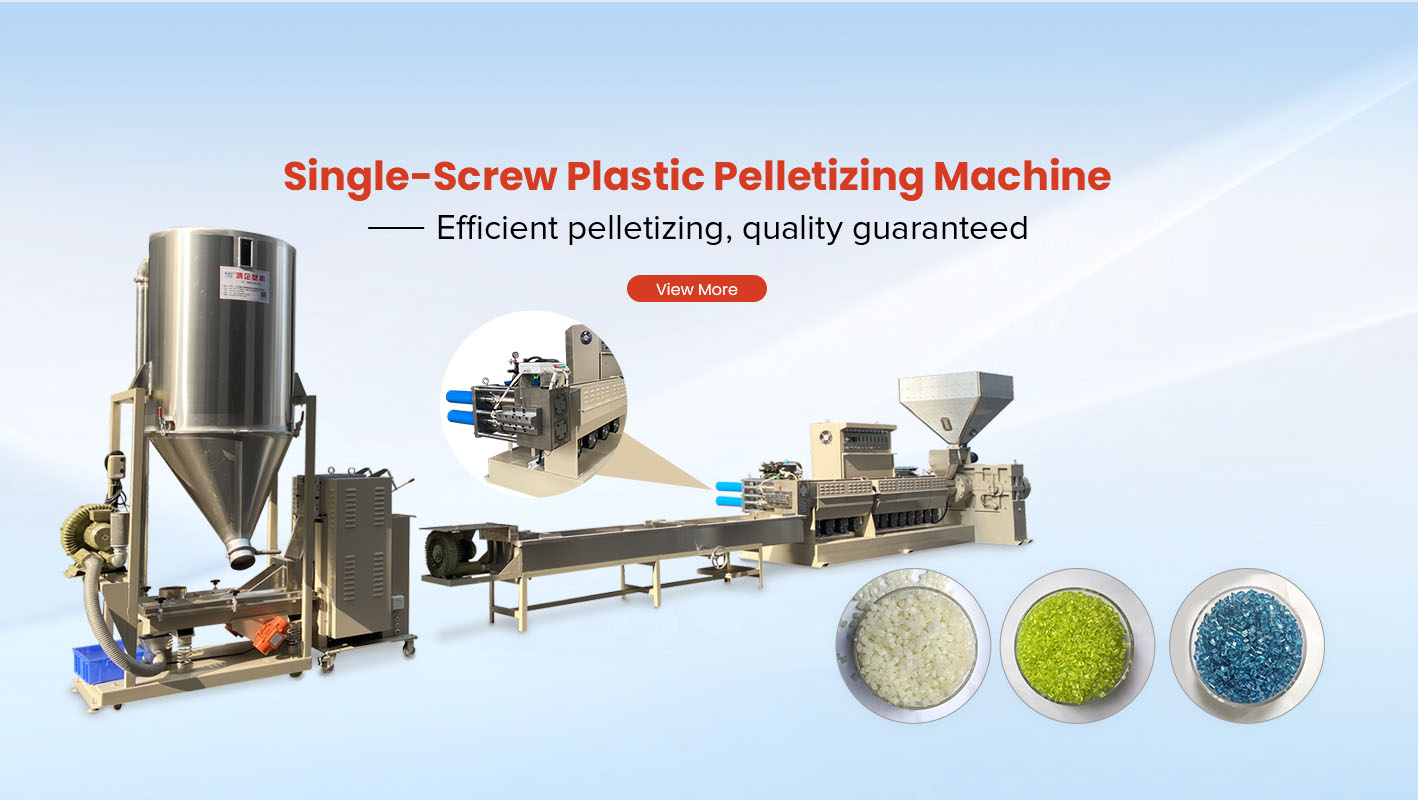
Injection molding factories generate waste every day. It may come from runners, sprues, rejected parts, color-change material, edge scrap, trial production material, or crushed defective products. If these materials are only sold as low-value scrap, the factory loses money twice: first from wasted raw material, then from disposal or resale loss.
plastic pelletizing machines give injection molding factories a way to reuse part of this material more efficiently. The key is not simply buying an extruder. The real value comes from choosing a supplier that can check the material, understand the reuse target, and match the machine configuration with actual production needs.
For buyers comparing plastic recycling machine manufacturers, the most important question should be: can the supplier help turn unstable factory scrap into usable pellets with consistent output, lower contamination risk, and practical after-sales support?

A Good Supplier Starts With The Scrap, Not The Machine Model
Injection molding waste is not always clean or simple. Some factories process PP or PE, while others handle ABS, PA, PC, PBT, TPE, TPU, or filled engineering plastics. Some scrap has color difference. Some contains glass fiber. Some has moisture. Some has mixed batches from different production runs.
Before recommending equipment, the supplier should ask for material photos, crushed material size, resin type, filler ratio, moisture level, current output target, and how the recycled pellets will be reused. This step is often more useful than sending a fast quotation.
Our industrial twin screw extruder can be used for plastic recycling, compounding, masterbatch preparation, thermoplastic elastomer processing, and highly filled composite material production. For injection molding factories, this gives more room to handle materials that need stronger mixing, better dispersion, and more stable processing than simple re-melting.
Twin Screw Processing Helps Improve Recycled Pellet Stability
Injection molding factories often care about whether recycled pellets can return to production without causing unstable molding. Poor pellets may create color spots, bubbles, weak parts, inconsistent flow, or higher reject rates. This is why mixing and temperature control matter.
The twin screw structure helps materials go through stronger conveying, shearing, melting, mixing, and extrusion. For factory scrap that includes additives, fillers, color masterbatch, or engineering plastics, better mixing can improve pellet consistency. The equipment uses a Ø71mm twin screw with an L/D ratio of 40, giving the material enough processing length for melting and homogenizing.
For buyers, this means the machine should be judged by more than output. Screw design, temperature control, degassing, cutting, cooling, and downstream reuse quality all need to be checked before ordering.
Degassing And Temperature Control Reduce Common Recycling Problems
Many injection molding factories face bubbles or unstable pellet appearance when reprocessing scrap. Moisture, residual volatiles, and heat-sensitive materials can make recycled pellets difficult to reuse.
The equipment is equipped with a 4KW vacuum unit for degassing, which is useful when processing recycled materials that may contain moisture or volatile components. The 10-zone temperature control system also helps operators adjust different heating sections more accurately. For heat-sensitive materials or filled compounds, stable temperature control can reduce degradation, discoloration, and carbonization.
This is where supplier experience becomes valuable. A supplier should not only sell the machine, but also help buyers understand how temperature, screw speed, feeding stability, and vacuum performance affect final pellet quality.
Output Planning Should Match The Factory’s Real Waste Volume
Some factories overestimate output needs. Others choose too small a machine and later cannot keep up with internal scrap recycling. Both situations can create cost problems.
The industrial twin screw extruder on this page covers different capacity ranges, and the HQ-75B/C level can reach 600-1000 kg/hr under suitable material and process conditions. For buyers who need a more balanced configuration, the detailed setup with 160KW main motor and variable frequency control is suitable for continuous industrial production.
Before confirming an order, injection molding factories should calculate daily scrap volume, working hours, target pellet reuse ratio, future expansion needs, and available workshop space. A good supplier should help buyers choose a practical capacity instead of pushing the biggest machine.
Cutting And Cooling Affect Whether Pellets Are Easy To Reuse
Recycled pellets should be uniform enough for storage, feeding, drying, and later molding. If the cutting system is unstable, the pellets may be too long, too dusty, or irregular. This can affect downstream feeding and increase production complaints.
This equipment uses SKD-11 or tungsten steel rotary blades, with 28 blades driven by a 7.5KW motor and variable frequency control. The cooling system uses a 304 stainless steel cooling water tank with a suction motor. These details matter because pellet shape and cooling stability directly affect the usability of recycled material.
For injection molding factories, pellet quality is not only about appearance. It affects whether the recycled material can return smoothly into production.
What Buyers Should Confirm Before Placing The Order
A careful buyer should prepare several details before talking with suppliers.
First, confirm the material type and whether it is clean, mixed, filled, reinforced, colored, or moisture-sensitive. Second, confirm the target output and whether the recycled pellets will be used internally or sold. Third, check the screw structure, gearbox, motor brand, heating zones, vacuum system, screen changing method, cutter blade material, cooling method, and control system.
Buyers should also ask about Spare Parts, operator training, installation guidance, voltage matching, factory layout, and trial material testing. For overseas projects, after-sales communication and clear technical documents are especially important.
Supplier Support Makes Reuse Easier To Start
For many injection molding factories, the hardest part is not understanding the value of recycling. The hard part is starting the project correctly. The factory needs to know which scrap can be reused, what quality level can be expected, what equipment layout is required, and how operators should run the process.
We can discuss custom requirements based on material type, capacity target, screw configuration, feeding method, pelletizing method, cooling system, electrical control, workshop layout, and packing needs. OEM and ODM cooperation can also be arranged for machinery distributors or project buyers who need market-specific configuration and documentation.
This kind of communication helps buyers avoid a common mistake: ordering a machine that looks suitable in photos but does not match the material in their workshop.
Conclusion
Injection molding factories can reuse waste material more effectively when they choose pelletizing equipment based on real scrap condition, target output, degassing needs, mixing quality, pellet uniformity, and long-term technical support. A twin screw plastic pelletizing machine is especially useful when the factory needs stronger mixing, better dispersion, and more stable recycled pellet quality.
If you are planning to recycle runners, sprues, rejected parts, crushed products, or filled plastic scrap, send us your material photos, resin type, target output, voltage standard, and workshop layout. We can help review the configuration and suggest a practical setup before you move forward with the order.