A twin screw extruder can keep a factory profitable only when it runs with stable output, predictable maintenance, and controlled Spare Parts cost. But in many compounding and recycling plants, the screw and barrel become the first expensive problem. Output begins to drop, melt quality becomes unstable, torque rises, temperature control becomes harder, and the maintenance team starts planning another replacement much earlier than expected.
For plastic recycling factories, masterbatch producers, engineering plastic compounders, and pelletizing line investors, a plastic twin screw extruder should not be judged only by output capacity. The screw and barrel must match the real material mix, filler content, production speed, cleaning habit, and long-term maintenance plan. Otherwise, the line may keep running, but every month quietly adds more cost.
Wear Is Usually Created By The Material Recipe
Glass Fiber And Mineral Fillers Are Not Gentle
Some materials are naturally harsher on Screw Elements and barrel sections. Glass fiber, talc, calcium carbonate, flame retardants, recycled plastic with impurities, and reinforced compounds can all increase friction inside the processing section. When these materials run every day, wear does not stay theoretical. It appears in the screw flight, kneading block, barrel liner, and high-shear zones.
Factories making reinforced plastics or filled compounds need to treat abrasion as part of the equipment selection, not as an after-sales surprise. A standard configuration may process simple materials well, but it may not survive the same way in a high-filler or recycled-material environment.
Recycled Materials Bring Hidden Abrasive Risk
Post-consumer or post-industrial plastic waste often contains dust, metal particles, labels, paper residue, sand, or inconsistent regrind quality. Even after sorting and washing, impurities may remain. These impurities move through the extruder with the polymer and can speed up wear in the feeding, melting, mixing, and metering areas.
For recycling factories, the question is not only “Can this extruder process recycled plastic?” The better question is “How will the screw and barrel handle the real recycled material we receive every day?”
Screw Design Can Either Control Wear Or Accelerate It
Too Much Shear Can Punish The Metal
Twin screw machines are valued for strong mixing. But aggressive mixing sections can also increase mechanical stress when the formulation does not need that level of shear. If the screw design is too intense, the material may generate more friction, heat, and local pressure than necessary.
For compounders, the screw layout should follow the recipe. Color masterbatch, glass fiber reinforcement, polymer alloy blending, biodegradable plastics, and recycling pelletizing do not need the same screw structure. A better screw configuration can reduce unnecessary wear while still achieving enough dispersion and melting.
Modular Thinking Reduces Blind Replacement
A full screw replacement is expensive. If the system allows a more planned configuration, the factory can focus on the most worn sections instead of treating the whole screw as one fixed part.
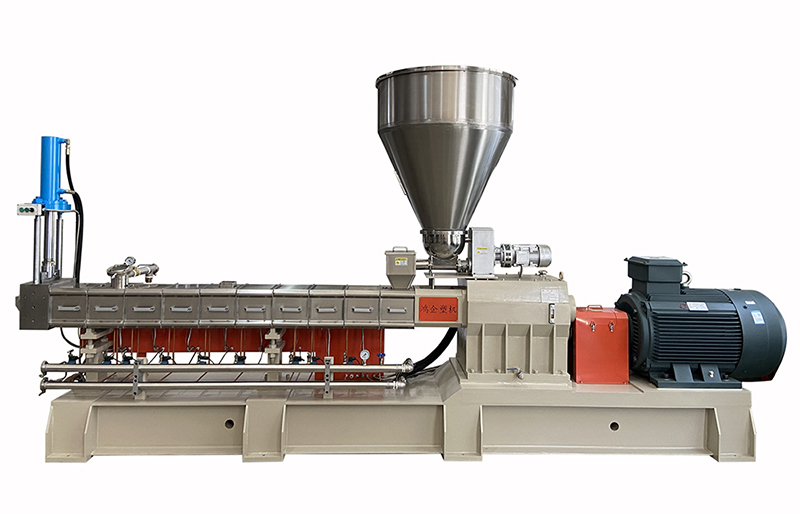
Our twin screw extruder can be prepared with flexible screw configurations, L/D ratio options, and die head choices according to the processing requirement. For buyers handling different materials, this kind of configuration work helps the line run closer to the actual production task instead of forcing one screw setup to handle everything.
Barrel Protection Is Not A Small Detail
Wear Resistance Should Match The Processing Load
The barrel faces constant contact with hot polymer, filler, pressure, and screw movement. When the material is abrasive, the barrel surface can wear along with the screw. As the clearance changes, the machine may lose conveying efficiency and mixing stability.
Our screw and barrel direction uses alloy steel with nitriding or bimetallic coating treatment. For factories processing high-torque or abrasive materials, this kind of wear-resistant preparation is important because the barrel is not a cheap part to replace.
Clearance Changes Affect Product Quality
Screw and barrel wear is not only a maintenance issue. As clearance increases, the material may not be conveyed, melted, or mixed with the same efficiency. Output can fall. Pellet quality may become less stable. Color dispersion may worsen. Filler distribution may become uneven.
This is why factories should watch quality changes as early warning signs, not wait until the screw or barrel is visibly damaged.
Temperature Control Can Reduce Mechanical Stress
Overheating Can Make Wear Worse
Poor temperature control can create extra processing stress. If the melt becomes too hot, the material may degrade. If the temperature is too low, torque may rise and the screw may work harder to move the material. Both conditions can increase pressure on the system.
A stable temperature control system helps keep processing conditions more predictable, especially for heat-sensitive materials, recycled plastics, biodegradable compounds, and filled engineering plastics.
Cooling And Heating Must Work Together
In extrusion, temperature control is not only about heating. Barrel cooling, water circulation, sensor accuracy, and control response also matter. If one zone runs differently from the set condition, operators may increase speed or adjust feeding in ways that increase mechanical load.
For buyers planning long-term production, thermal stability should be part of the wear-control discussion.
Operating Habits Can Shorten Or Extend Service Life
Low-Load Running Can Still Damage The Line
Some factories think wear only happens under heavy production. In reality, poor operation can also damage the screw and barrel. Running the screw for long periods at no load or low load can create unnecessary friction. Starting with the wrong temperature, feeding unstable materials, or stopping without proper cleaning can also create problems later.
A plastic twin screw extruder should be operated with a clear startup, shutdown, cleaning, and maintenance routine. When operators follow different habits across shifts, wear becomes harder to control.
Cleaning Should Protect The Machine, Not Only The Product
Residue inside the screw and barrel can affect the next batch, but it can also create mechanical stress. Burnt material, unmelted particles, or hardened deposits may increase friction and damage the processing surface.
Regular cleaning of the screw, barrel, die head, feeding system, and screen changer helps reduce both quality problems and wear risk.
Maintenance Planning Should Start Before The First Breakdown
Waiting For Failure Costs More
Many factories only inspect the screw and barrel when output drops badly. By then, the problem may already affect product quality, energy use, downtime, and delivery schedules.
A more practical approach is to create a scheduled inspection plan. Maintenance teams can record torque change, output change, melt pressure, temperature stability, vibration, pellet quality, and unusual noise. These signs help identify wear before the machine stops production.
Spare Parts Should Follow Material Severity
Factories processing clean virgin polymers may not need the same spare parts rhythm as factories processing glass fiber reinforced material or recycled plastic. Buyers should build the spare parts plan around the material, not only the machine model.
For high-abrasion production, it is better to prepare key screw elements, barrel sections, screen changer parts, blades, seals, and lubrication items before urgent downtime happens.
Production Lines Need Support Beyond The Main Extruder
Downstream Stability Also Affects The Extruder
If the cooling tank, pelletizer, vibrating screen, feeder, or screen changer is unstable, the extruder may face pressure fluctuation, inconsistent feeding, or irregular output handling. These problems can indirectly increase stress on the screw and barrel.
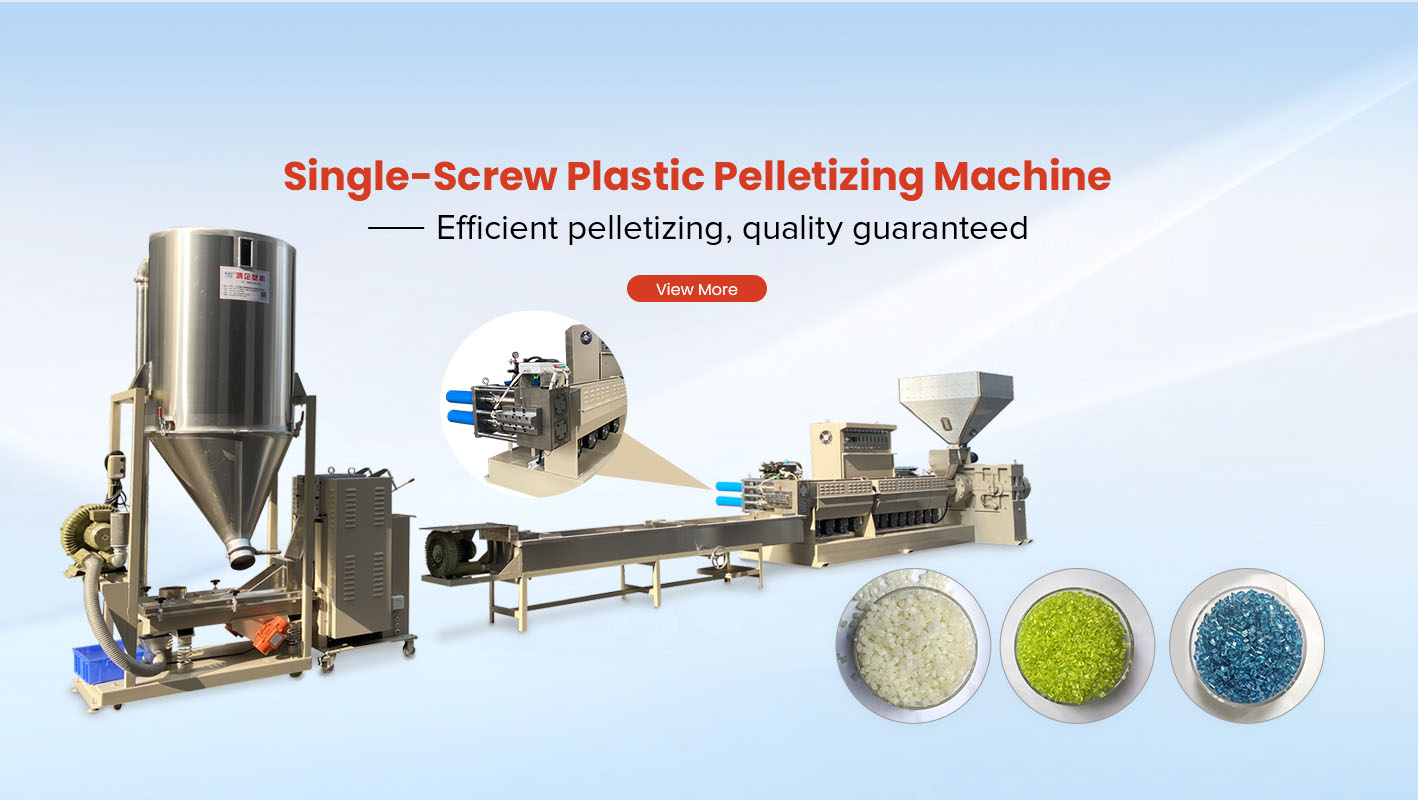
Our complete plastic pelletizing line can include feeding, extrusion, cooling, pelletizing, and screening equipment. For buyers building a new line, the full process should be reviewed together so the extruder does not carry problems created by weak Auxiliary Equipment.
Material Flow Should Stay Predictable
Stable feeding is one of the simplest ways to reduce mechanical stress. If feed rate keeps changing, the screw may face alternating load conditions. Over time, this can affect wear, output consistency, and energy consumption.
Auto feeding, proper material preparation, and stable screen changing can help the line maintain a smoother production rhythm.
Build A Lower-Wear Extrusion Plan Before Production Expands
Rapid screw and barrel wear usually comes from several causes working together: abrasive raw materials, unsuitable screw configuration, weak barrel protection, unstable temperature control, poor cleaning habits, and delayed maintenance. Solving only one point may not be enough.
A plastic twin screw extruder used for recycling, compounding, reinforced plastics, biodegradable materials, masterbatch, or polymer modification should be planned around the real material recipe and expected operating load.
If your factory needs a twin screw extrusion line that reduces unnecessary screw and barrel replacement pressure, come to us to plan the configuration before production expands. Send the material type, filler content, target output, cleaning frequency, current wear problem, spare parts concern, and final pellet requirement. Our team can help match the screw design, barrel treatment, temperature control, and line configuration with your actual production conditions, so maintenance cost is easier to control from the beginning.