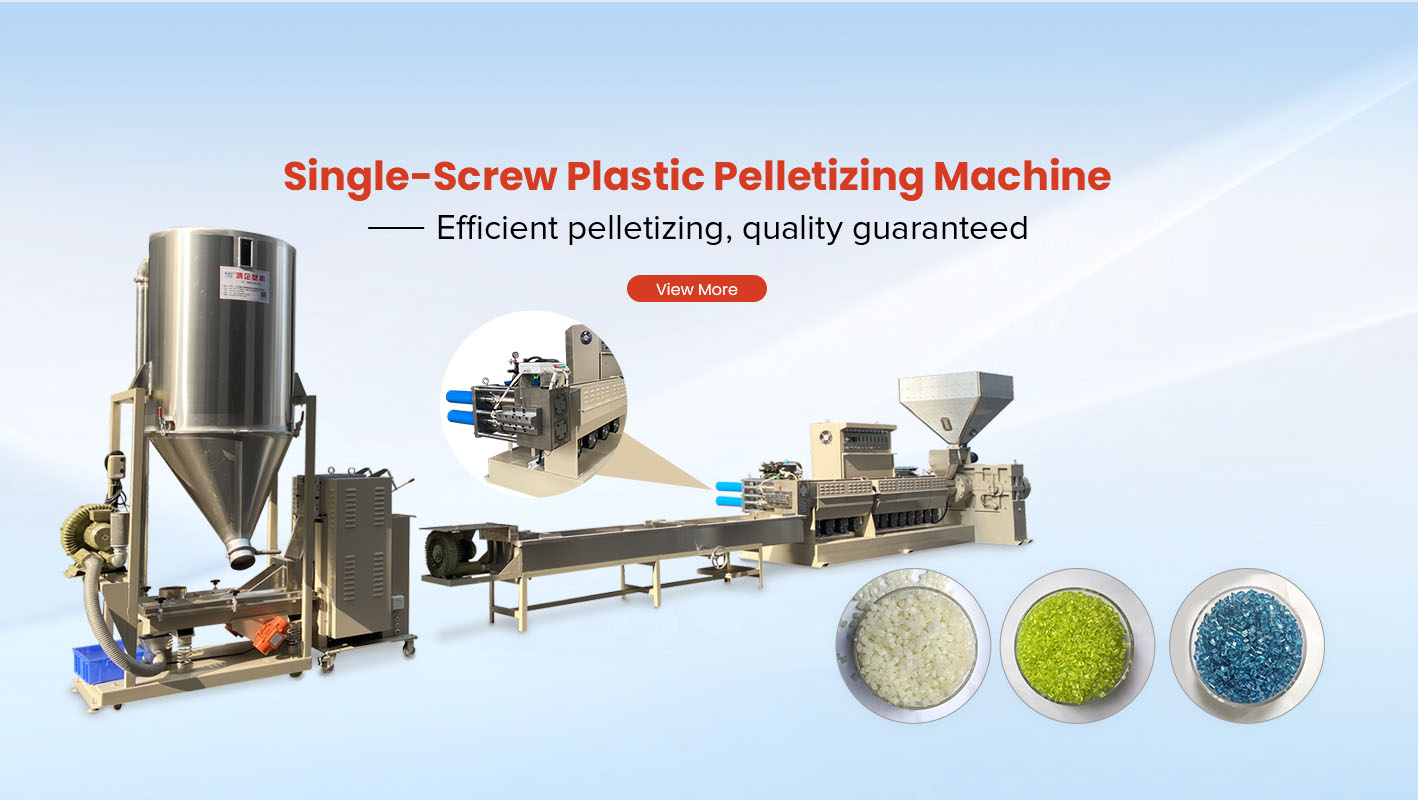
Plastic extrusion can be classified in several ways. Some engineers classify it by die structure, while others classify it by the finished product or the number of screws.
For a practical introduction, four common types are:
Profile extrusion
Pipe and tube extrusion
Film and sheet extrusion
Compounding and pelletizing extrusion
All four use an extruder to prepare and deliver molten plastic, but their dies, cooling systems, downstream equipment, and quality controls differ.
1. Profile Extrusion
Profile extrusion produces a continuous plastic shape with the same cross section along its length.
Common products include:
Window and door profiles
Decorative trim
Sealing strips
Cable channels
Furniture edging
Construction profiles
Plastic rails
The molten plastic passes through a shaped die, then moves through calibration and cooling equipment.
Key Production Challenges
Profile extrusion requires careful control of:
Die-flow balance
Dimensional accuracy
Cooling rate
Haul-off speed
Warpage
Surface finish
Cutting length
The extruder output and downstream pulling speed must remain synchronized. If the haul-off pulls too quickly, the profile may become too thin. If it pulls too slowly, dimensions may increase or the profile may distort.
2. Pipe and Tube Extrusion
Pipe and tube extrusion uses an annular die to form a hollow continuous product.
Applications include:
Water pipe
Drainage pipe
Irrigation tube
Medical tubing
Pneumatic hose
Cable conduit
Industrial pipe
After leaving the die, the hot pipe normally enters a sizing and cooling section.
Why Sizing Is Important
The product is still soft immediately after extrusion.
Vacuum calibration or another sizing method helps maintain the outer diameter and roundness while the plastic cools.
Important specifications include:
| Parameter | Production Effect |
|---|
| Outer diameter | Determines fit and compatibility |
| Wall thickness | Influences strength and material use |
| Ovality | Affects connection performance |
| Cooling rate | Influences shape stability |
| Haul-off speed | Affects dimensions |
| Cut length | Supports packaging and installation |
Pipe production normally requires a coordinated extruder, die, calibration tank, cooling tank, haul-off unit, and cutting equipment.
3. Film and Sheet Extrusion
Film and sheet extrusion produces flat or tubular material for packaging, construction, printing, thermoforming, and industrial applications.
Blown Film Extrusion
In blown film production, molten plastic exits through a circular die and is inflated into a bubble.
The bubble is cooled, collapsed, and wound into rolls.
Products may include bags, liners, packaging film, and agricultural film.
Cast Film and Sheet Extrusion
A flat die distributes molten plastic across a wide opening.
The material is cooled on rollers or another cooling system and then trimmed, pulled, and wound or cut.
Sheet may later be thermoformed into trays, containers, panels, and other products.
Main Control Points
Film and sheet quality depends on:
Melt uniformity
Die temperature
Thickness control
Cooling
Roller speed
Surface finish
Edge trimming
Winding tension
Small process fluctuations can create visible thickness variation across a wide product.
4. Compounding and Pelletizing Extrusion
Compounding extrusion combines polymers with fillers, reinforcements, pigments, stabilizers, flame retardants, impact modifiers, or other ingredients.
Pelletizing extrusion may also process cleaned recycled plastic into reusable granules.
The finished product is usually a pellet rather than a continuous final profile.
When a Twin-Screw Extruder Is Used
A Twin Screw plastic extruder is often selected when the formulation requires stronger mixing and more precise material distribution.
Co-rotating twin screws can provide effective conveying, dispersive mixing, distributive mixing, degassing, and controlled residence time.
Common applications include:
Engineering plastic compounds
Polymer blends
Glass-fiber reinforcement
Mineral-filled plastics
Color masterbatch
Flame-retardant compounds
Biodegradable materials
Recycled plastic modification
Single Screw vs Twin Screw
| Processing Need | Common Equipment Choice |
|---|
| Consistent clean regrind | Single screw may be suitable |
| Basic recycling pelletizing | Often single screw |
| Multiple additives | Twin screw often preferred |
| High filler loading | Twin screw |
| Polymer blending | Twin screw |
| Strong dispersive mixing | Twin screw |
| Simple melt conveying | Single screw |
This is a general guide rather than a fixed rule. The final choice depends on formulation, contamination, output, shear sensitivity, and pellet requirements.
Are There Other Types of Extrusion?
Yes. The four categories above are a practical introduction, not a complete list.
Other extrusion methods include:
Co-extrusion
Wire and cable coating
Extrusion coating
Foam extrusion
Reactive extrusion
Multilayer extrusion
Monofilament extrusion
Underwater pelletizing
Water-ring pelletizing
A production line should be classified by the actual product and process rather than by one broad label.
How to Choose the Correct Extrusion Type
Start with the final product.
Ask:
Is the output a profile, pipe, film, sheet, or pellet?
Which polymer will be processed?
Are additives or fillers required?
Is the material virgin or recycled?
What hourly capacity is needed?
What level of filtration is required?
How sensitive is the material to heat and shear?
Which downstream equipment is available?
These answers determine the screw structure, die, cooling system, pelletizer, and Auxiliary Equipment.
Our Twin-Screw Extrusion Capability
Our twin-screw product range includes models for laboratory, medium-output, and high-capacity applications.
The equipment can be configured with different screw diameters, L/D ratios, screw arrangements, die heads, temperature systems, and pelletizing processes.
We also provide single-screw pelletizing machines and auxiliary equipment, allowing buyers to compare different solutions for recycling and compounding rather than selecting a machine only by motor size.
Send us the polymer formulation, additives, filler percentage, moisture, target capacity, pellet application, filtration requirement, voltage, and workshop layout.
Our team will prepare a Twin Screw Plastic Extruder configuration based on the material and production objective.