Plastic gun sights are aiming components made from polymer materials rather than metal. They are usually designed to help align the user’s eye, front sight, and target. In material terms, these parts are small plastic components that need dimensional stability, impact resistance, weather resistance, and consistent molding quality.
This article only explains the material and manufacturing logic behind plastic sight components. It does not cover firearm modification, installation, or tactical use. From a plastics industry view, this topic is mainly about how small precision parts depend on polymer selection and processing control.
Why Plastic Is Used for Small Precision Parts
Plastic is used in many small functional components because it is lightweight, moldable, corrosion-resistant, and suitable for repeat production. Compared with metal, plastic can reduce weight and allow more flexible shape design.
For sight-like components, the material may need to resist outdoor temperature changes, handling friction, oil contact, sunlight, and repeated mechanical stress. This is why ordinary low-grade plastic is not enough for many functional parts.
Engineering plastics such as nylon, ABS, PC, POM, or reinforced compounds may be considered depending on the product requirement.
What Material Properties Matter Most
For small molded parts, the important question is not simply whether the part is plastic. The real question is whether the polymer can hold its shape and performance after molding, assembly, transport, and long-term use.
Key material properties may include:
Impact resistance
Dimensional stability
Heat resistance
UV resistance
Surface hardness
Low warpage
Color consistency
Good mold flow
Stable shrinkage rate
A small part with poor material stability may deform, crack, fade, or lose fitting accuracy.
Why Pellet Quality Affects Finished Parts
Plastic gun sights and other small precision components usually begin with pellets. If the pellets contain moisture, contamination, uneven additives, or poor mixing, the molded part may show defects.
Common issues include bubbles, black spots, brittle areas, color difference, weak surface, or unstable dimensions. These problems often appear during injection molding, but the root cause can start earlier in material preparation or pelletizing.
That is why pellet quality is important for downstream molded components.
Some plastic products can use recycled pellets, but precision or safety-related components need stricter material control. Recycled plastics may be suitable only when the material source, formula, filtration, moisture level, and pellet consistency are well managed.
Our plastic pelletizing machinery supports different plastic processing needs, including general-purpose plastics and engineering plastics. For buyers working with ABS, PC, PA, PET, PBT, PP, HDPE, LDPE, or PS, the production line should match the material’s temperature, moisture, filtration, and cutting requirements.
The goal is to produce cleaner and more stable pellets for later processing.
Where Pelletizing Equipment Fits In
A pelletizing line does not directly produce final molded parts. It prepares raw plastic or recycled plastic into pellets that can be used in injection molding, extrusion, compounding, or other downstream processes.
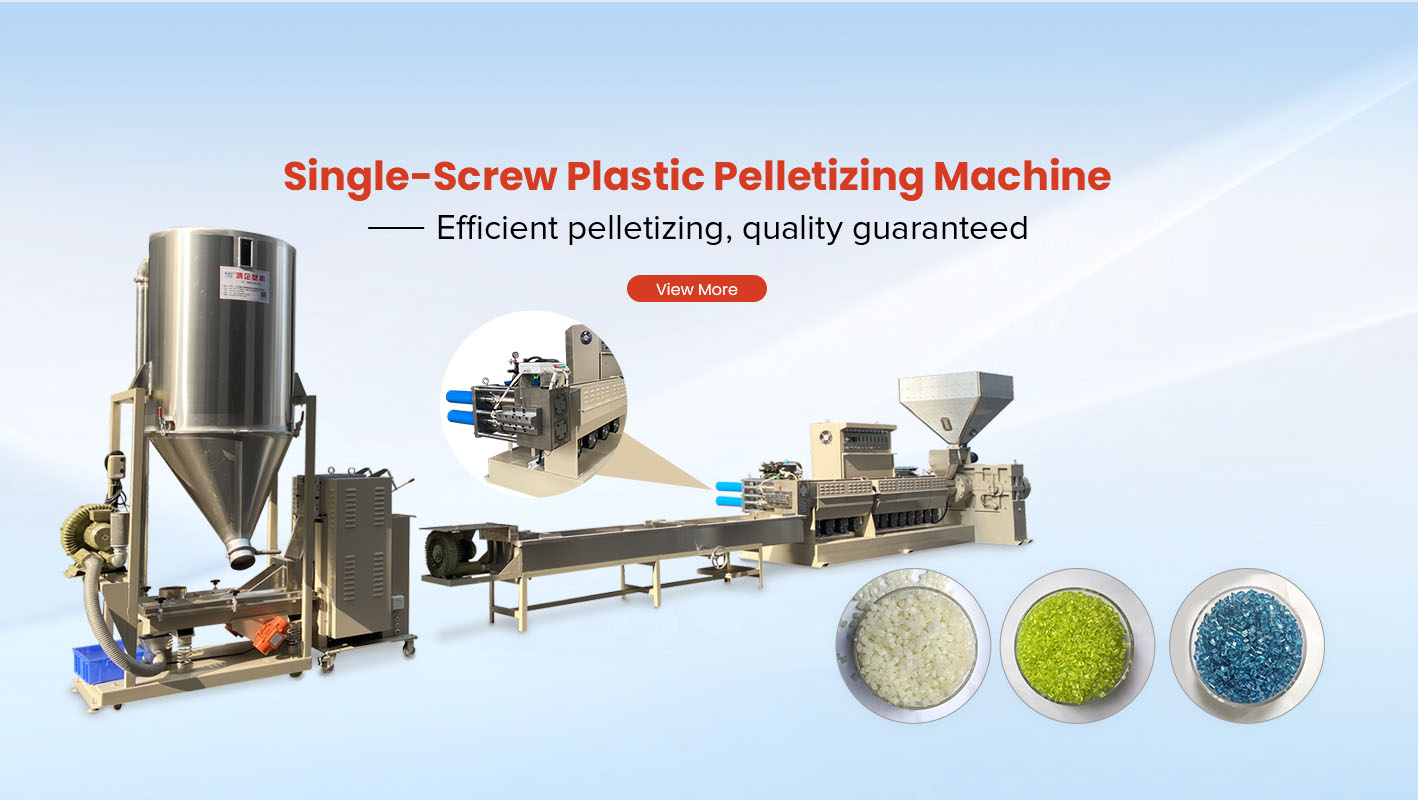
Our Single Screw Plastic Pelletizing Extrusion Machine can support efficient plastic processing for recycling and pellet production. For more complex materials or compounding needs, twin-screw and two-stage solutions may be more suitable.
For small precision plastic parts, stable feeding, melting, filtration, degassing, and pellet cutting all influence final material quality.
Material Advice for Component Buyers
When sourcing small plastic components, buyers should ask about the polymer grade, reinforcement, UV package, color masterbatch, molding tolerance, testing method, and material traceability.
When producing pellets for these components, buyers should confirm drying, filtration mesh, screw design, temperature control, pellet size, and output stability.
The finished part may be small, but the material chain behind it is not simple.
Final Material Note
Plastic gun sights are polymer-based aiming components, but their quality depends on engineering plastic performance, precision molding, and stable pellet quality.
For plastic processors, better pellet preparation can help reduce downstream molding defects and improve consistency in small functional plastic parts.
Request a Plastic Pelletizing Solution
Send us your plastic material, recycled or virgin source, expected output, moisture condition, filtration requirement, pellet size, and downstream application. We can recommend suitable pelletizing equipment for stable plastic processing.