Composite railings may look like plastic because they often contain polymer materials on the surface or throughout the structure. Many composite railing products are made from plastic resin mixed with wood fiber, mineral filler, color additives, stabilizers, and protective surface layers. The result can look smoother, more uniform, and more synthetic than natural wood.
This plastic-like appearance is not always a weakness. It may be part of the design. Composite railings are often made to resist moisture, reduce maintenance, and keep a consistent color across repeated production.
Composite Does Not Mean One Material
A composite product is made by combining two or more materials. In railings, the structure may include plastic resin, wood powder, fiber reinforcement, fillers, or protective coatings.
Because plastic resin is often a major part of the formula, the surface can look like plastic, especially when the product has a smooth cap layer or molded texture.
Some products are designed to imitate wood grain. Others are designed to look clean, modern, and uniform.
Why the Surface Looks Smooth
Plastic melts and flows during processing. When it is extruded or molded, it can form a smooth and consistent surface. Natural wood has pores, grain variation, knots, and irregular color, while composite products are more controlled.
This is why composite railings may look more uniform than wood railings. The color and surface pattern are created by formulation and tooling rather than by tree growth.
For buyers, the choice depends on whether the market prefers natural variation or low-maintenance consistency.
Color Additives Affect the Final Look
Composite railings use pigments and color masterbatch to create shades such as white, grey, brown, black, or wood-like tones. If the color formula is too flat, the railing may look more like plastic.
Better texture design, balanced filler, surface embossing, and color blending can make composite products look more natural.
However, higher-end surface effects require more controlled compounding and extrusion.
Why Pellet Quality Matters for Composite Products
Composite railings and similar plastic-wood products often rely on stable material preparation. If the pellets are uneven, wet, poorly mixed, or contaminated, the finished railing may show color streaks, bubbles, rough areas, weak sections, or surface defects.
A good pelletizing or compounding process helps improve formula consistency before final extrusion.
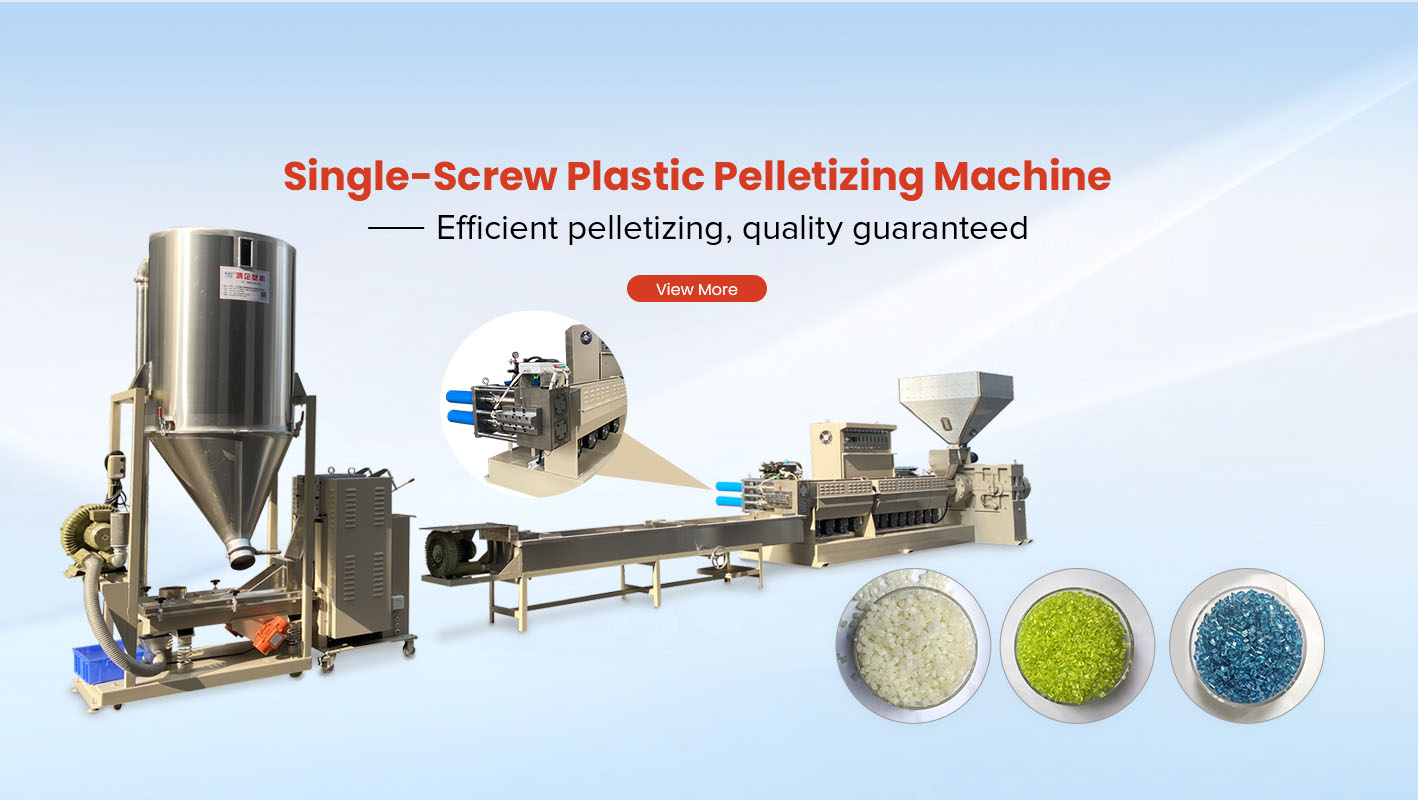
Our plastic pelletizing machinery can support material preparation for recycled plastics, modified plastics, and compound materials. For buyers working with fillers or mixed materials, the machine should be selected for mixing, degassing, filtration, and output stability.
Wood-Plastic Composite Processing
Wood-plastic composite materials often need careful drying because wood fiber or filler can carry moisture. If moisture is not controlled, bubbles and surface roughness may appear during extrusion.
The plastic resin also needs proper melting and mixing with the filler. Poor mixing can create weak spots or uneven surface appearance.
For composite products, material preparation is just as important as the final extrusion die.
Product Appearance and Market Expectation
Some customers complain that composite railings look like plastic because they expect natural wood. Others prefer the plastic-like uniformity because it looks clean and requires less maintenance.
For manufacturers, the product should be positioned honestly. Composite railings are not solid wood. Their value comes from engineered structure, stable dimensions, moisture resistance, and repeatable production.
The appearance should match the target market.
Production Link With Pelletizing Equipment
Our Industry Plastic Pelletizing Machine can process a wide range of plastics such as PP, HDPE, LDPE, PS, ABS, PC, PA, PET, and PBT. For composite and modified plastic applications, material characteristics should be reviewed before choosing machine configuration.
A railing manufacturer may need different equipment from a film recycling plant or PET flake processor.
Improving Composite Railing Appearance
Manufacturers can improve appearance by controlling material mixing, filler ratio, surface embossing, color masterbatch, cooling, die design, and pellet quality.
If the material looks too plastic, the issue may be related to surface texture, formula design, or color depth. If the product has streaks or bubbles, the issue may be related to moisture, mixing, or processing temperature.
Material Selection Note
Composite railings look like plastic because plastic resin is often a key part of the material system. This gives them a smoother and more uniform surface than natural wood.
For manufacturers, stable pelletizing and compounding help create better color, texture, and structure in composite railing products.
Request a Composite Material Pelletizing Plan
Send us your base resin, filler type, moisture condition, output target, pellet size, degassing need, and downstream extrusion application. We can recommend suitable pelletizing equipment for composite or modified plastic processing.