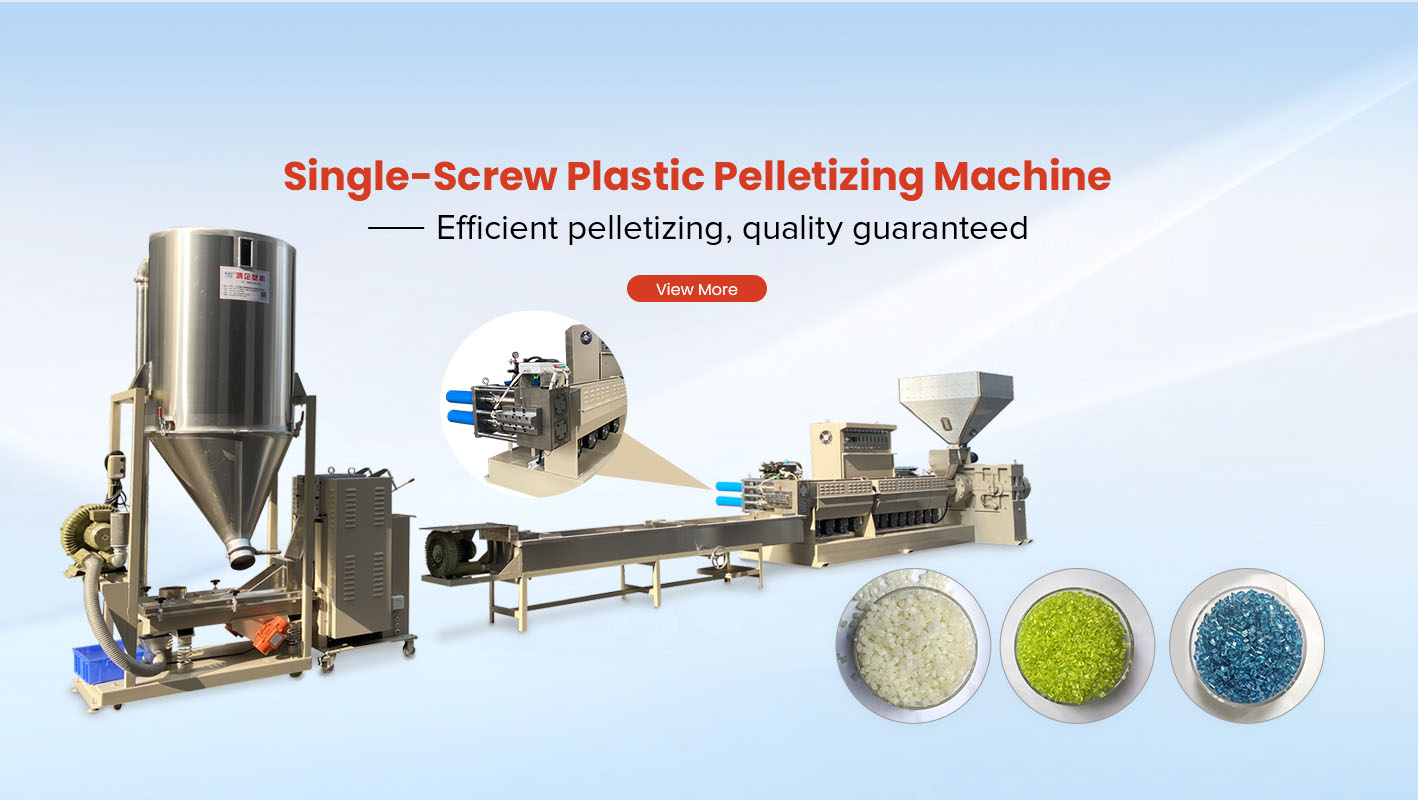
Common problems with pellet machines include unstable feeding, poor melting, uneven pellet size, die blockage, screen clogging, excessive moisture, weak cutting, high motor load, material degradation, smoke, odor, unstable output, and abnormal noise. These problems may come from the machine, the material, or the operating process.
A pellet machine is not only a single piece of equipment. In plastic recycling or pelletizing, it usually works with feeding, crushing, drying, extrusion, filtration, degassing, cooling, cutting, and collection systems. A problem in one stage can affect the whole line.
Unstable Feeding
Feeding problems are very common. Film scraps, flakes, regrind, fibers, and mixed materials may bridge, slip, or enter the screw unevenly.
When feeding is unstable, the extrusion pressure changes. The final pellets may become inconsistent in size, shape, and density.
Possible causes include poor material preparation, oversized scrap, wrong feeding method, low bulk density, or unsuitable hopper design.
Moisture and Bubbles
Moisture is one of the biggest enemies of stable pelletizing. Wet plastic can create bubbles, holes, surface defects, strand breakage, odor, and material degradation.
PET, PA, PC, and some engineering plastics are especially sensitive to moisture. Washed recycled materials also need proper drying before extrusion.
For these cases, drying and degassing should be considered before machine selection.
Screen and Filter Blockage
Recycled plastic often contains impurities such as paper, metal, dust, labels, rubber, sand, or degraded material. These impurities can clog the filter screen and increase pressure.
If the screen blocks too quickly, output drops and machine downtime increases.
Better sorting, washing, crushing, filtration design, and screen-changing systems can help reduce this problem.
Uneven Pellet Size
Uneven pellets may be caused by unstable extrusion, incorrect cutting speed, worn blades, poor cooling, strand vibration, or inconsistent material flow.
Pellet size matters because downstream processing machines need stable feeding. Irregular pellets can affect injection molding, extrusion, or compounding performance.
Knife inspection, cooling control, and stable melt flow are important for pellet quality.
Material Degradation
Plastic can degrade when the temperature is too high, residence time is too long, moisture is present, or the material has been recycled many times.
Signs of degradation may include yellowing, black spots, smoke, odor, brittle pellets, low strength, or unstable melt flow.
Operators should check temperature settings, screw speed, feeding rate, degassing condition, and material history.
Abnormal Noise or Vibration
Noise and vibration may come from bearings, gearbox, screw contact, cutter system, motor, cooling system, or loose installation parts.
Ignoring abnormal sound can lead to larger equipment damage. Operators should stop and inspect the machine when noise suddenly changes.
Regular maintenance is cheaper than emergency repair.
Output Lower Than Expected
Low output can be caused by poor feeding, insufficient heating, wrong screw design, clogged filter, high material moisture, low motor power, or unsuitable machine configuration.
The output target should be discussed before purchase. Different plastics and feeding forms have different production capacities.
Our PET Granulator Machine is designed for PET material processing, while other single-screw, twin-screw, and two-stage pelletizing solutions can support different plastic recycling needs.
Why Machine Matching Matters
A pellet machine should be selected according to material type, contamination level, moisture condition, output target, pellet use, and factory space. A machine that works well for clean PP regrind may not be suitable for wet PET flakes or highly filled engineering plastics.
We provide plastic pelletizing machinery design, production, sales, and after-service support. Our solutions include single-screw pelletizing, twin-screw pelletizing, and plastic recycling processing equipment.
For buyers, correct machine selection is the first step to reducing common operating problems.
Troubleshooting Direction
When pellet machine problems appear, check the material first, then the process settings, then the machine condition. Many issues are caused by material moisture, contamination, or unstable feeding rather than the extruder alone.
A practical troubleshooting order is material preparation, temperature, pressure, screw speed, filtration, cooling, cutter setting, and final pellet inspection.
Request Pellet Machine Troubleshooting Support
Send us your material type, feeding form, machine model, output problem, pellet appearance, temperature settings, screen condition, and photos or videos if available. We can help review the possible causes and recommend suitable pelletizing equipment or process adjustments.