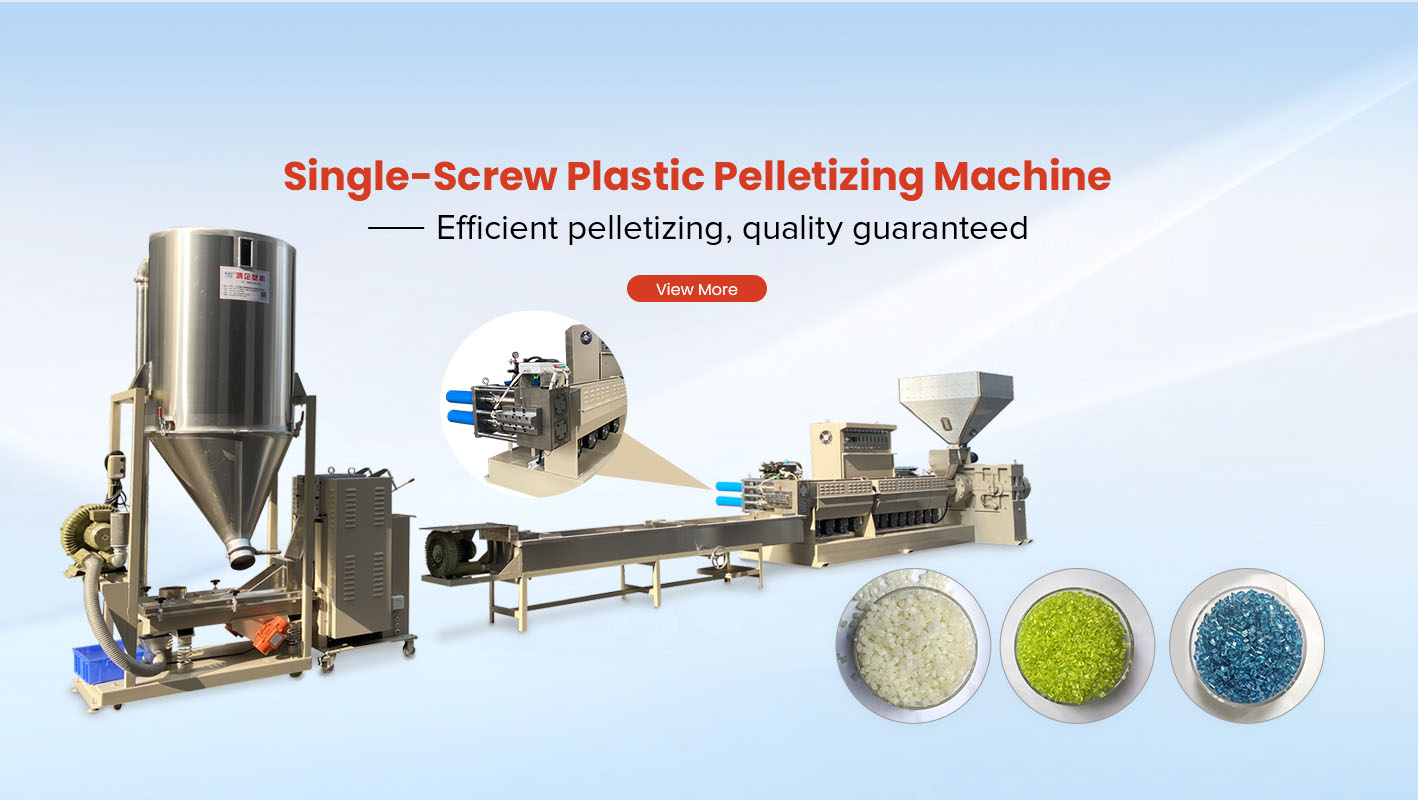
Pelletising and pelletizing mean the same process. “Pelletising” is the British English spelling, while “pelletizing” is the American English spelling. Both terms describe converting a material into pellets. In plastic recycling, the process usually involves melting, filtering, extruding, cooling, and cutting plastic into reusable granules.
Why Are There Two Spellings?
British English commonly uses “s” in words such as pelletising, granulating, and plasticising. American English often changes the relevant spelling to “z,” producing pelletizing and plasticizing.
Neither spelling indicates a different machine, polymer, or production method. A plastic pelletising machine and a plastic pelletizing machine may refer to exactly the same equipment.
Manufacturers selling internationally often use both terms in catalogs and online content so that buyers in different regions can find the product.
Other Terms Buyers May Encounter
The plastics industry also uses several related terms:
These names sometimes overlap, but they can also refer to different parts of the process. A recycling extruder melts and pressurizes the polymer. A Strand Pelletizer is the downstream cutter that turns cooled strands into short pellets.
“Granulator” can describe a pelletizing system in some markets, while in others it refers to a size-reduction machine that cuts solid plastic waste into flakes. Buyers should therefore ask for a process diagram instead of relying on the equipment name alone.
What Happens During Plastic Pelletising?
Prepared plastic is first fed into the extrusion system. A rotating screw conveys the material through heated barrel zones, where it becomes compressed and plasticized.
The melt may pass through venting and filtration stages. Venting removes moisture or volatile substances, while the screen removes solid contamination.
The polymer then leaves the die. In a strand line, it forms continuous strands that are cooled before entering the cutting machine. The pelletizer cuts them into granules, and a vibrating screen may separate fines or irregular pieces.
The final pellets can be stored, blended, transported, and fed into another manufacturing process.
Pelletising Is Not the Same as Crushing
Crushing reduces the size of solid waste but does not melt it. A crusher or granulator can turn defective products, bottles, runners, sheets, or other waste into flakes.
Pelletising changes the physical form through melting and re-extrusion. It may also provide filtration, degassing, color blending, and additive distribution.
A complete recycling plant may use both operations. Waste is first crushed and prepared, then fed into the pelletizing line.
Does Every Plastic Use the Same Pelletizing Process?
No. Each polymer has different melting behavior, moisture sensitivity, viscosity, and degradation risk.
PP and PE are common recycling materials, but they still require the correct feeding and screw arrangement. PET must be dried appropriately because moisture can reduce material performance. PC and PMMA need controlled processing to limit discoloration and maintain transparency-related properties.
Filled or reinforced compounds may require stronger mixing and wear-resistant components. Printed or painted waste may need de-coating or enhanced filtration.
The spelling remains the same process, but the equipment configuration changes with the material.
Our Export Equipment Approach
As a reliable export plastic pelletizing machine supplier, we provide single-screw and twin-screw extrusion pelletizing equipment, auxiliary machinery, and Spare Parts.
Our systems can be configured for recycling, compounding, PC and PMMA, LED diffuser materials, and polymers including PA, ABS, ABS/PC, PET, PBT, PP, HDPE, LDPE, and PS.
CNC machining equipment supports production accuracy, while our experience in design and after-service helps us adapt machines for different countries. Export details can include voltage, frequency, control components, layout, documentation, and auxiliary-equipment matching.
For search and catalog purposes, buyers may see both “pelletising” and “pelletizing” in our industry. Technical discussions should focus on the polymer, output, filtration, cooling, and pellet requirement rather than spelling.
Which Term Should You Use?
Use “pelletising” when writing for markets that prefer British English. Use “pelletizing” for the United States and other markets where American English is standard.
Either spelling is technically correct. Consistency within a document is more important than choosing one universal version.
Request an Export Pelletizing Solution
Send us your material description, target output, desired pellet quality, electrical standard, country, and factory layout. We can prepare an export equipment configuration and quotation for your recycling or compounding process.