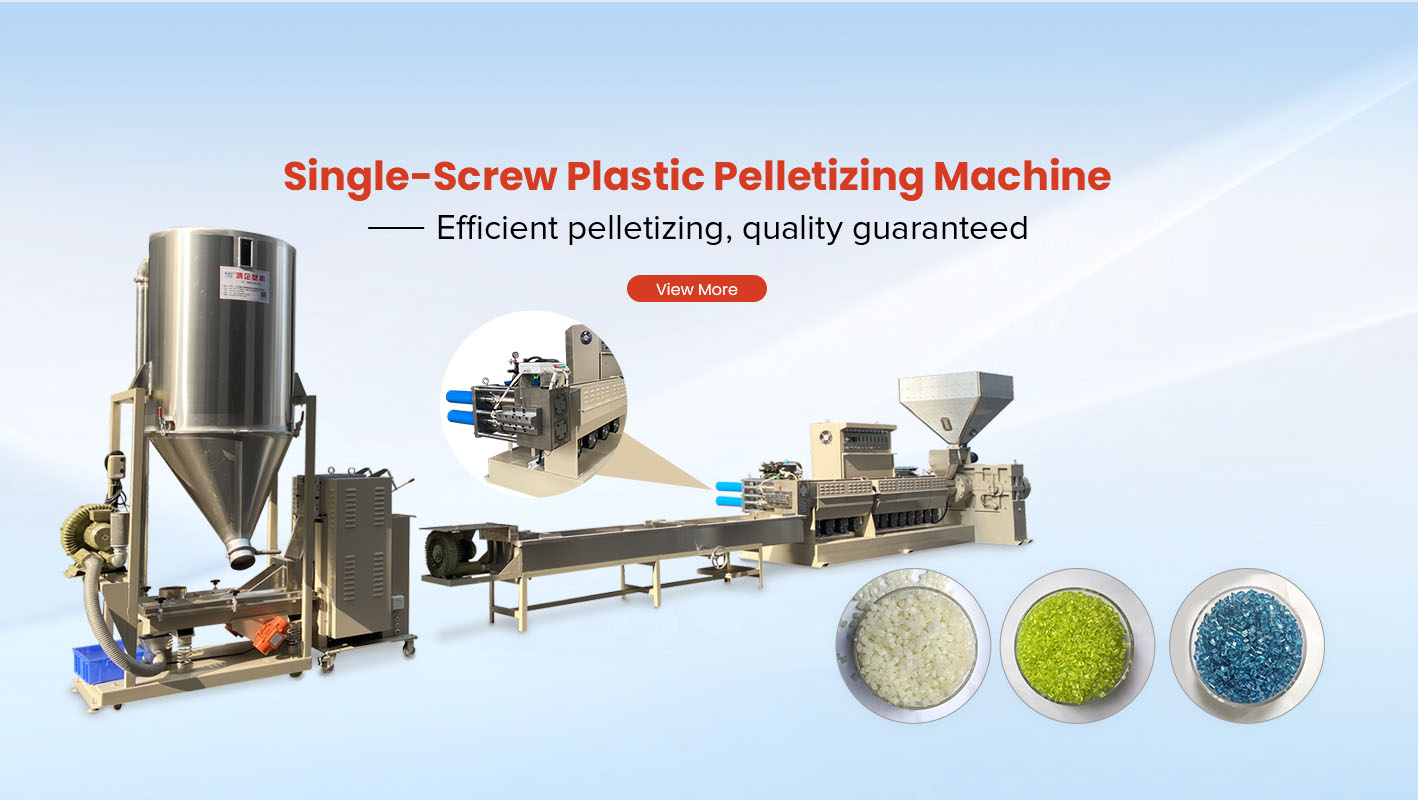
Turning waste plastic into reusable pellets becomes easier when the material is sorted, cleaned, dried and fed into a properly matched extrusion line. The machine does not remove the need for preparation; it makes a controlled process repeatable. A customized plastic recycling and pelletizing line should therefore be designed around the condition of the waste rather than around a generic machine list.
Begin with One Clearly Defined Waste Stream
Mixed plastic is one of the most common causes of poor pellet quality. PE, PP, PET, PVC, ABS and engineering plastics behave differently when heated. Their processing temperatures and material compatibility are not the same.
Before starting, identify:
Plastic should also be separated from metal, glass, paper and other foreign matter. Better sorting at the beginning usually means fewer screen changes and more stable pellets later.
Reduce the Material to a Feedable Size
Large molded parts, sheets or production offcuts cannot always enter the extruder directly. They may first need shredding or crushing.
The processed pieces should be small enough for reliable feeding but not so fine that they bridge, scatter or feed unevenly. Films and lightweight flakes may require a forced feeder, while heavier regrind may enter through a conventional hopper.
Wash and Dry Only When Necessary—but Do It Properly
Post-consumer plastic normally requires more cleaning than clean factory scrap. Dirt, labels, adhesive and oil can cause odor, discoloration and blocked filtration screens.
Washed plastic must then be dewatered. Residual moisture may form bubbles or voids as the polymer melts. Hygroscopic materials require particularly careful drying because they can absorb moisture into the resin itself.
Our vertical plastic dewatering equipment is intended for plastic materials such as ABS, PET, PP, PE and PS. Where mixing and drying are both required, buyers can also click to view our plastic pellet mixer with heating.
Set Up Extrusion Around the Material
Prepared plastic enters the extruder and moves through controlled temperature zones. The screw melts, conveys and mixes it. A vent or vacuum section may remove moisture and volatile matter, while a screen changer filters solid contaminants from the melt.
Stable pellet production depends on balancing:
feed rate;
screw speed;
barrel temperatures;
melt pressure;
cooling conditions;
cutter speed.
Raising temperature or screw speed is not a universal cure for unstable output. Excessive heat can degrade resin, while excessive screw speed can create unnecessary shear.
Our customized plastic recycling and pelletizing line can use single-screw or twin-screw extrusion according to the input. Single-screw systems are practical for many recycling duties; twin-screw systems are valuable when mixing and formulation control are more demanding.
Cool, Cut and Screen the Pellets
In strand pelletizing, molten strands pass through a cooling section and then enter the cutter. Strands that are too warm may smear around the blades. Overcooled strands may become brittle and break before reaching the pelletizer.
After cutting, screening separates acceptable pellets from fines or oversized pieces. Pellets can then be dried, mixed, tested and packed.
Operators should check pellet size, color, surface, odor, bulk density and contamination instead of judging output by appearance alone.
Where Our Factory Fits into the Process
We produce single-screw, twin-screw and two-stage pelletizing machines together with mixers, conveyors, Strand Pelletizers, dewatering machines and screening equipment. This range allows the material route to be planned from preparation through finished granules.
Our CNC machining centers support the accuracy of equipment components, while more than 20 years of pelletizing-machinery experience helps us discuss different resins, production capacities and workshop conditions. You can click to read about our equipment and production background.
“Easy” pelletizing does not mean skipping steps. It means matching each step so operators do not spend every shift correcting moisture, contamination or unstable feeding.
Plan Your Recycling Line with Our Engineers
Tell us what plastic you process, whether it is washed, its incoming form and the required kg/h. We can prepare a configuration covering feeding, extrusion, cooling, cutting and Auxiliary Equipment. Submit your project details here for a customized plastic recycling and pelletizing line quotation.