The phrase seven types of plastic recycling usually refers to the seven resin identification codes found on plastic products—not seven separate recycling technologies. Codes 1 through 7 identify the main resin family, but the symbol does not guarantee that an item is accepted by a local recycling program. A reliable export supplier of plastic recycling machinery must therefore ask about the actual polymer and waste condition before recommending equipment.
Code 1: PET or PETE
Polyethylene terephthalate is used in beverage bottles, food packaging, fibers and thermoformed containers.
Clean PET can be recycled into flakes or pellets, but moisture control is critical. Labels, caps, adhesives and mixed colors must be managed before extrusion. PET can degrade during processing when it has not been dried correctly.
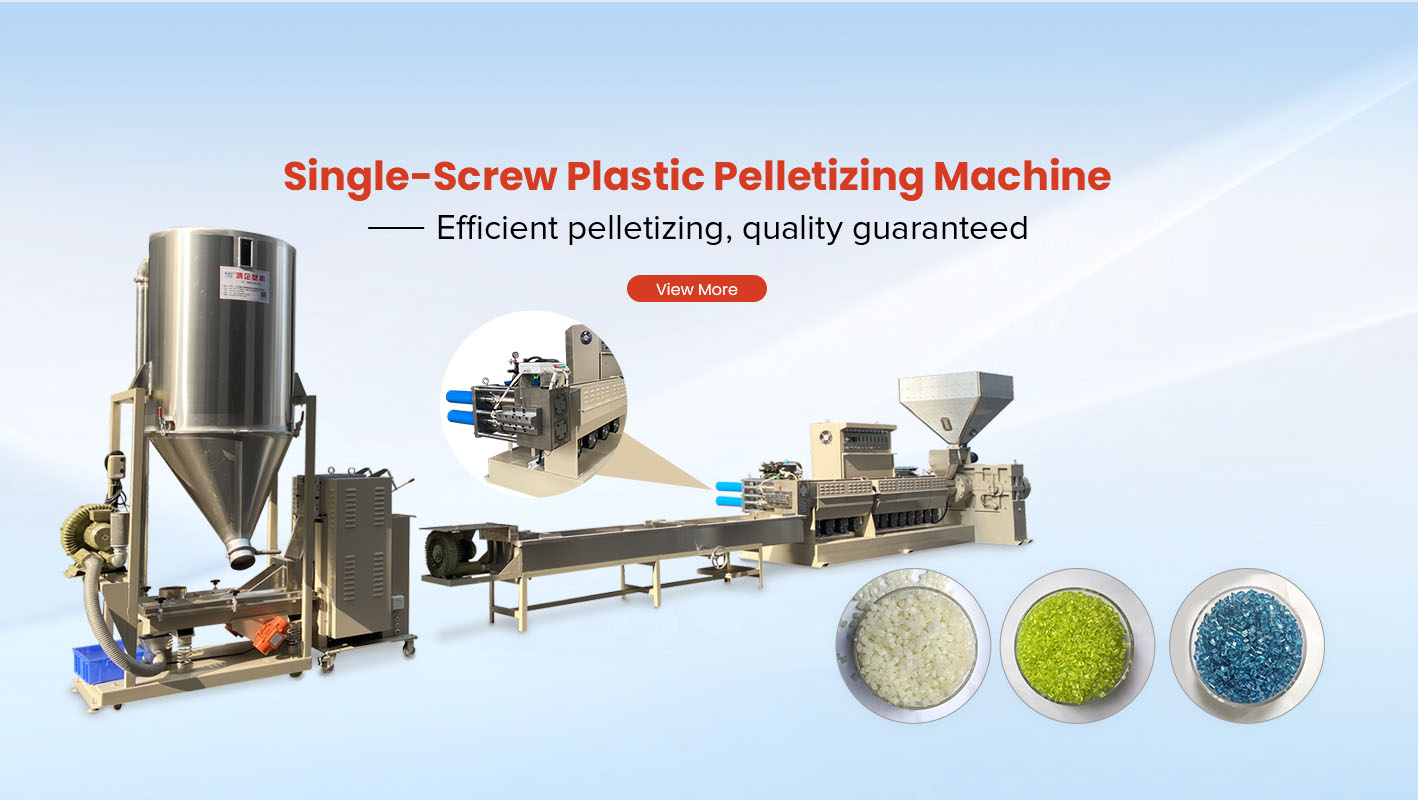
Our single-screw PET granulator machine is one equipment option for suitable PET and PP granulation applications.
Code 2: HDPE
High-density polyethylene is found in bottles, drums, crates, pipes and many rigid containers. It is widely recycled where collection and sorting systems are available.
Washed HDPE usually passes through shredding, washing, dewatering, drying and extrusion. Film-like and rigid HDPE may require different feeding arrangements even though both carry the same resin code.
Code 3: PVC
Polyvinyl chloride appears in pipes, profiles, flooring, cable compounds and flexible products.
PVC recycling requires careful sorting and temperature control. Its processing behavior is different from that of PE or PP, and it should not enter a mixed polyolefin stream. Formulation additives also vary considerably between rigid and flexible PVC.
Code 4: LDPE
Low-density polyethylene is common in film, bags, liners and flexible packaging. Film waste is lightweight and can retain dirt or moisture, making feeding more difficult than with dense regrind.
A line may need washing, squeezing or drying and a forced feeding system before extrusion. Thin films must also be separated from incompatible multilayer materials where possible.
Code 5: PP
Polypropylene is used for containers, household goods, automotive parts, woven bags and injection-molded products.
PP is frequently recycled, but the input may contain fillers, paint, labels or several grades. Sorting by source and application improves consistency. A single-screw PP extrusion and pelletizing system can process properly prepared material under a suitable configuration.
Code 6: PS
Polystyrene includes rigid PS products and expanded foam. Clean rigid material can be crushed and reprocessed more directly, while foam has very low bulk density and often needs densification before efficient transport or extrusion.
The recycling line must reflect the input form. A hopper and feeder that work with rigid flakes may not handle loose foam effectively.
Code 7: Other Plastics
Code 7 covers materials outside codes 1 through 6 and may include polycarbonate, nylon, ABS, bioplastics or multilayer combinations. It is not one uniform polymer family.
Some Code 7 engineering plastics have good recycling value when collected separately. Mixed or multilayer products can be harder to recycle because their components may not be compatible.
Twin-screw extrusion can be useful for selected engineering-plastic formulations where stronger mixing, degassing or additive distribution is required. Buyers can view our twin-screw plastic recycling extruder for available configurations.
Resin Code Is Only the First Question
A number printed on a product helps identify the resin family, but machinery selection also depends on:
rigid, film, foam, powder or fiber form;
post-industrial or post-consumer origin;
contamination and moisture;
paint, coating and label content;
polymer degradation;
final pellet application;
required production capacity.
As a reliable export supplier of plastic recycling machinery, we review these factors before selecting single-screw, twin-screw or two-stage pelletizing equipment. Our wider range includes mixers, dewatering machines, conveyors, Strand Pelletizers and vibrating screens, allowing the surrounding process to be considered as well.
We have more than 20 years of experience in plastic pelletizing machinery. Our CNC machining capability, production management and after-sales service support equipment projects for customers in different markets.
Get a Recycling Machine Recommendation for Your Plastic
Send us the resin code, material photos, contamination level, current preparation process and target output. We will review whether the material needs washing, drying, mixing, single-screw extrusion or twin-screw compounding. To obtain a proposal from our reliable export supplier of plastic recycling machinery, click here to send an inquiry.