The “7 types of plastics” usually refer to the Resin Identification Code system found on packaging and molded products. The number inside the familiar triangular symbol identifies the main resin family; it does not automatically indicate recyclability, safety, quality, or the number of times a product has been recycled.
Understanding these plastic resin codes helps recyclers sort incoming material, but the code alone is not enough to design a pelletizing process. Color, additives, moisture, contamination, melt behavior, and previous thermal history also affect how a plastic should be processed.
The Seven Plastic Resin Codes Explained
| Code | Plastic | Common Products | Key Processing Considerations |
|---|
| 1 | PET or PETE | Beverage bottles, food trays, polyester products | Moisture-sensitive; drying and contamination control are important |
| 2 | HDPE | Detergent bottles, pipes, crates, caps | Relatively easy to recycle when the material stream is clean and separated |
| 3 | PVC | Pipes, cable insulation, profiles, flooring | Heat-sensitive; formulation and temperature control require special attention |
| 4 | LDPE | Films, bags, flexible packaging, squeeze bottles | Lightweight film may require compacting or controlled feeding |
| 5 | PP | Containers, automotive parts, household products | Common in recycling, but fillers and mixed grades can alter melt behavior |
| 6 | PS | Disposable packaging, insulation, rigid housings | Available as solid or foamed material; density and contamination vary greatly |
| 7 | Other | PC, ABS, PA, pmma, bioplastics, multilayer materials | Not one resin; the actual polymer must be identified before processing |
1. PET: Polyethylene Terephthalate
PET is widely used in beverage bottles, food packaging, fibers, and transparent products. It is hygroscopic, meaning it can absorb moisture from the surrounding air. Excess moisture during melting may reduce molecular weight and affect the mechanical properties of recycled pellets.
A PET recycling line therefore needs more than an extruder. Washing, dewatering, drying, stable feeding, filtration, temperature control, and pellet cooling all influence the result. Labels, caps, adhesives, and PVC contamination should be reduced before extrusion.
2. HDPE: High-Density Polyethylene
HDPE appears in bottles, drums, crates, pipes, and industrial containers. Clean, single-color HDPE streams are generally easier to reprocess than heavily printed or mixed household waste.
The material source still matters. Blow-molding, injection-molding, and pipe grades may have different melt-flow characteristics. Mixing them without testing can produce pellets with inconsistent performance.
3. PVC: Polyvinyl Chloride
PVC can be rigid or flexible depending on its formulation. Pipes, profiles, flooring, cable compounds, and flexible sheets may all contain different stabilizers, plasticizers, fillers, and pigments.
PVC is sensitive to excessive heat and residence time. Processing equipment should provide controlled conveying, appropriate screw design, dependable temperature measurement, and a process route matched to the specific formulation. PVC should not be casually mixed with PET or other resin streams.
4. LDPE: Low-Density Polyethylene
LDPE is common in film, bags, liners, and flexible packaging. Post-consumer film creates feeding challenges because it has low bulk density and may contain water, ink, paper, sand, or other polymers.
A stable process may require size reduction, washing, drying, agglomeration, force feeding, degassing, and filtration before consistent pellets can be produced.
5. PP: Polypropylene
PP is used in woven bags, containers, caps, appliances, automotive parts, and household goods. It is widely recycled, but not every PP product has the same formulation.
Mineral fillers, glass fiber, elastomers, flame retardants, pigments, and degraded material can alter density, filtration pressure, screw wear, and final pellet quality. Feedstock identification should come before machine settings.
6. PS: Polystyrene
PS may be rigid, impact-modified, or foamed. Each form creates different handling requirements. Expanded foam has extremely low bulk density and may need densification, while rigid scrap can usually be granulated and fed more directly.
Contamination and thermal history should be monitored because prolonged heat exposure may cause discoloration and odor.
7. Other Is a Category, Not a Single Plastic
Code 7 includes materials that do not belong in Codes 1 through 6. PC, ABS, PA, Pmma, PLA, multilayer structures, and many specialty resins may enter this group.
These plastics cannot be processed as though they were one material. PC requires moisture control, PA is also moisture-sensitive, and PMMA transparency can be compromised by contamination or overheating. Multilayer materials may not be mechanically separable at all.
How Resin Type Guides Pelletizing Equipment Selection
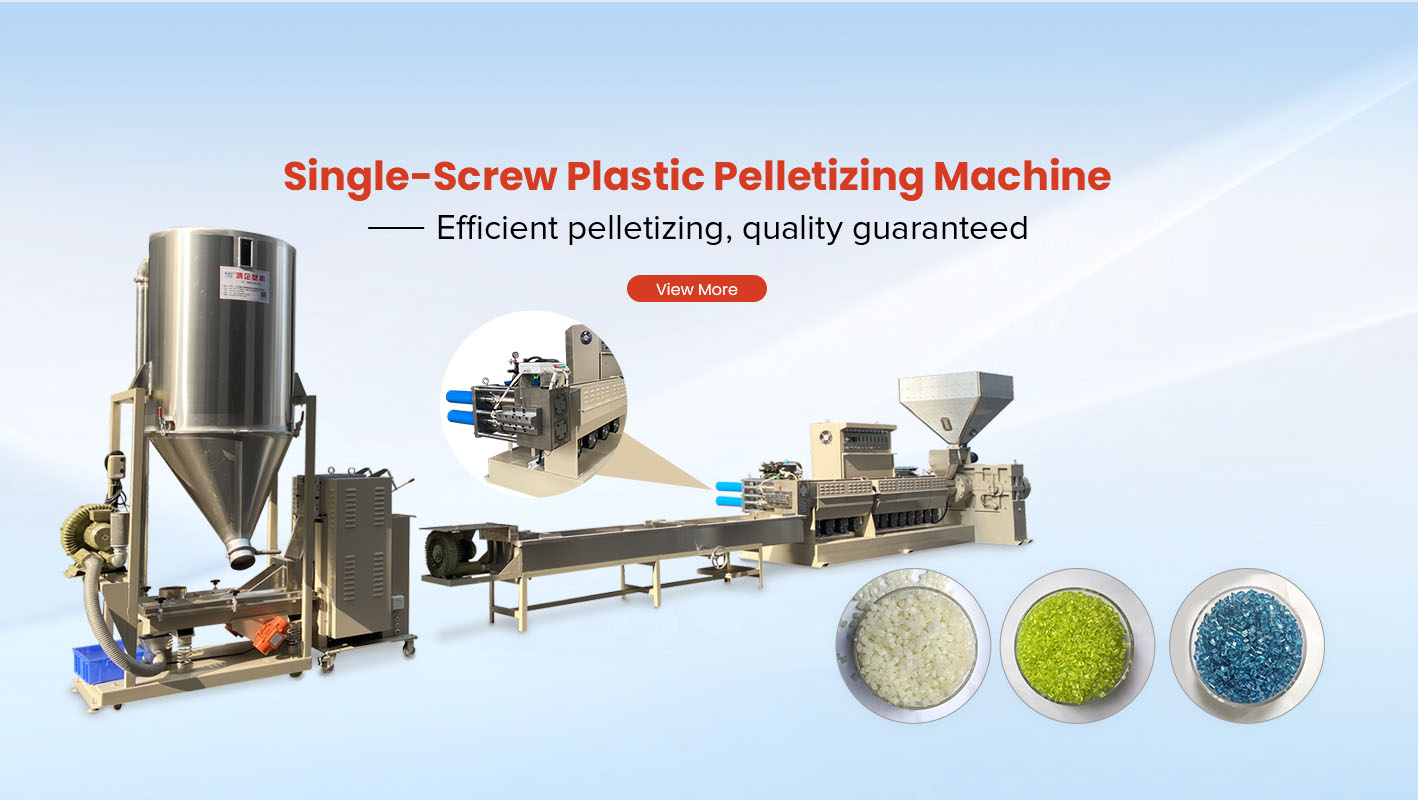
Our factory manufactures single-screw plastic pelletizing extrusion machines, twin-screw lines, mixers, pelletizers, conveyors, dewatering machines, vibrating screens, and related Spare Parts. With more than 20 years of experience, we develop equipment for recycling and compounding materials including PP, PE, PVC, ABS, PC, PMMA, PA, PET, PBT, and PS.
As an industrial plastic pelletizing equipment supplier, we review the resin, feedstock form, contamination, moisture, additives, required output, filtration method, degassing demand, and pellet specification before recommending a line. Our single-screw systems are available in model-dependent capacities typically ranging from 100 to 800 kg/h, while twin-screw systems cover approximately 150 to 2,000 kg/h.
Why the Number Is Only the Starting Point
A resin code is useful for initial sorting, but a successful recycling operation needs a more detailed material profile. Buyers should identify whether the feedstock is rigid, film, fiber, foam, flake, regrind, or mixed waste and provide representative samples for evaluation.
The best processing decision comes from combining resin identification with actual production evidence. Moisture, melt flow, filler content, contamination, output targets, and the intended use of the finished pellets ultimately determine the correct equipment and process settings.