A polymer is a substance made of very large molecules built from repeating structural units. A plastic is a processable material formulated mainly from one or more polymers, usually with additives that help it achieve a specific manufacturing or performance requirement.
Put simply, the polymer is the molecular foundation; the plastic is the usable material formulation. The terms overlap in everyday conversation, but they are not technically identical.
Begin at the Molecular Level
The word “polymer” describes molecular structure rather than a finished product. Polymers may be natural or synthetic.
Natural polymers include cellulose, proteins, and natural rubber. Synthetic polymers include polyethylene, polypropylene, polystyrene, polyamide, and polycarbonate. Not every polymer is made into a conventional rigid or flexible plastic product.
A plastic formulation usually contains a base polymer plus selected ingredients. These may include:
Pigments
Heat stabilizers
Ultraviolet stabilizers
Plasticizers
Flame retardants
Impact modifiers
Processing aids
Mineral fillers
Glass or carbon fibers
Antioxidants
The formulation determines how the material flows, looks, ages, and performs.
A Practical Example: Polypropylene
Polypropylene is the polymer. A household storage box, automotive trim compound, woven sack, and glass-filled mechanical part may all use polypropylene-based plastics.
Their properties differ because the molecular grade, filler, reinforcement, pigment, impact modifier, and processing history are different. Knowing only that a product is “PP” does not fully describe its recycling behavior or final quality.
Why This Difference Matters During Recycling
Mechanical recycling does not restore material to an untouched molecular state. Heat, oxygen, moisture, contamination, and shear can change polymer chains or additives during earlier use and subsequent processing.
A recycler therefore needs to investigate:
Base resin or polymer blend
Melt-flow characteristics
Moisture sensitivity
Filler and fiber content
Heat history
Contamination
Previous additives
Required properties of the new pellets
Two batches labeled ABS may behave differently if one contains flame retardant and the other is a PC/ABS blend. Mixing them without evaluation can cause unstable viscosity, surface defects, color variation, or reduced mechanical performance.
Polymer Compatibility Is Not Guaranteed
Different polymers do not necessarily form a stable blend when melted together. Some combinations separate into phases with weak interfacial bonding, reducing strength and consistency.
Compatibilizers can improve certain blends, but they must be selected for a defined material pair and final application. Adding more mixing energy alone cannot make every incompatible polymer combination perform well.
This is one reason sorting remains important. A powerful extruder can disperse additives, but it cannot correct unknown chemistry or remove every contaminant.
Why Processing Temperature Is Not a Single Number
Crystalline and semi-crystalline thermoplastics often show a clearer melting transition, while amorphous polymers soften across a range. The barrel-temperature setting is also not identical to the actual melt temperature.
Heat comes from barrel heaters and mechanical shear. Screw geometry, speed, throughput, residence time, moisture, and back pressure all influence the process. Operators should build a temperature profile around the material and verify it through stable production rather than copying a generic setting.
How We Translate Material Chemistry Into Equipment
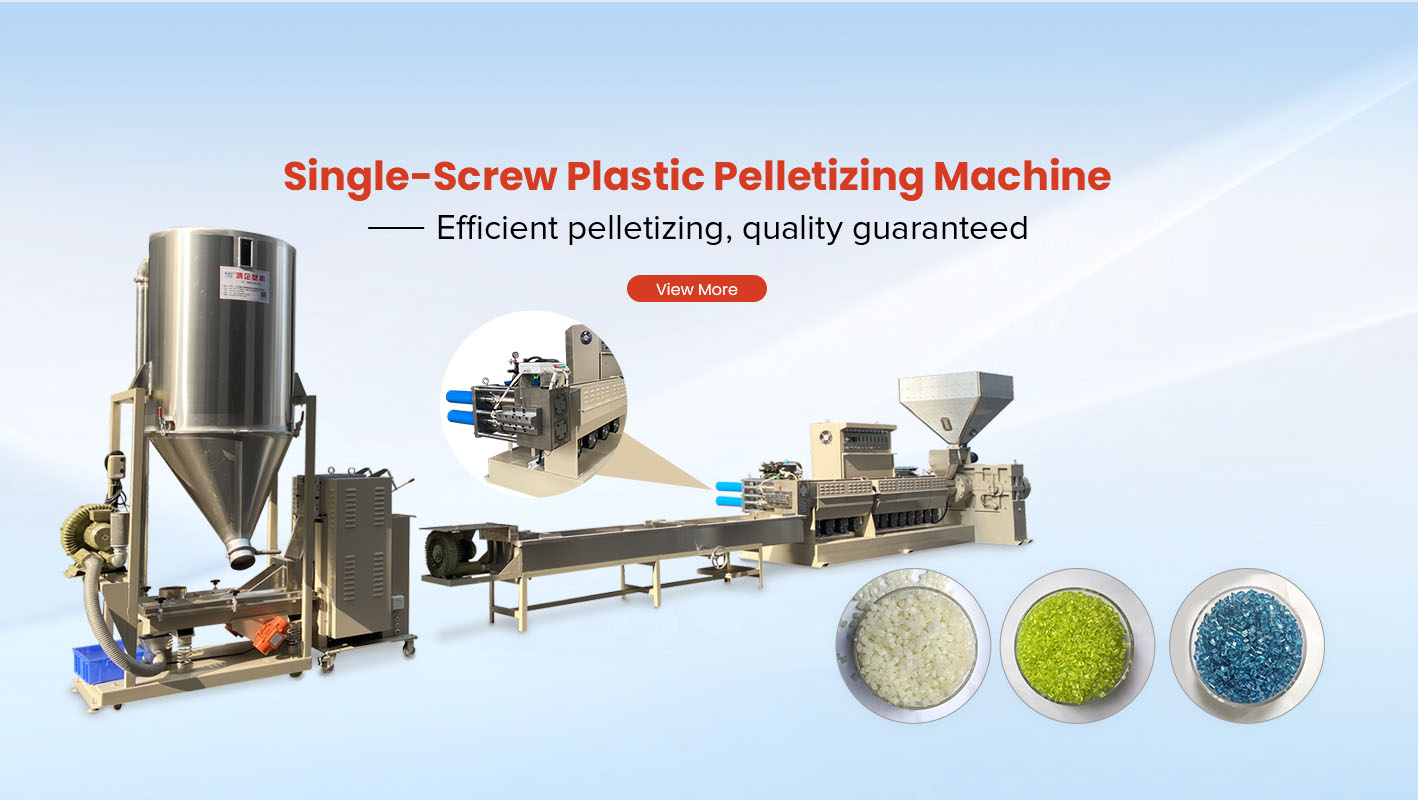
Our factory produces single-screw and twin-screw plastic pelletizing machines together with feeding, mixing, conveying, dewatering, cutting, and screening equipment. We configure machinery around the actual plastic formulation, not merely the broad polymer abbreviation on a material sheet.
As a customized plastic compounding equipment manufacturer, we can discuss screw configuration, L/D ratio, motor power, temperature zones, liquid or powder addition, vacuum degassing, filtration, cooling, and pellet cutting. Selected twin-screw models use ten-zone temperature control, water-cooled barrel sections, and configurations intended for industrial mixing and degassing duties.
Our team has more than 20 years of experience in plastic pelletizing machinery and supplies production support from design and manufacture through installation guidance, training, Spare Parts, and technical service. Materials and target formulations should be evaluated before the final machine proposal is confirmed.
Plastic, Polymer, and Compound: A Useful Distinction
Use “polymer” when discussing the molecular material. Use “plastic” when discussing a processable commercial material or finished object. Use “compound” when the polymer has been deliberately combined with additives, fillers, reinforcements, or another polymer to achieve a defined property profile.
That distinction improves communication between material suppliers, recyclers, machinery manufacturers, and product converters. It also reduces the risk of specifying equipment from an incomplete label.