Polyethylene, polypropylene, PVC, polystyrene, and PET are among the most common industrial plastics because they support high-volume manufacturing across packaging, construction, household goods, transportation, and consumer products. Their widespread use also makes them major feedstocks for plastic recycling and pelletizing operations.
Common does not mean interchangeable. Each resin has different feeding, melting, moisture, filtration, degradation, and end-use considerations.
1. Polyethylene: Films, Bottles, Pipes, and Containers
Polyethylene is produced in several forms, including HDPE and LDPE.
HDPE is used for rigid bottles, drums, crates, caps, pipes, and household products. LDPE and related grades are common in films, bags, liners, and flexible packaging.
Rigid HDPE regrind usually feeds more consistently than low-density film. Film recycling may require crushing, washing, dewatering, drying, agglomerating, or force feeding before extrusion. Labels, paper, sand, ink, aluminum, and incompatible plastics should be controlled.
Best recycling focus: stable feeding, moisture removal, melt filtration, and odor management.
2. Polypropylene: Packaging, Automotive Parts, and Furniture
Polypropylene is valued for its low density, fatigue resistance, chemical resistance, and versatile processing. Typical products include food containers, caps, woven sacks, hinges, automotive trim, appliance parts, and plastic furniture.
recycled PP streams can contain calcium carbonate, talc, glass fiber, elastomers, or flame retardants. These ingredients change melt flow, density, ash content, filtration pressure, and wear behavior.
Clean PP production scrap may suit single-screw re-pelletizing. Modification with filler, pigment, reinforcement, or another polymer may benefit from twin-screw compounding.
Best equipment question: Is the process simply remelting PP, or must it mix and disperse a new formulation?
3. PVC: Profiles, Flooring, Cable, and Pipe
PVC is used in window profiles, pipes, flooring, wall coverings, cable insulation, and numerous construction products. Rigid and flexible PVC contain different additive systems.
The resin is thermally sensitive, so uncontrolled heat or long residence time can cause degradation. Equipment must match the formulation, and operators need dependable temperature monitoring and suitable screw design.
Contamination by PVC can also create problems in other recycling streams. Even a small amount may be undesirable in PET processing, making material separation especially important.
Best processing focus: narrow thermal control, formulation awareness, and limited residence time.
4. Polystyrene: Packaging, Insulation, and Housings
Polystyrene appears as rigid general-purpose PS, impact-modified HIPS, and expanded foam. It is used in packaging, disposable products, appliance liners, insulation, model components, and housings.
Foamed PS is difficult to transport and feed because of its low bulk density. Densification can make subsequent processing more practical. Rigid PS scrap is easier to grind, but contamination, rubber modification, and heat exposure still influence pellet properties.
Best preparation focus: identify whether the feedstock is rigid, impact-modified, or expanded before line design.
5. PET: Bottles, Trays, Fibers, and Strapping
PET is widely used for beverage bottles, food trays, textile fibers, and industrial strapping. Its strength and clarity make it valuable, but its moisture sensitivity creates processing demands.
PET flakes should be sorted, washed, and dried correctly. Moisture at extrusion temperature can cause hydrolytic degradation, reducing molecular weight and final performance. Caps, labels, adhesives, metal, PVC, and colored flakes also affect pellet quality.
Some PET recycling projects focus on standard pellets, while others require tighter control of viscosity, color, and contamination. The intended downstream product should be defined before equipment selection.
Best processing focus: effective drying, low contamination, controlled melt history, and suitable filtration.
How Should a Pelletizing Line Be Matched to These Plastics?
A line should be selected from the material outward. Resin type is followed by feedstock form, moisture, contamination, additives, hourly output, filtration requirement, degassing, and pelletizing method.
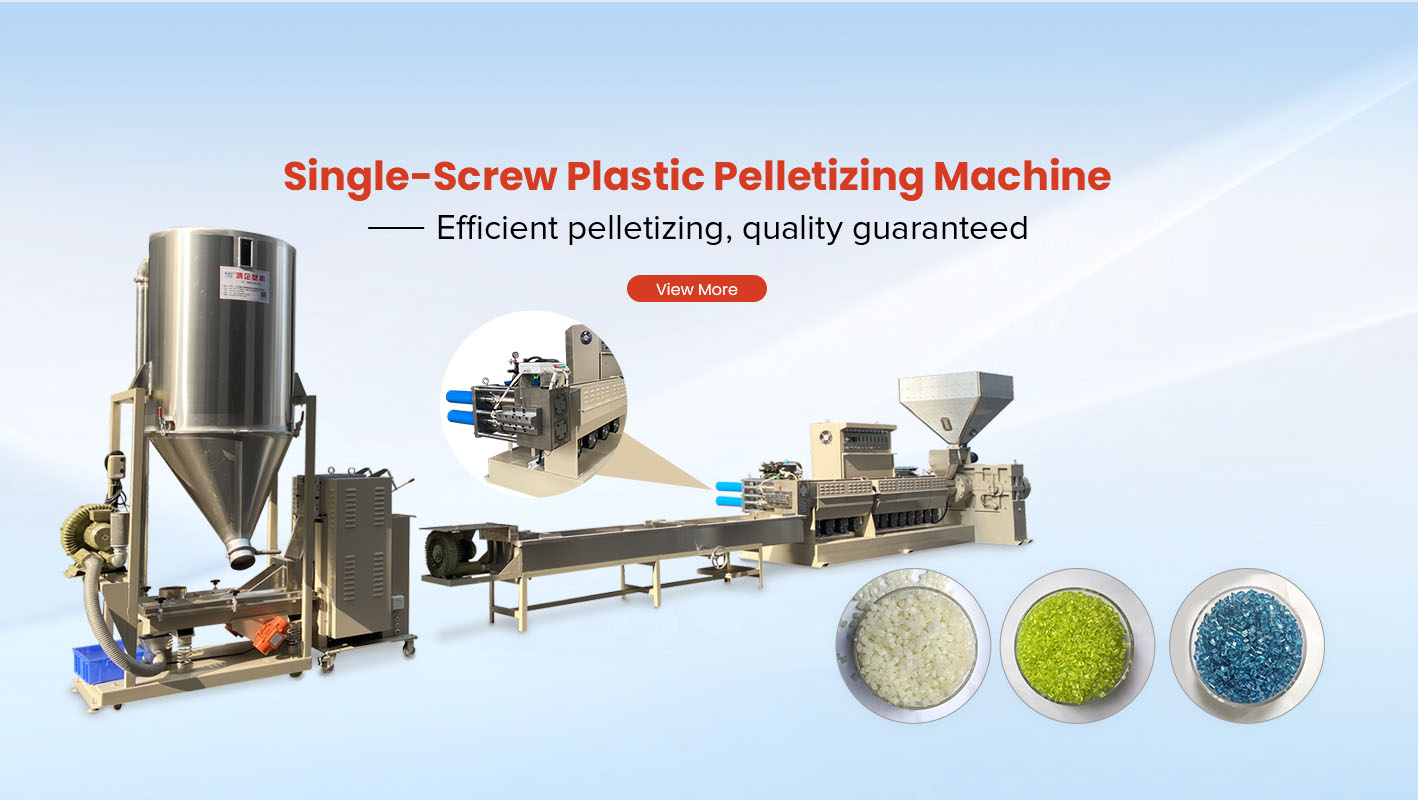
Our factory supplies single-screw pelletizing machines for recycling and stable extrusion duties and twin-screw pelletizing machines for compounding and demanding mixing applications. We also produce the mixers, Screw Conveyors, dewatering machines, strand cutters, screens, and other Auxiliary Equipment needed to assemble a practical line.
For companies evaluating a heavy-duty commercial plastic recycling machine, our engineers can configure screw size, motor power, control system, filtration, venting, cutting, and auxiliary stages around the supplied material. Our model range covers small-output production as well as industrial systems reaching approximately 2,000 kg/h under suitable twin-screw configurations and processing conditions.
We manufacture these machines directly and provide installation guidance, operator training, Spare Parts, and ongoing technical assistance. Raw-material samples and a written production target allow our factory to propose a more accurate solution than a capacity request alone.
The Most Important Procurement Lesson
PE, PP, PVC, PS, and PET are common, but each name covers multiple grades and waste conditions. A machine selected for clean HDPE flakes may not perform correctly with wet LDPE film, filled PP, foamed PS, or moisture-sensitive PET.
Successful industrial recycling begins with material characterization. Once the feedstock and pellet application are understood, the recycling process can be engineered around measurable requirements rather than the general phrase “plastic waste.”