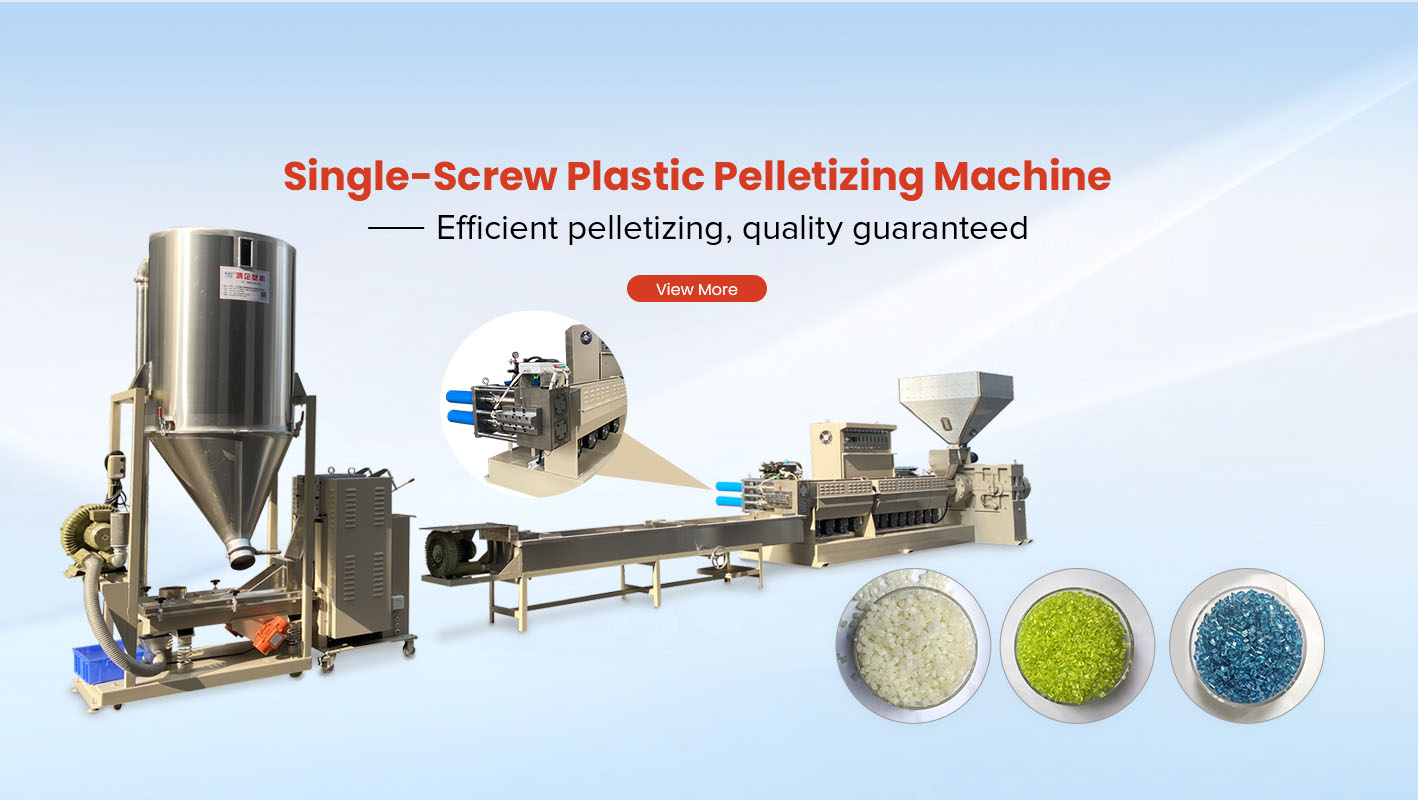
Single-stage and two-stage pelletizing lines can both process recycled plastic, but they solve different feedstock problems. A single-stage line completes melting, filtration, extrusion, and pellet formation through one extruder. A two-stage pelletizing line transfers the melt from a primary extruder to a secondary extruder, creating another opportunity for degassing, filtration, temperature control, and pressure stabilization.
Cleaner, more consistent regrind may perform efficiently on a single-stage system. Printed film, mixed recycled material, heat-sensitive polymers, or feedstock containing more volatiles may justify a two-stage configuration.
Begin with the Condition of the Waste
“Recycled plastic” is too broad to specify a machine. The equipment supplier needs to know:
Polymer type and grade
Rigid, film, fiber, flake, or agglomerated form
Bulk density
Moisture level
Printed or coated surface
Contamination percentage
Melt-flow behavior
Number of previous heat histories
Required pellet application
Clean factory scrap is generally easier to process than post-consumer waste. Washed flakes can still contain moisture, labels, adhesive, dirt, metal, or incompatible polymers.
A machine cannot restore heavily degraded material to virgin-resin performance. Proper sorting, washing, drying, and feed preparation remain fundamental.
How a Single-Stage Line Works
The material is fed into one extruder, melted, homogenized, vented where applicable, filtered, and pushed through a die. The strands or melt are then cooled and cut.
A single-stage recycled plastic pelletizing machine offers several possible advantages:
Shorter process layout
Fewer major machine sections
More direct operation
Lower equipment and floor-space requirements
Reduced residence time for suitable materials
Simpler maintenance planning
It works best when the raw material is stable enough for one extrusion stage to achieve the necessary melt condition and cleanliness.
Why Add a Second Stage?
A two-stage line connects two extruders in sequence. The first stage performs much of the melting, plasticizing, and contaminant management. The second stage can stabilize the melt, provide additional venting or filtration, and generate the pressure required for the final die.
This arrangement may be helpful for recycled material with:
Higher moisture or volatile content
Ink, coating, or residual contamination
Unstable feeding characteristics
Greater filtration demand
Heat-sensitive behavior requiring divided process control
More demanding pellet appearance requirements
Two stages do not mean twice the quality automatically. Poor sorting, incorrect temperatures, unsuitable screw design, or excessive residence time can still cause odor, black specks, discoloration, and degraded properties.
The Role of Degassing and Filtration
Moisture and volatile compounds can produce bubbles, surface defects, strand breakage, odor, and unstable output. Vacuum venting helps remove these substances after the polymer has melted enough to release them.
Filtration captures solid contamination, but finer filtration normally creates greater resistance and faster screen loading. The system must maintain enough pressure while controlling temperature and avoiding prolonged stagnation.
A two-stage system can separate filtration and pressure-building functions more effectively for certain difficult materials. However, a well-configured single-stage line may remain the more economical solution for clean feedstock.
Capacity Should Mean Usable Output
Output should be measured as stable, acceptable pellets per hour—not simply the amount of material entering the hopper.
Production losses may come from:
Screen changes
Strand breakage
Startup waste
Off-color pellets
Excess fines
Cooling instability
Material bridging
Unplanned cleaning
Reliable capacity estimates require material information and agreed quality criteria. A trial with representative feedstock is especially useful when recycled input varies significantly.
Our Two-Stage Equipment Support
Our factory produces single-screw, twin-screw, and two-stage plastic pelletizing machines as part of complete recycling solutions. Supporting equipment includes mixers, washing equipment, de-coating machines, centrifugal dewatering machines, conveyors, vibrating screens, pellet cutters, and Spare Parts.
Businesses sourcing a two-stage recycled plastic pelletizing line wholesale supplier need more than a standard equipment list. Our team studies the material flow from feeding through pellet collection and configures the line around contamination, moisture, filtration frequency, output, plant utilities, and available space.
With more than 20 years of plastic pelletizing machinery experience, we also provide process guidance, machine commissioning support, training, technical assistance, and replacement-part planning. The equipment can be adapted through screw design, motor selection, controls, degassing, filtration, and cutting-system configuration.
Which Line Should You Select?
Use a single-stage line when the recycled material is clean, consistent, and technically manageable in one extrusion pass. Consider a two-stage pelletizing line when feedstock contains greater moisture, volatiles, printing, contamination, or when the process needs separate melt treatment and pressure stabilization.
Material testing should settle the decision. The best recycled plastic pelletizing line is the simplest system that can repeatedly produce the required pellet quality at a commercially useful output.