

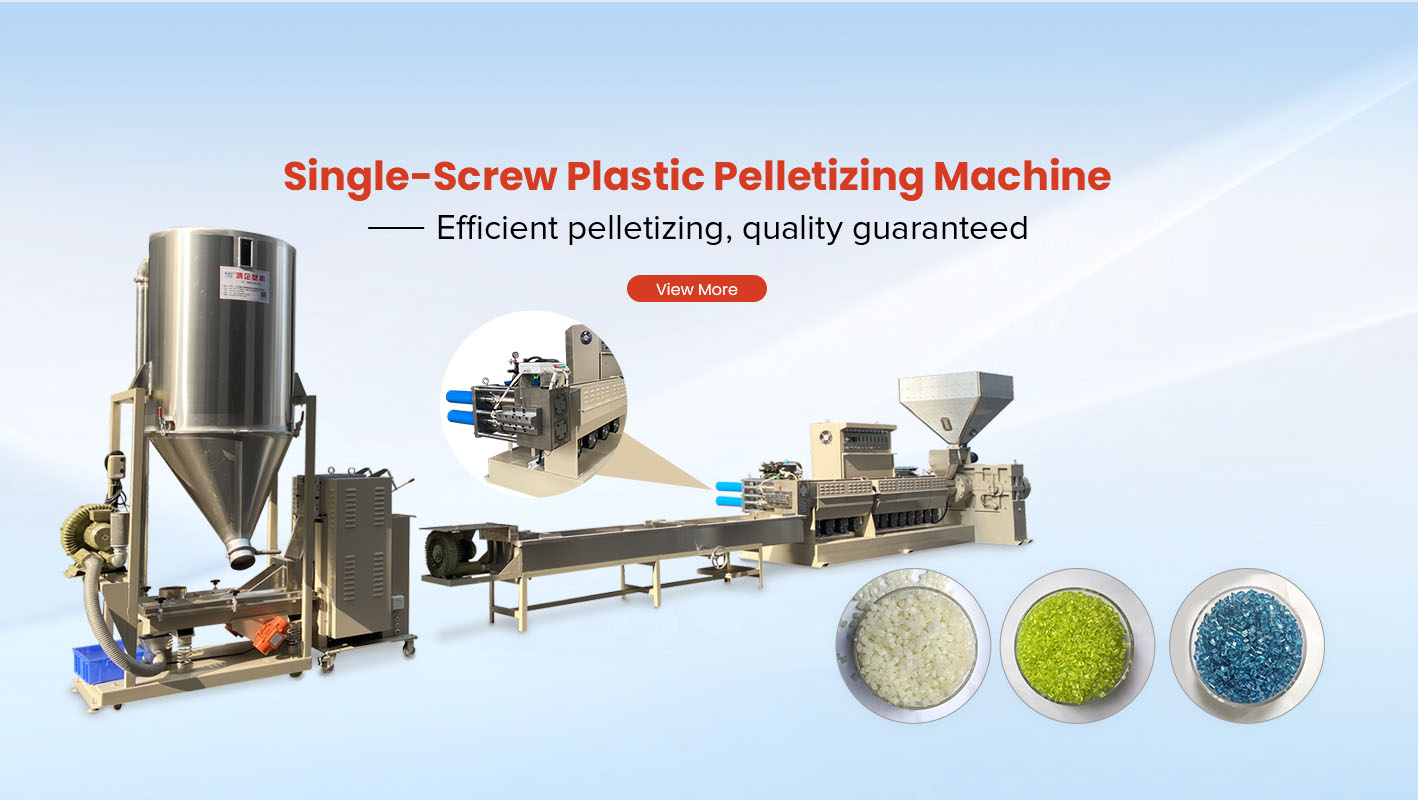
For small recycling plants, the core challenge is not whether plastic can be pelletized, but whether pelletizing can be done stably, economically, and with predictable quality under limited manpower, space, and capital investment.
Single screw pelletizing machines are widely used to turn plastics into uniform pellets for stable feeding, storage, and downstream extrusion or molding. In daily production, most issues are not caused by a single defective component.
Inconsistent pellet size is one of the most frequent quality issues in twin screw pelletizing lines. It affects downstream handling, packaging uniformity, and customer acceptance, especially in recycling and compounding applications where pellet appearance is closely inspected.
A plastic color mixer machine looks simple from the outside, but it combines rotating parts, electrical power, heavy materials, and airborne dust in one workstation. Most incidents happen during routine actions such as feeding, cleaning, inspection, or clearing a jam, not during normal mixing.
Color consistency and material uniformity are critical factors in plastic processing. Whether producing molded parts, extruded products, or recycled pellets, uneven color distribution or poor additive dispersion can directly lead to quality complaints, higher scrap rates, and unstable downstream processing.
When buyers compare single screw pelletizing machines, the real difference is rarely decided by a single headline number. Machines with similar screw diameters and motor power can perform very differently once they enter continuous production.
The typical output capacity of a single screw pelletizing extrusion machine is not a fixed figure. It varies based on material type, feed condition, screw design, filtration method, pelletizing mode, and how stable the machine can run over long production cycles.
A plastic color mixer machine works in a harsh reality of production. It handles pellets, regrind flakes, masterbatch, and additives that can leave fine dust, color residue, and static-driven buildup inside the drum and discharge area.
Color consistency is one of the easiest quality indicators for customers to judge and one of the hardest parameters to keep stable in daily production. A plastic color mixer machine is not only used to blend masterbatch and resin.
A single screw plastic pelletizing extrusion machine is widely used in recycling and reprocessing lines because it can handle a broad range of thermoplastic materials with stable output, simple operation, and relatively low energy consumption.
Energy consumption is one of the biggest operating costs in plastic pelletizing. It affects not only electricity bills, but also throughput stability, pellet quality, and overall equipment lifespan. In most factories, energy waste does not come from a single obvious issue.
A plastic extrusion machine is a core piece of equipment used in polymer processing industries, converting raw plastic materials into continuous, uniform products such as pellets, pipes, sheets, profiles, and films. Through controlled heating, melting, mixing, and pressure-driven shaping, extrusion enables high-volume, consistent, and repeatable production.