Water itself does not suddenly become unusable on a specific calendar date. However, bottled water can develop changes in taste, odor, clarity, or packaging condition during long storage.
The printed date on a plastic water bottle may reflect the manufacturer’s recommended quality period, local labeling rules, or packaging-management practices. It should not be interpreted as permission to drink from every old, damaged, or poorly stored bottle.
Before opening bottled water, check the label, cap, bottle condition, storage history, and local food-safety guidance.
What Does the Date on a Water Bottle Mean?
A date printed on bottled water usually relates more closely to the packaged product than to the water molecule itself.
The complete product includes:
Even when the water was safe at the time of filling, poor handling can affect the finished product before it reaches the user.
Best-Before Date vs Safety Inspection
A best-before date often indicates the period during which the manufacturer expects the product to maintain its intended taste and packaging condition.
Consumers should still discard a bottle when:
The cap is loose or damaged
The seal has been broken
The bottle is swollen or leaking
The water has an unusual smell
The liquid looks cloudy
Particles are visible
The bottle was stored near chemicals
The storage conditions are unknown
The condition of the bottle can be more informative than the printed date alone.
How Storage Affects Bottled Water
Bottled water should be stored in a cool, dry place away from direct sunlight and strong odors.
Avoid Long-Term Heat Exposure
A vehicle, outdoor warehouse, window ledge, or metal container can become very hot.
Heat can change the bottle’s shape, affect the cap seal, and accelerate changes in taste and odor. Bottles that have been repeatedly heated and cooled should not be treated as equivalent to bottles stored under controlled conditions.
Keep Bottles Away From Chemicals
Plastic packaging can absorb or transmit surrounding odors.
Do not store drinking water beside fuel, paint, cleaning chemicals, pesticides, solvents, or strongly scented products.
Protect the Bottle From Sunlight
Sunlight can warm the water and weaken the packaging over time.
For emergency storage, rotate the stock according to the supplier’s instructions rather than leaving the same bottles exposed for many years.
What Happens After the Bottle Is Opened?
Once opened, the bottle is exposed to hands, air, drinking contact, and the surrounding environment.
A bottle used directly from the mouth should not be shared. Partially consumed water should be stored according to the label and consumed within a reasonable period.
If the bottle has been left open in a warm place, handled by several people, or contaminated by food, it should be discarded.
Can a Single-Use Bottle Be Refilled?
Some people refill disposable PET water bottles several times.
The main practical concerns are cleaning, drying, scratches, deformation, and bacterial contamination around the neck and cap. Thin single-use bottles are not always easy to clean thoroughly.
A reusable bottle made for repeated washing is generally easier to maintain than a lightweight disposable package.
How to Dispose of Empty Water Bottles
Empty bottles should be drained and placed in the correct local recycling stream when accepted.
Remove foreign materials according to the recycler’s requirements. Labels, caps, mixed polymers, food residue, and metal parts may affect sorting and processing.
From PET Bottle Flakes to Recycled Pellets
In an industrial recycling line, PET bottles may pass through sorting, crushing, washing, dewatering, drying, extrusion, filtration, cooling, and pellet cutting.
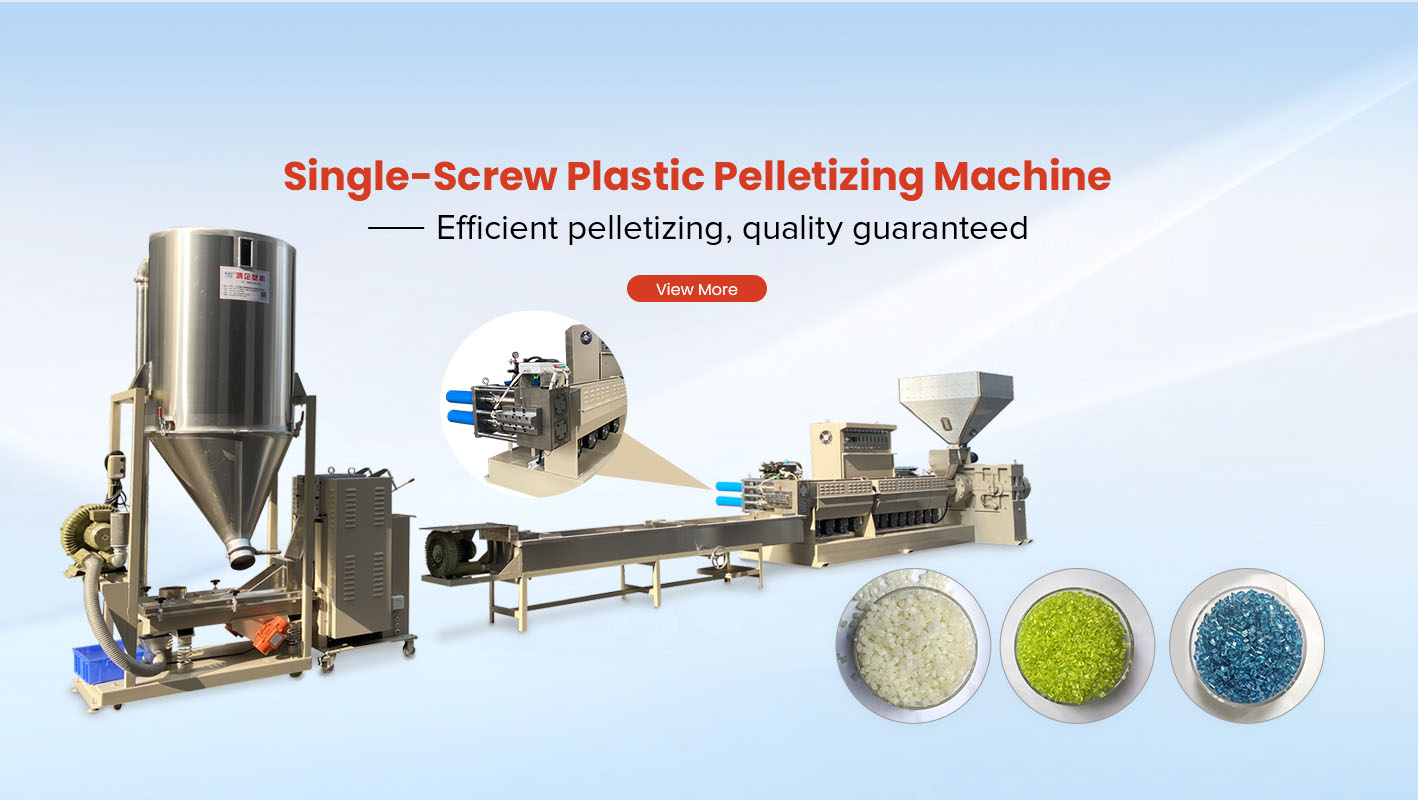
A Single Screw PET Granulator Machine can process prepared PET flakes into more uniform pellets for selected downstream applications.
The input material must be properly cleaned and classified before extrusion. A granulator cannot automatically correct mixed polymers, excessive moisture, metal contamination, or unsuitable additives.
How Our PET Pelletizing Equipment Supports Recycling
Our PET granulator range includes models for different production requirements. One published configuration uses a single-screw system, multi-zone temperature control, automatic feeding, screen-changing equipment, water cooling, pellet cutting, and vibrating separation.
Available equipment configurations can be adjusted according to:
PET flake condition
Required output
Moisture level
Filtration requirement
Pellet specification
Factory layout
Motor power
Cooling method
Automation level
Our team also supports installation guidance, technical training, Spare Parts, and equipment customization.
Request a PET Recycling Line Assessment
Planning to process washed bottle flakes, packaging scrap, or other PET materials?
Send us your raw-material photos, contamination level, moisture content, required output, pellet use, workshop dimensions, voltage, and purchasing budget. We will prepare a Single Screw PET Granulator Machine configuration for evaluation.