Plastic can be cut with a utility knife, scoring tool, saw, rotary tool, pipe cutter, or industrial shredder. The correct method depends on the plastic type, thickness, shape, and required edge quality.
A thin polypropylene sheet behaves differently from acrylic, polycarbonate, PVC pipe, ABS housing, or a thick molded component. Choosing the wrong tool can cause cracking, melting, chipping, or an uneven cut.
Identify the Plastic Before Cutting
Look for a material label, resin identification code, product drawing, or supplier information.
Common materials include:
PET
PP
PE
PVC
ABS
Acrylic
Polycarbonate
Nylon
Polystyrene
Do not cut an unknown container that previously held fuel, solvent, pesticide, pressurized gas, or hazardous chemicals.
Choose the Cutting Method
| Plastic Form | Suitable Starting Method |
|---|
| Thin flexible sheet | Sharp utility knife or scissors |
| Thin rigid sheet | Scoring knife and straight edge |
| Thick acrylic panel | Fine-tooth saw with stable support |
| Polycarbonate sheet | Circular saw or jigsaw with suitable blade |
| PVC pipe | Ratcheting pipe cutter or fine-tooth saw |
| Molded plastic housing | Rotary tool, jigsaw, or band saw |
| Industrial plastic waste | Shredder, crusher, and granulation line |
The tool should be selected according to the plastic manufacturer’s guidance and the finished part requirements.
Cutting Thin Plastic Sheet
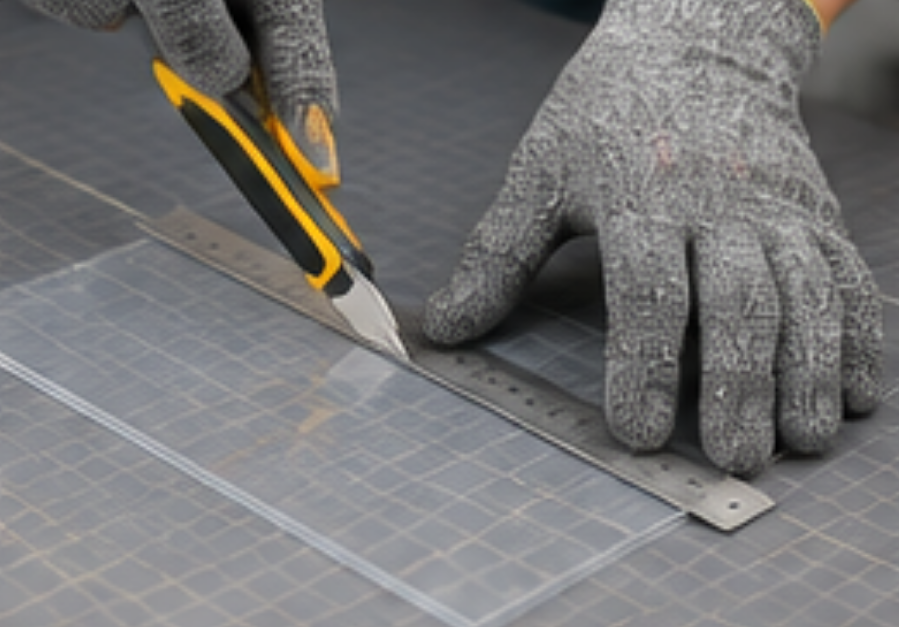
Thin plastic film and flexible sheet can often be cut with a sharp knife or heavy-duty scissors.
Use a Cutting Mat
Place the material on a stable cutting surface.
Mark the cut line clearly, position a metal straight edge, and keep the supporting hand away from the blade path.
Make several controlled passes instead of trying to cut through a tough sheet in one movement.
Scoring Rigid Plastic
Acrylic and other rigid sheets can sometimes be scored and snapped when they are within the thickness recommended for that method.
Make Repeated Straight Passes
Clamp the straight edge securely and score the same line several times.
Move the scored line to the edge of a stable bench, support both sides, and apply even pressure.
Do not use the snap method on thick, brittle, cracked, or irregularly shaped plastic.
Using a Jigsaw or Circular Saw
Power saws are suitable for thicker sheets and longer cuts.
Select the Correct Blade
Use a fine-tooth blade intended for plastic or non-ferrous materials.
A coarse blade can chip the edge. Excessive speed can generate heat and melt the cut line.
Support the Sheet
Clamp the workpiece and support the offcut so it does not vibrate or fall before the cut is complete.
Leave protective film in place when practical to reduce surface scratches.
Control Heat During Cutting
Plastic softens when friction creates too much heat.
To reduce melting:
Melted plastic can close behind the blade or create a rough raised edge.
Wear Suitable Protection
Use eye protection and keep loose clothing, hair, and gloves away from rotating tools.
Cutting some plastics can produce fine dust or fumes. Work in a ventilated area and use suitable dust extraction when required.
Do not burn plastic scraps to dispose of them.
Finish the Cut Edge
After cutting, remove burrs with a deburring tool, fine file, scraper, or suitable abrasive.
Work gradually so the edge remains straight.
Flame polishing and solvent polishing require specialist knowledge and are not suitable for every plastic.
How Industrial Plastic Cutting Differs
Factories processing large quantities of scrap do not cut every item by hand.
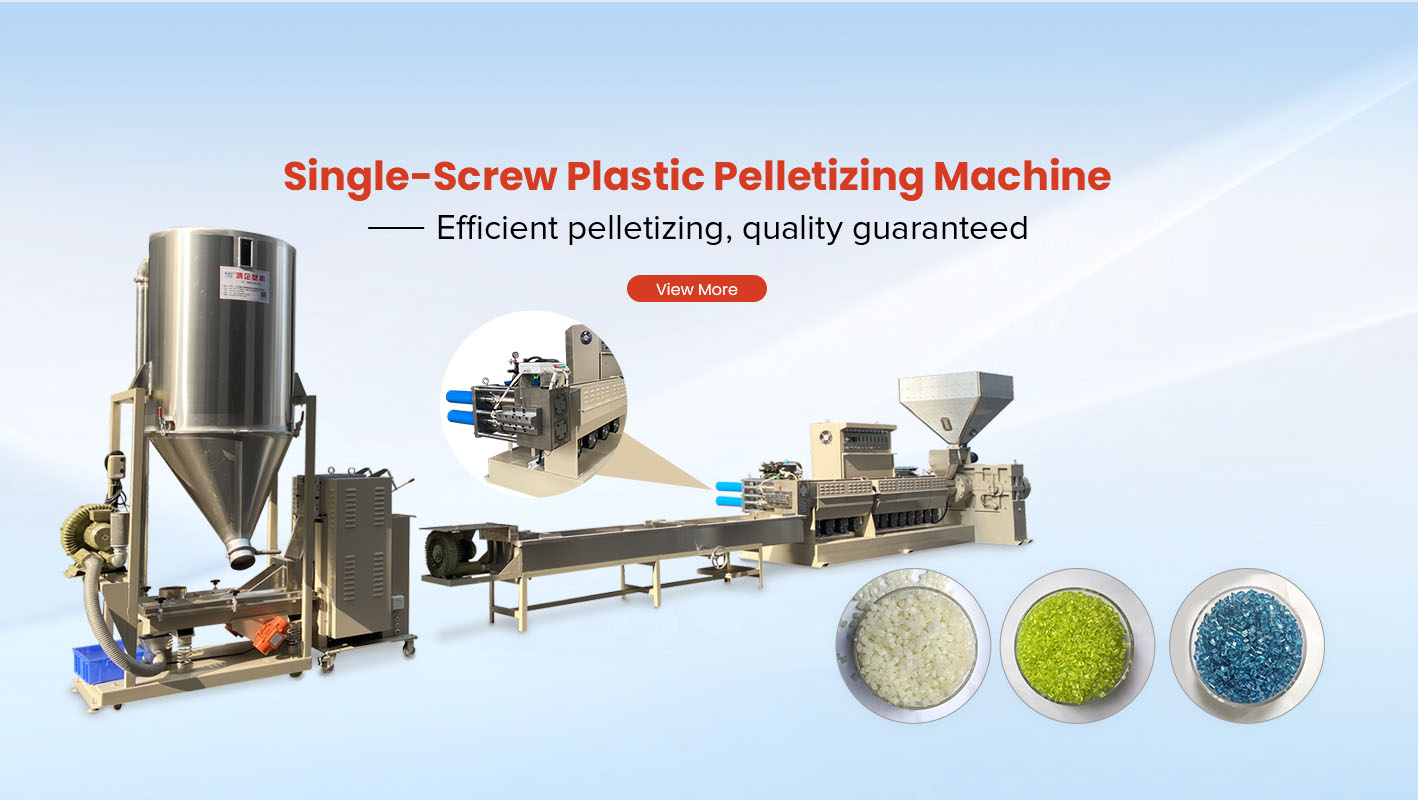
Industrial Plastic Recycling Equipment may include:
Sorting system
Shredder or crusher
Washing equipment
Dewatering system
Extruder
Screen changer
Cooling tank
Pellet cutter
Vibrating screen
Storage hopper
The shredder reduces large products into manageable pieces before washing or extrusion.
Our single-screw recycling systems can process selected thermoplastics such as PP, PE, ABS, PVC, PET, and other compatible materials after suitable preparation.
Published machine configurations include capacities ranging from smaller recycling operations to higher-output production lines. Screw size, motor power, temperature control, screen-changing method, feeding system, and pelletizing arrangement can be customized.
Discuss Your Plastic Size-Reduction Process
Send us the plastic type, product shape, maximum piece size, contamination, moisture level, required throughput, final pellet specification, and factory layout. We will recommend suitable Plastic Recycling Equipment for crushing, preparation, extrusion, and pelletizing.