Permanent marker can often be removed from a smooth plastic surface, but the safest method depends on the plastic and its finish.
Ink may sit on top of polypropylene, polyethylene, or another non-porous surface. On soft, textured, aged, painted, or transparent plastic, the ink may penetrate scratches or react with the coating.
Always test the cleaning method in a hidden area first.
Start With Soap and Water
Wash the marked area with warm water and mild detergent.
Use a microfiber cloth or soft sponge. This may remove surface dirt and some fresh ink without affecting the plastic.
Dry the area before trying another method.
Try Isopropyl Alcohol
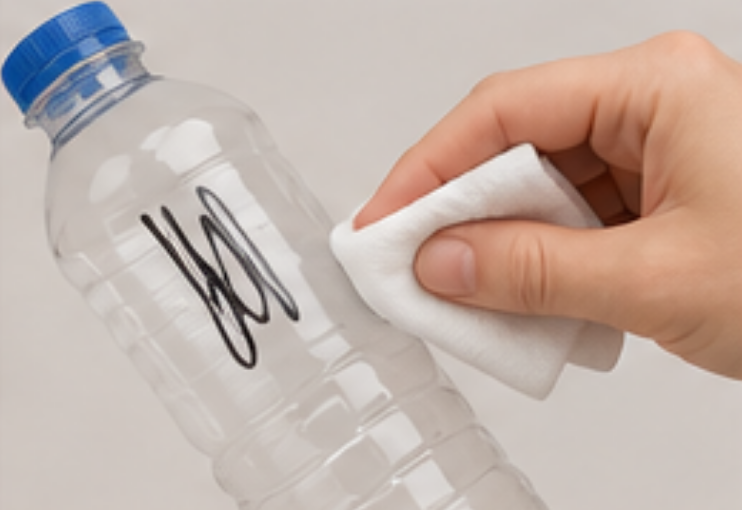
Place a small amount of isopropyl alcohol on a clean white cloth.
Blot the marker rather than spreading it across the surface. As the ink transfers, move to a clean section of the cloth.
Do Not Pour Solvent Directly on the Plastic
Direct pouring can allow solvent to enter seams, soften adhesives, or spread the ink into a larger area.
Apply a controlled amount to the cloth and work gradually.
Rinse After Cleaning
Wash the surface with mild soap and water after the ink has been removed.
This is particularly important for plastic used around food, children, or frequently touched surfaces.
Use the Dry-Erase Marker Method Carefully
On some smooth non-porous surfaces, drawing over permanent marker with a dry-erase marker can loosen the original ink.
Wipe both inks away immediately with a soft cloth.
Test this method first because dry-erase ink may also stain textured or porous plastic.
Can Acetone Remove Permanent Marker?
Acetone can dissolve many inks, but it may also soften, whiten, craze, or deform plastics such as acrylic, ABS, polycarbonate, and polystyrene.
Do not use acetone on an unknown plastic.
A mild alcohol-based method is usually a safer starting point.
Cleaning Transparent Plastic
Clear plastic requires extra care because small scratches and cloudy areas are easy to see.
Avoid abrasive pads, powdered cleaners, rough paper towels, and strong solvents.
Use a clean microfiber cloth and very light pressure.
Removing Marker From Textured Plastic
Ink may remain inside the small recesses of a textured surface.
Use a soft-bristled brush with mild detergent or a plastic-compatible cleaner. Do not use a metal brush or sharp tool.
Several gentle treatments are safer than one aggressive attempt.
When the Marker Cannot Be Removed Completely
A faint shadow may remain when the ink has entered scratches, aged plastic, or a damaged coating.
Further cleaning may create a more visible dull or discolored patch than the original mark.
For valuable parts, test panels, automotive trim, and electronic housings, replacement or professional refinishing may be preferable.
Household Cleaning vs Industrial De-Coating
Removing one marker line from a storage box is different from removing coatings from industrial plastic scrap.
A Plastic De-Coating Machine is intended for controlled treatment of plastic parts carrying paint, plating, or another surface layer before reuse or recycling.
It should not be presented as a household marker-removal device.
Why Coating Removal Matters in Recycling
Paint, plating, labels, adhesives, and surface treatments can affect:
Material purity
Melt filtration
Pellet color
Odor
Mechanical properties
Downstream processing
Product consistency
The appropriate treatment depends on the coating and base resin.
Our Plastic De-Coating Equipment
Our product range includes equipment for removing paint or plated layers from selected plastic components.
Before recommending a system, our technical team reviews:
Request a Plastic De-Coating Test
Send us samples or clear photos of the plastic part, resin type, coating, contamination, required output, and final recycled application. We will assess whether a Plastic De-Coating Machine is suitable for your process.