Cyanoacrylate is the adhesive family commonly associated with instant glue or super glue.
It cures quickly when exposed to small amounts of moisture and can bond plastic surfaces within seconds. Removing it requires patience because the adhesive may be stronger than the plastic finish.
Do not pull bonded parts apart by force. Thin plastic, transparent covers, clips, and molded tabs can crack before the glue releases.
Identify the Plastic and Adhesive Area
Before applying a chemical, determine:
Plastic type
Surface finish
Whether the part is transparent
Whether it contains paint
Whether it is bonded to rubber or metal
Whether the adhesive is fresh or fully cured
Whether the part can be removed from an assembly
A method suitable for polyethylene may damage acrylic or ABS.
Begin With Warm Soapy Water
When the part can be immersed safely, place the affected area in warm soapy water.
Allow the adhesive to soften gradually. Gently flex the plastic without forcing it.
This method may not dissolve a thick cured bond, but it is a low-risk starting point.
Do Not Use Boiling Water
High temperature can warp plastic, damage coatings, and weaken surrounding adhesives.
Use comfortably warm water rather than uncontrolled heat.
Use a Plastic-Safe Debonder
Commercial cyanoacrylate debonders are available, but not all are safe for all plastics.
Read the label and test the product on a hidden area.
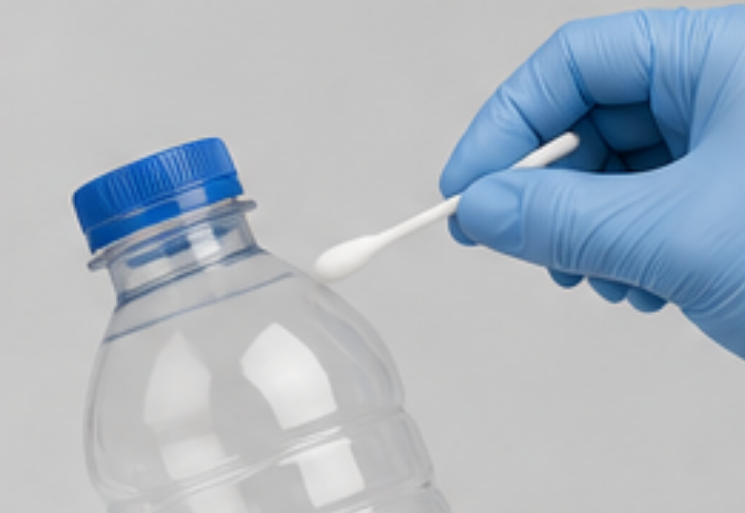
Apply a small amount around the glue edge with a cotton swab or fine applicator. Allow it to work before attempting removal.
Can Acetone Be Used?
Acetone dissolves many cyanoacrylate adhesives, but it can also attack common plastics.
It may cause:
Cloudiness
Softening
Surface cracking
Loss of gloss
Color transfer
Permanent deformation
Avoid acetone on acrylic, polycarbonate, ABS, polystyrene, painted plastic, and unknown materials unless the manufacturer confirms compatibility.
Remove Softened Adhesive Gently
Once the glue begins to soften, lift it with a plastic scraper, wooden stick, or fingernail.
Work from the outside edge toward the center.
Do not use a knife, metal screwdriver, or razor blade on a finished plastic surface.
Repeat Instead of Scraping Harder
Several short treatments are safer than one long solvent soak.
Wipe away dissolved adhesive before it spreads across the surrounding plastic.
Cleaning Glue From Transparent Plastic
Transparent parts show damage easily.
Use only a cleaner approved for the exact plastic. Even a small amount of incompatible solvent can cause visible crazing.
For lenses, display windows, light diffusers, and precision parts, professional replacement may be safer than chemical removal.
Removing Glue From Mechanical Assemblies
When cyanoacrylate has entered a thread, hinge, switch, bearing, or electrical connector, do not flood the assembly with solvent.
The liquid may damage lubrication, insulation, seals, or nearby components.
Disassemble the part according to its service instructions or consult a technician.
Why Adhesive Contamination Matters in Recycling
Cyanoacrylate residue is a contaminant when plastic scrap is prepared for reprocessing.
Small amounts may be managed within a controlled recycling process, but heavy adhesive, mixed coatings, metals, fibers, and incompatible polymers can affect the melt.
Sorting and cleaning should take place before extrusion.
A Twin Screw Plastic Recycling Extruder provides strong mixing and controlled processing for selected recycling and compounding applications.
Its suitability depends on the resin, contamination, additives, moisture, filtration, and required pellet properties.
Twin-screw equipment should not be expected to make every mixed or adhesive-covered plastic usable without proper preparation.
Our Twin-Screw Equipment Options
Our systems can be configured with:
Different screw diameters
Customized Screw Elements
Multiple temperature zones
Vacuum degassing
Controlled feeding
Screen filtration
Water or air cooling
Strand or other pelletizing methods
Adjustable motor power
Automatic control systems
Published output ranges vary by model and application, from smaller production requirements to high-capacity lines.
Prepare Samples Before Machine Selection
For accurate testing, provide representative scrap rather than only a clean resin description.
Our team needs to know:
Discuss a Twin-Screw Recycling Project
Send us your material composition, photos, sample weight, additives, contamination level, expected capacity, pellet target, voltage, and workshop information. We will prepare a Twin Screw Plastic Recycling Extruder proposal for technical evaluation.