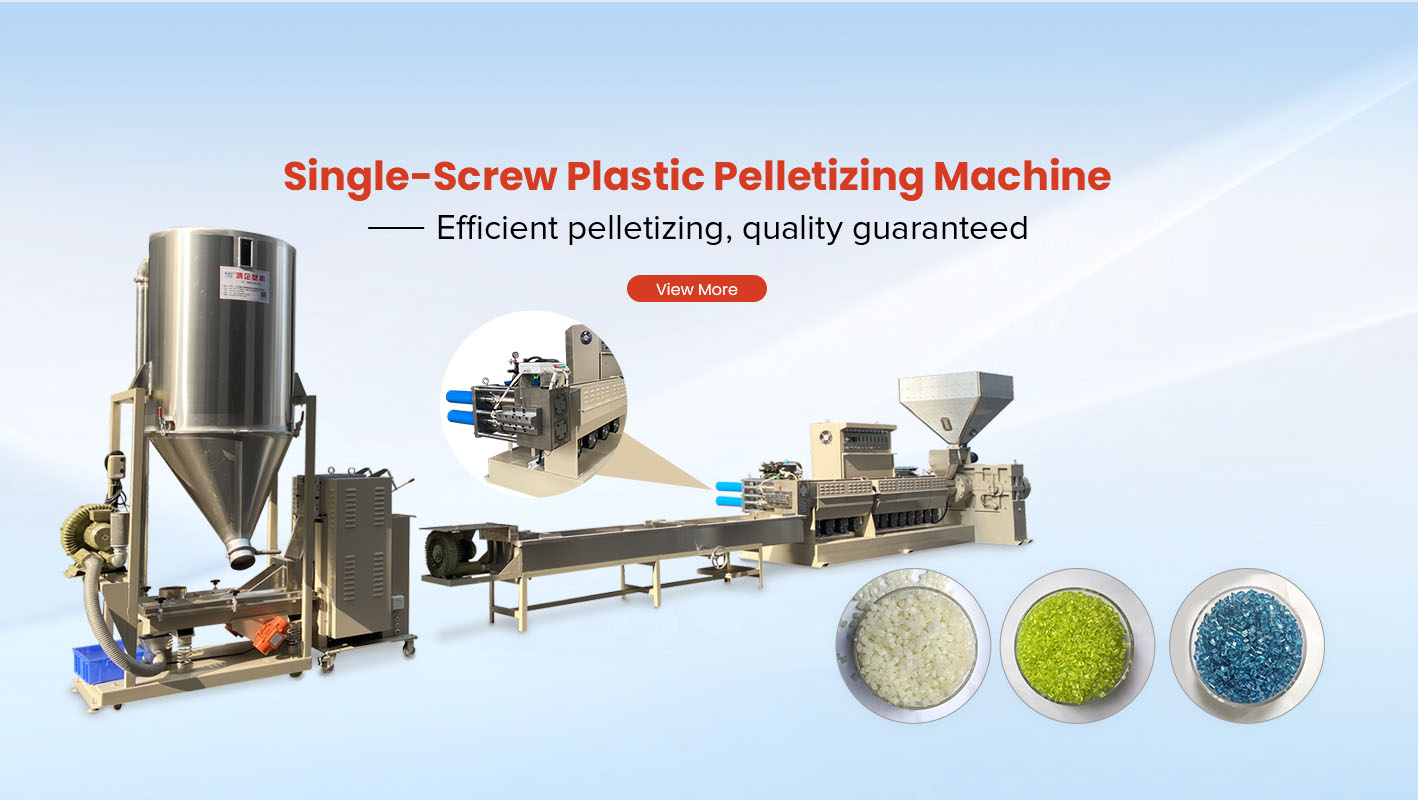
Plastic extrusion is a continuous manufacturing process that turns thermoplastic raw materials into a uniform melt and then pushes that melt through a die or pelletizing head.
The finished output may be a pipe, sheet, film, profile, cable coating, strand, or recycled plastic pellet. Although the downstream equipment changes with the product, the central operation remains similar: the material is fed into a heated barrel, moved forward by a rotating screw, melted and mixed, then discharged in a controlled form.
In plastic recycling, extrusion is often used after waste has been sorted, crushed, washed, and dried. The extruder converts prepared flakes or regrind into a more consistent melt that can be filtered and made into reusable pellets.
Material Preparation Comes Before Extrusion
The condition of the raw material has a direct effect on extrusion stability.
Plastic may enter the line as:
Before feeding, the operator should confirm the resin type, contamination level, particle size, moisture content, and required additives.
Why Sorting Matters
Different plastics have different melting temperatures and processing behavior.
Mixing incompatible resins can cause unstable pressure, poor pellet strength, surface defects, discoloration, or weak downstream products.
Metal, paper, wood, rubber, and other foreign materials should also be removed before extrusion.
Drying Moisture-Sensitive Plastics
Some plastics absorb moisture during storage or washing.
When wet material enters the barrel, moisture may create bubbles, unstable flow, reduced material performance, and irregular pellets.
The required drying method depends on the resin and its previous processing history. PET and selected engineering plastics generally need more careful moisture control than many clean polyolefin materials.
Feeding the Plastic Into the Extruder
Prepared material enters the hopper and moves into the feed throat.
The screw begins conveying the solid particles along the barrel. Stable feeding is important because interruptions or sudden overfeeding can change motor load, melt pressure, and output.
Common Feeding Problems
Irregular feeding may be caused by:
A Screw Conveyor, force feeder, or controlled dosing system may be added according to the material form.
Conveying and Compressing the Material
Inside a single-screw extruder, the screw is commonly divided into functional sections.
The feed section transports solid material away from the hopper. The compression section reduces the available channel volume, increasing contact and helping the material compact and melt. The metering or homogenizing section delivers a more uniform melt toward the die.
The exact screw geometry must match the polymer, output target, and processing purpose.
Heat Comes From More Than the Barrel Heaters
External heaters raise and control the barrel temperature, but the rotating screw also generates heat through friction and shear.
The operator must balance heater settings, screw speed, feed rate, and cooling. Excessive heat may degrade the polymer, while insufficient heat can leave unmelted particles and increase pressure.
Melting and Plasticizing
As the material moves forward, it gradually changes from solid particles into a continuous melt.
Good plasticizing means the resin is melted evenly without being overheated. The melt should reach a suitable temperature and viscosity for filtration, mixing, and discharge.
Several parameters influence this stage:
A stable temperature reading does not automatically mean the melt is uniform. Pressure, motor current, output appearance, and pellet quality should also be monitored.
Mixing and Homogenization
Extrusion can blend color masterbatch, stabilizers, fillers, modifiers, and other ingredients into the polymer.
A single-screw system is often suitable for straightforward conveying, melting, and recycling of relatively consistent materials.
A twin-screw extruder provides stronger distributive and dispersive mixing and is commonly considered for compounding, reinforced plastics, polymer blends, and more complex formulations.
Avoiding Excessive Shear
More mixing is not always better.
Heat-sensitive materials can degrade when the screw configuration, speed, or residence time creates excessive shear. Equipment selection should therefore begin with the actual formulation and final pellet requirement.
Degassing and Moisture Removal
Some extrusion systems include an atmospheric or vacuum vent.
The vent allows moisture, trapped air, volatile substances, and selected processing gases to leave the melt before it reaches the die.
Effective degassing depends on:
Material preparation
Melt temperature
Screw design
Vent position
Vacuum stability
Feed rate
Residence time
A vacuum vent cannot compensate for heavily contaminated or badly dried raw material in every situation.
Melt Filtration
Recycled plastic often passes through a screen or filter before discharge.
The filtration system can capture unmelted contamination and protect downstream pellet quality.
The required screen size and screen-changing structure depend on the contamination level and acceptable pressure.
Watch Melt Pressure
As contamination builds on the screen, melt pressure normally increases.
If the operator waits too long to change the screen, output may become unstable and the extruder may operate under unnecessary load.
Manual, hydraulic, and continuous screen-changing systems are selected according to the line capacity and production requirements.
Shaping or Pelletizing the Melt
After filtration, the molten polymer leaves through the die head.
In profile extrusion, the die forms a continuous cross-sectional shape. In recycling and compounding lines, the melt may form strands or enter another pelletizing arrangement.
For strand pelletizing, the molten strands are cooled and then cut into granules.
Cooling and Cutting
Cooling stabilizes the extruded material before final handling.
A typical strand pelletizing line may include:
Extruder
Screen changer
Strand die
Water-cooling tank
Strand Pelletizer
Vibrating screen
Pellet collection system
The cooling condition affects strand strength and cutting quality. Strands that are too soft may deform, while overcooled or brittle strands may break before reaching the cutter.
Inspection of the Finished Output
The final product should be checked against its intended downstream use.
For recycled pellets, common inspection points include:
A pellet that looks acceptable may still perform poorly if the material composition or thermal history is unstable.
How Our Extrusion Equipment Supports Plastic Recycling
Our product range includes single-screw and twin-screw plastic pelletizing extrusion machines, together with mixers, screw conveyors, vertical dewatering machines, strand pelletizers, vibrating screens, de-coating equipment, and Spare Parts.
We have more than 20 years of experience in plastic pelletizing machinery and provide complete recycling-processing solutions. Our equipment can be configured around the material, required capacity, filtration system, screw structure, cooling method, pelletizing process, and workshop conditions.
Request a Plastic Extrusion Machine Configuration
Send us the resin type, raw-material form, contamination level, moisture, hourly output, final pellet application, voltage, workshop layout, and automation requirements.
We will prepare a suitable Plastic Extrusion Machine proposal covering the main extruder and necessary Auxiliary Equipment.