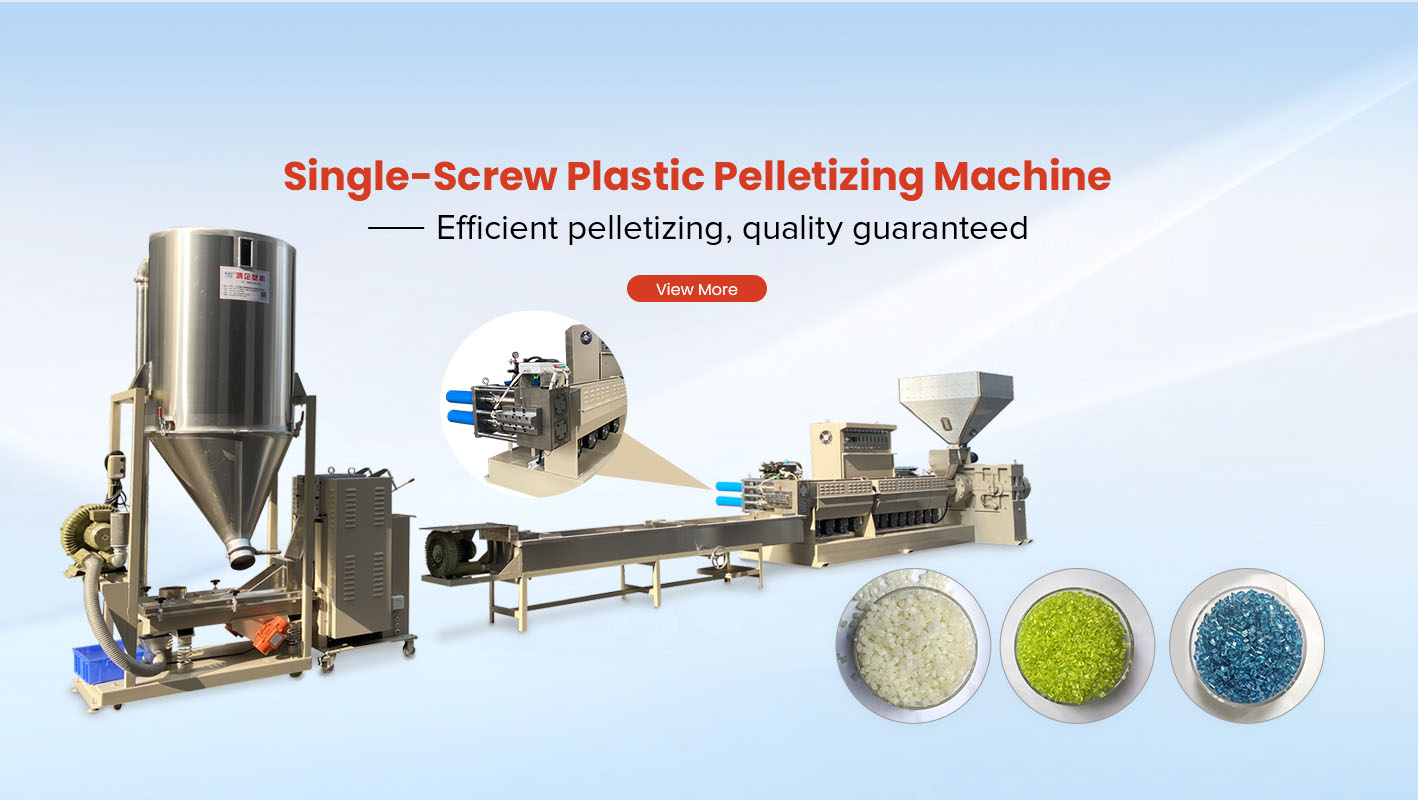
A budget plastic pelletizer may be suitable for simple, stable materials and lower output, while a premium plastic pelletizing machine is normally configured for tighter pellet consistency, difficult polymers, longer production hours, and more precise process control. The price difference comes from the complete configuration, not from the extruder size alone.
Why Pelletizer Prices Vary So Much
Two pelletizing machines with similar screw diameters may have very different quotations. Motor power, screw design, gearbox, temperature control, feeding method, degassing, filtration, cooling, cutting, electrical components, and Auxiliary Equipment all affect the final price.
A low quotation may cover only the main extruder. The production line may still require a mixer, Screw Conveyor, dewatering machine, screen changer, cooling section, Strand Pelletizer, vibrating screen, and material collection system.
Before comparing prices, buyers should confirm whether each quotation covers the same production boundary.
Budget and Premium Configurations Compared
| Configuration point | Budget pelletizer | Premium pelletizing system |
|---|
| Suitable feedstock | Stable, relatively clean material | Recycled, blended, transparent, or demanding polymers |
| Screw design | General-purpose configuration | Designed around polymer and process requirements |
| Feeding | Basic manual or standard feeding | Controlled feeding for more stable throughput |
| Temperature control | Fewer or simpler control zones | Multiple zones with more precise monitoring |
| Degassing | Basic vent or no special system | Vacuum or enhanced venting where required |
| Filtration | Manual or simple screen changing | Higher-efficiency filtration for contaminated melt |
| Controls | Basic panel and adjustment | More detailed monitoring and inverter control |
| Auxiliary equipment | Limited line integration | Coordinated mixing, conveying, cooling, cutting, and screening |
| Operating schedule | Intermittent or lower-demand use | Longer production runs and higher consistency targets |
| Initial investment | Lower | Higher, but may reduce process variation and labor intervention |
The table represents general differences. A premium machine should not be defined by decorative covers or a larger motor alone. Its additional cost should correspond to measurable process capability.
When a Budget Machine Is Enough
A lower-cost machine can be practical when the material is clean, the formulation rarely changes, and the buyer has modest production targets. Small factories, laboratories, or businesses testing a new recycling stream may not need a highly automated line at the beginning.
A small-output plastic granulation machine can also support sample production or limited batches. However, the buyer should still verify screw compatibility, heating capacity, electrical standard, pellet-cutting method, and access to Spare Parts.
Buying the cheapest machine becomes risky when the material contains moisture, paint, fillers, mixed polymers, or unstable bulk density. These conditions can cause output fluctuation, screen blockage, bubbles, discoloration, and irregular pellets.
What Justifies a Premium Configuration?
Premium configurations are useful when product quality directly affects the next manufacturing process. Transparent PC and PMMA, light-diffusion compounds, engineering plastics, and controlled blends may require more accurate temperature management and material handling.
For these applications, the equipment must help control:
A premium line can also reduce the amount of manual correction required during production. This does not eliminate the need for trained operators, but it gives them better control over the process.
Single Screw or Twin Screw?
Single-screw pelletizing machines are commonly selected for recycling relatively consistent thermoplastics. The rotating screw conveys, compresses, melts, and pressurizes the material before extrusion.
Twin-screw machines provide stronger mixing and more flexible compounding capability. They are often chosen when additives, fillers, pigments, or several material components must be distributed evenly.
The correct choice depends on material behavior rather than the buyer’s available budget alone. Purchasing a twin-screw machine for a simple application can create unnecessary investment, while selecting a basic single-screw line for difficult compounding may limit quality.
Calculating the Real Investment
The real cost includes installation, electricity, water, labor, spare parts, maintenance, rejected pellets, downtime, and the value of the processed material.
A machine that costs less initially but produces unstable pellets may become more expensive over several years. At the same time, an oversized premium line may never recover its cost when actual production volume remains low.
As a commercial grade plastic pelletizing machine supplier, we configure single-screw and twin-screw equipment around the material, target output, pellet requirement, and factory conditions. Our product range also includes mixers, conveyors, dewatering machines, strand pelletizers, vibrating screens, de-coating equipment, and spare parts.
With more than 20 years of experience in pelletizing machinery, we support machine design, production, sales, and after-service. Advanced CNC machining centers help control equipment accuracy, while complete-line planning prevents auxiliary equipment from becoming the bottleneck.
Select Configuration Before Comparing Price
A useful quotation begins with material samples or a clear material description. Buyers should provide polymer type, contamination, moisture, additives, feed form, desired capacity, final pellet application, electricity supply, and available space.
Only after these conditions are defined can budget and premium options be compared fairly.
Request a Configuration-Based Quotation
Send us your raw material, target output, final pellet use, operating hours, factory voltage, and available floor space. We can propose a practical configuration and explain which features are necessary, optional, or unnecessary for your process.