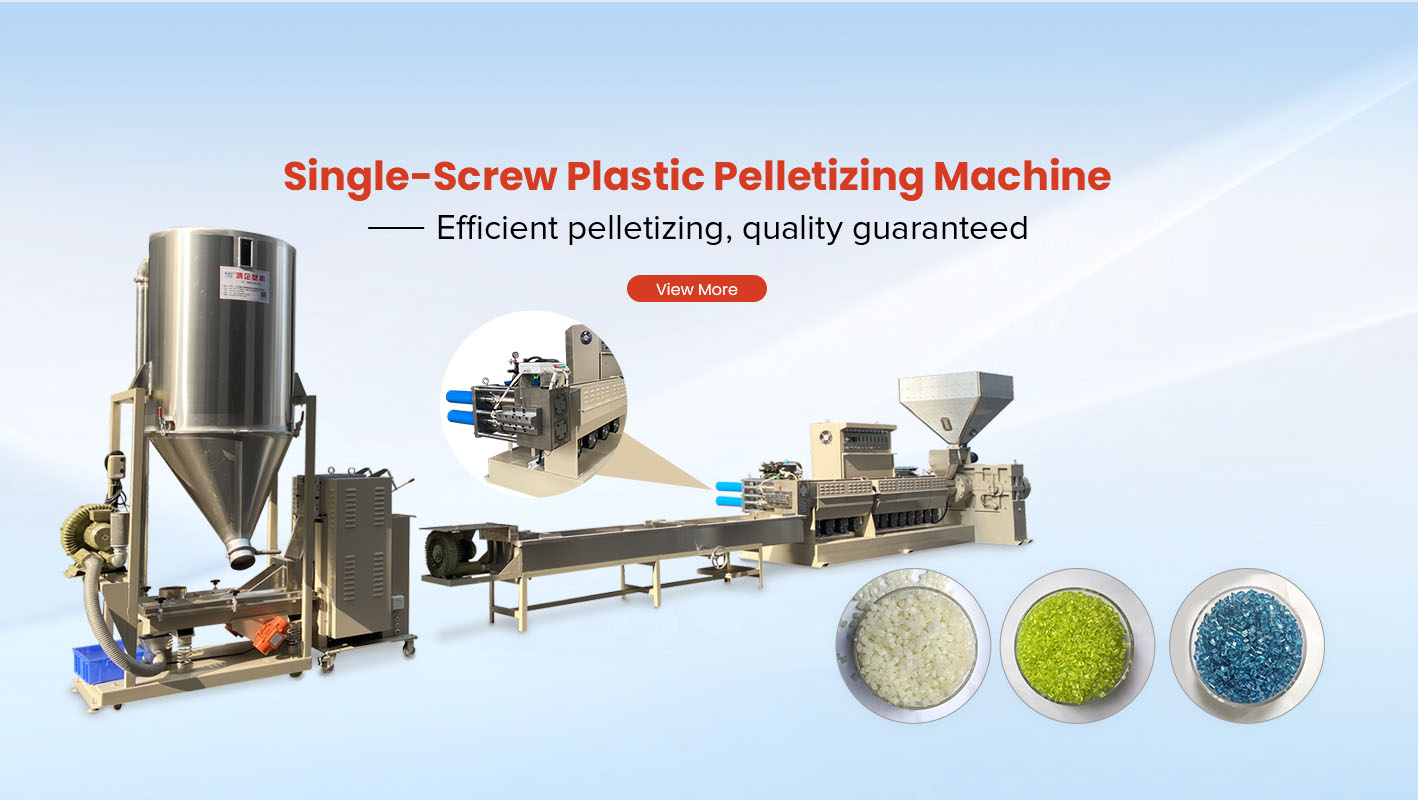
A plastic pelletization machine converts prepared plastic waste into reusable granules. The material is fed into an extruder, conveyed and melted by a rotating screw, filtered and pushed through a die, then cooled and cut into pellets. These recycled pellets can become feedstock for later extrusion, injection molding, or other plastic processing.
What Goes Into a Pelletizing Line?
Plastic waste cannot always be fed directly into the extruder. The incoming material may require sorting, crushing, washing, drying, de-coating, or mixing before pelletization.
Rigid flakes, film scraps, crushed engineering plastics, and production offcuts have different bulk densities and feeding behavior. Wet material may create vapor and bubbles, while paint, metal, paper, and other contaminants can block filters or reduce pellet quality.
A complete recycling line therefore begins with understanding the feedstock rather than selecting the extruder first.
The Pelletization Process Step by Step
Material Feeding
Prepared plastic enters the feeding system. Stable feeding is important because irregular material delivery changes pressure, residence time, and output.
Light film may need compaction or another feeding arrangement, while uniform rigid flakes can often move more predictably. A mixer may be used before feeding when color, additives, or several material batches must be combined.
Conveying and Compression
The screw rotates inside the barrel and moves the plastic forward. As the screw-channel geometry changes, the material is compacted and exposed to heat and shear.
Heaters raise the barrel temperature, while mechanical energy from screw rotation also contributes to melting. Operators must control both sources of heat because excessive temperature can degrade the polymer.
Melting and Plasticizing
The plastic gradually becomes a more uniform melt. The required temperature depends on the polymer. PP, PE, ABS, PET, PC, PMMA, PA, PBT, and PS do not share one universal processing window.
For mixed or engineering materials, screw configuration and residence time are particularly important. Incomplete melting produces unstable flow, while excessive heat or time may cause discoloration, odor, or reduced material performance.
Venting and Filtration
Moisture, air, and volatile substances may need to escape through a vent or vacuum system. Effective degassing helps reduce bubbles and porous pellets.
Before leaving the extruder, the melt passes through a screen or filtration device. This step removes solid contamination that could otherwise enter the final pellets or damage downstream processing equipment.
The filter must match the contamination level. Very fine filtration may improve cleanliness but also increase pressure and screen-changing frequency.
Extrusion, Cooling, and Cutting
The filtered melt exits through a die. In strand pelletizing, it forms continuous strands that are cooled and then cut into granules. Cooling conditions affect strand strength and cutting stability.
The Strand Pelletizer pulls and cuts the material into a selected length. A vibrating screen may then separate irregular pieces or fines before collection.
Other pelletizing methods exist, but the final goal is similar: create pellets that are convenient to transport, blend, meter, and reprocess.
How Single-Screw Pelletization Works
A single-screw plastic extruder uses one rotating screw for feeding, melting, and pressurizing. It is widely applied to recycling consistent thermoplastic materials.
Single-screw systems can process PP, PE, ABS, PET, and other polymers when the screw design and downstream configuration suit the material. They are often valued for relatively straightforward operation and maintenance.
Our single-screw product range includes small-output machines and industrial systems, including a PET granulator configuration listed for 400–600 kg/h. Actual output depends on material condition and complete-line setup rather than the nameplate alone.
When Twin-Screw Equipment Is Used
Twin-screw pelletizing machines use two screws to provide more intensive mixing and material distribution. They are commonly selected for compounding, color masterbatch, fillers, additives, and applications that need tighter control of dispersion.
The screws may contain conveying, kneading, and mixing elements arranged according to the process. This configuration gives twin-screw systems more flexibility, but also requires careful material and parameter planning.
Building a Complete Recycling System
As an industrial plastic recycling equipment supplier, we provide single-screw and twin-screw pelletizing extruders together with auxiliary machinery. Available equipment includes color mixers, vertical and horizontal mixers, Screw Conveyors, dewatering machines, de-coating machines, Strand Pelletizers, and linear vibrating screens.
Our complete-system approach considers how material moves between each stage. A high-output extruder cannot perform efficiently when drying, feeding, cooling, or cutting capacity is insufficient.
More than 20 years of industry experience and CNC machining resources support equipment production and application matching. We also provide after-service for customers operating in different markets.
Pellet Quality Reflects the Whole Process
Uniform pellets require stable feeding, appropriate melting, effective filtration, controlled cooling, and consistent cutting. Problems observed at the pelletizer may actually begin in material preparation or upstream conveying.
The best line is therefore not one machine, but a coordinated sequence designed for the feedstock and final pellet requirement.
Discuss Your Recycling Material
Provide the polymer type, waste form, moisture level, contamination, required output, and pellet application. We can review the complete process and prepare an industrial recycling equipment proposal.