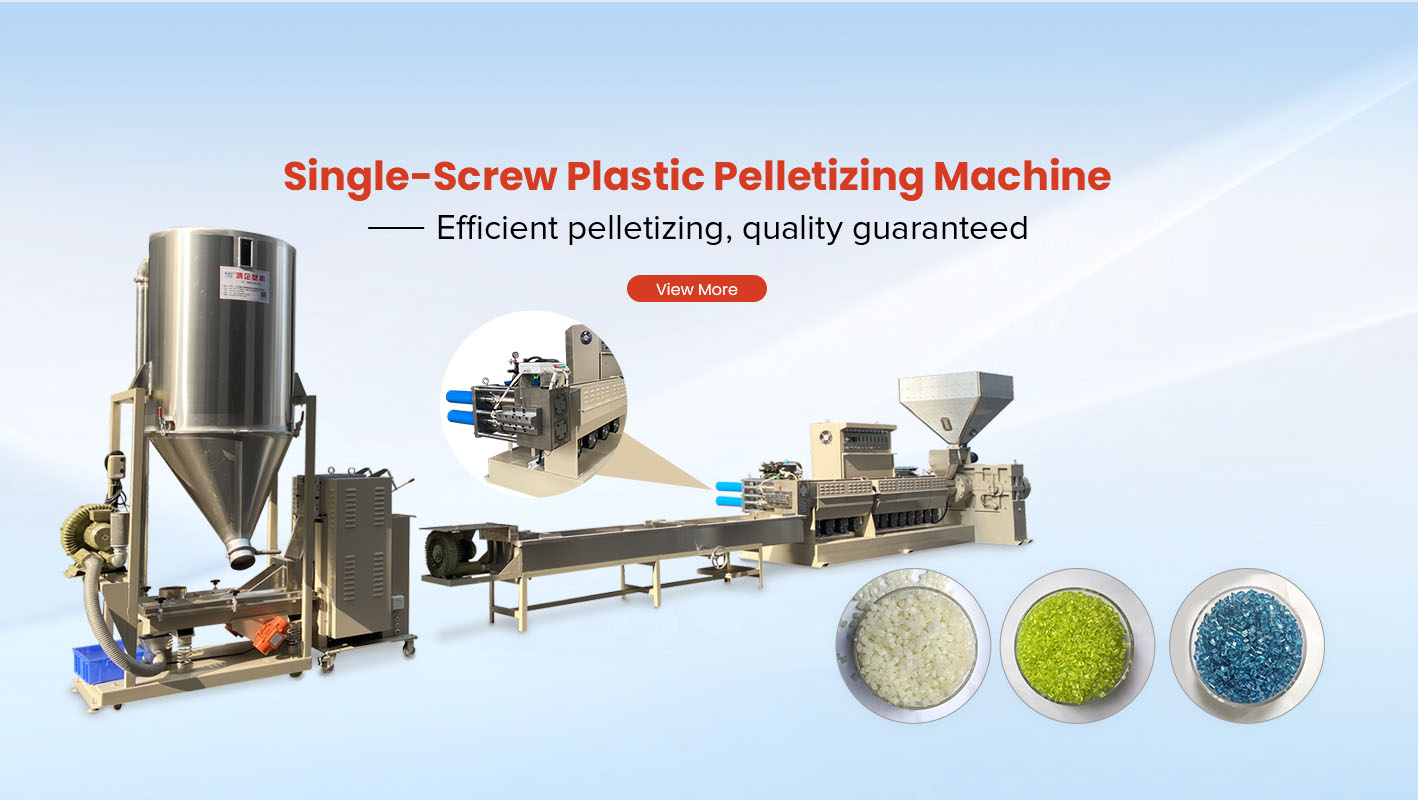
A plastic extruder uses heat and screw rotation to turn solid plastic material into a controlled, continuous melt. When the extruder is connected to filtration, cooling, cutting and screening equipment, it becomes the central part of a plastic pelletizing machine. Recycling plants comparing an industrial equipment supplier of plastic pelletizing machines should look at the entire process, not only motor power or screw diameter.
What Happens Inside a Plastic Extruder?
Plastic flakes, powder, crushed material or resin enter the barrel through a hopper. A rotating screw then carries the material forward.
Several changes take place along the barrel:
Material is conveyed away from the feed opening.
Barrel heaters and friction gradually raise its temperature.
The plastic softens and melts.
The screw mixes and homogenizes the melt.
Moisture and volatile matter may escape through a venting section.
The molten plastic passes through a screen and die.
Temperature is normally controlled in separate zones because the material should not receive the same amount of heat at every point. The settings depend on the resin, moisture, contamination, additives and expected output.
A stable extruder should deliver a consistent melt without excessive temperature fluctuation, pressure surges or material degradation.
How Does the Pelletizing Section Work?
Extrusion prepares the plastic, while pelletizing converts the extruded material into manageable granules.
With strand pelletizing, molten polymer leaves the die as continuous strands. The strands are cooled, dried and fed into a rotating cutter. The resulting pellets can then pass through a vibrating screen to remove oversized pieces and fines.
The normal sequence is:
Feeding → melting → mixing → venting → filtration → extrusion → cooling → cutting → screening
Our single-screw plastic pelletizing extrusion machines are used where steady conveying and relatively straightforward processing are priorities. Their configurations cover different output requirements and plastic materials.
Single Screw or Twin Screw?
A single-screw extruder is often selected for recycling or re-pelletizing materials with a reasonably stable composition. Its simpler structure can make operation and maintenance more manageable.
A twin-screw extruder provides stronger distributive and dispersive mixing. It is commonly used when the recipe includes pigments, fillers, reinforcing materials or several polymer components.
Our industrial twin-screw extruder machine uses two screws to convey, melt and mix polymer materials. Available models on the page cover laboratory-scale output through higher-volume industrial production.
An experienced industrial equipment supplier of plastic pelletizing machines should match the screw system to the actual material instead of recommending a larger machine by default.
Why Material Preparation Cannot Be Ignored
An extruder cannot correct every upstream problem. Wet, dirty or poorly sorted waste can lead to bubbles, unstable pressure, blocked screens and weak pellets.
Depending on the input, a recycling line may require:
Our vertical plastic dewatering machine can remove surface moisture from washed plastic before extrusion. Mixers, Screw Conveyors and screening equipment can also be incorporated according to the process.
How Our Manufacturing Capability Supports the Machine
We have more than 20 years of experience in plastic pelletizing machinery design, production, sales and after-sales service. Our equipment range includes single-screw, twin-screw and two-stage pelletizing machines as well as the Auxiliary Equipment required around the extruder.
Advanced CNC machining centers help us control the accuracy of critical components. Our technical team can review material condition, target output and plant layout before determining the screw, motor, screen changer and downstream configuration.
The basic answer is straightforward: a plastic extruder produces a uniform melt, while a plastic pelletizing machine cools and cuts that melt into reusable pellets. The quality of the finished granules depends on how well the whole line works together.
Send Us Your Plastic Pelletizing Requirements
Share your plastic type, material form, moisture level, hourly capacity and finished-pellet requirements. We will review the process and recommend a suitable configuration. To consult our industrial equipment supplier of plastic pelletizing machines, click here to obtain a quotation.